Technology
When AI Goes Haywire: Unpacking the Skyscraper and Slide Trombone Case
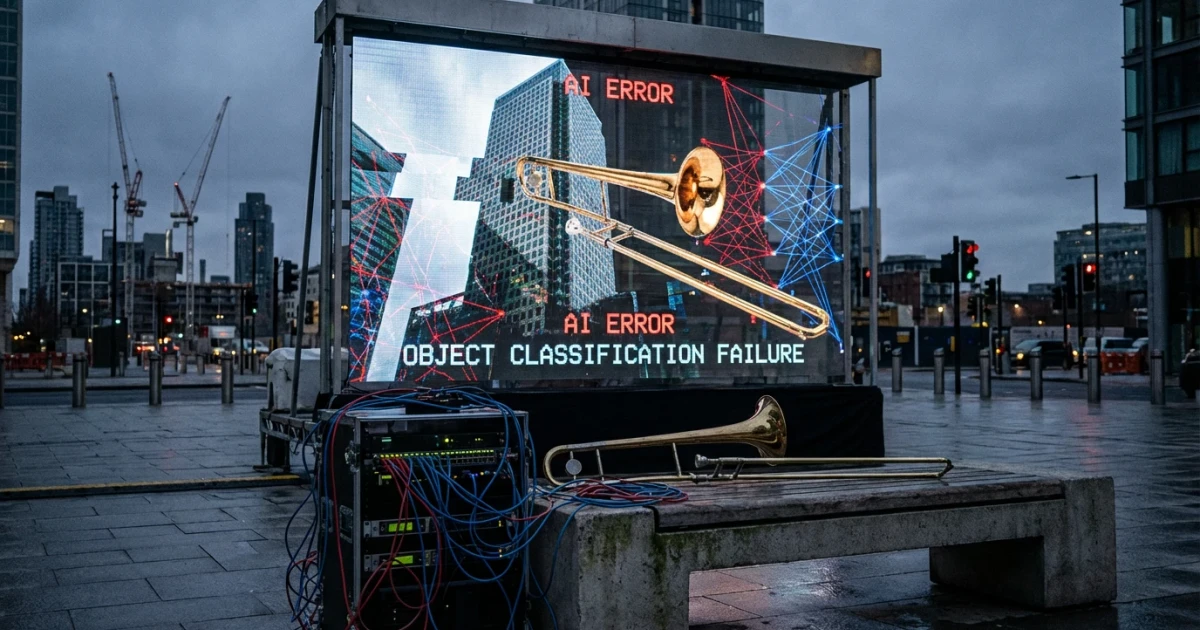
Artificial intelligence has made remarkable strides in recent years, but a recent incident – where an AI system confused a skyscraper with a slide trombone – starkly illustrates the technology’s vulnerabilities. This case, highlighted by The Conversation, serves as a cautionary tale about the limitations and risks of AI in everyday applications.
How AI Made a Bizarre Mistake
The story centers on an AI model that, when tasked with identifying objects in images, misclassified a photograph of a towering skyscraper as a slide trombone. While such an error might seem amusing, it underscores deeper problems embedded within the current generation of AI systems. The Conversation’s analysis points to the way AI models, particularly those based on deep learning, can sometimes make wildly inaccurate predictions if their training data or algorithms fail to account for key contextual cues.
Why Do Such Errors Occur?
AI systems like image classifiers rely heavily on vast datasets to learn patterns and associations. However, these models can be easily ‘confused’ if they encounter images outside their training experience, or if there are biases and gaps in the data. The Conversation explains that AI often recognizes objects based on pixel patterns, colors, and shapes rather than deeper semantic understanding. This can lead to situations where two visually dissimilar objects are mistaken for one another – as in the case of a skyscraper and a musical instrument.
- AI errors often stem from incomplete or unbalanced training data
- Deep learning models may overfit to certain visual features, missing broader context
- Such mistakes can have serious implications in high-stakes domains like healthcare or transportation
Broader Implications for AI Safety and Trust
While the skyscraper-trombone mix-up is relatively benign, The Conversation highlights that similar AI failures in medical diagnosis, autonomous vehicles, or security systems could result in real-world harm. These incidents erode public trust and raise concerns about deploying AI in critical settings without robust safeguards and oversight. The need for transparency and explainability in AI decision-making is paramount; users must be able to understand why a system made a particular choice, especially when it seems nonsensical.
Moving Toward More Reliable AI
Experts advocate for several approaches to reduce these kinds of errors:
- Expanding and diversifying training datasets to capture a wider range of real-world scenarios
- Developing hybrid AI models that combine deep learning with symbolic reasoning for better context awareness
- Implementing rigorous validation and testing protocols before deploying AI in sensitive domains
Looking Ahead: Balancing Innovation and Caution
The skyscraper and slide trombone case is a compelling example of AI’s current limitations and the importance of cautious optimism. As AI technology becomes increasingly integrated into daily life, addressing these shortcomings will be essential to ensure safety, reliability, and public confidence. Ongoing research and critical analysis, such as that provided by The Conversation, play a vital role in guiding the responsible evolution of artificial intelligence.