Sports
Which World Cup stars have Sheffield roots? Interactive lookup tool reveals all

Sheffield keeps surfacing when World Cup squads are broken down by hometown, club and family tie. FIFA’s England page for the 2026 tournament in Canada, Mexico and the USA includes a long list of familiar names with Sheffield links in earlier coverage, while England Football says 18 of Thomas Tuchel’s players are making their first World Cup appearance.
Sheffield as a talent factory
The city’s reputation did not appear overnight. The Star reported in 2022 that Sheffield was one of the biggest producers of English footballers, a claim that fits the scale of the city’s current World Cup footprint. That is why a postcode lookup lands so strongly locally: it turns a broad football pattern into something mapped onto streets, neighbourhoods and club pathways.
The Star returned to the theme in 2026 with a guide to 21 Sheffield United and Sheffield Wednesday World Cup links, bringing together current players, former names and a few less obvious connections. That kind of spread matters because it shows the pipeline is not built around one academy or one generation, but around a wider football culture that keeps reappearing when major tournaments arrive.
England’s squad and the Sheffield connection
FIFA’s squad listing for England names Jordan Pickford, Dean Henderson, James Trafford, John Stones, Marc Guehi, Reece James, Jordan Henderson, Bukayo Saka, Harry Kane, Marcus Rashford, Anthony Gordon, Ollie Watkins, Noni Madueke and Ivan Toney, with Thomas Tuchel in charge. England Football adds two key markers of the squad’s profile: 18 players are at their first World Cup, and Pickford has become England’s joint record World Cup appearance maker.

That blend of first-timers and established tournament figures is part of why Sheffield-linked readers pay attention. Pickford, Stones, Kane, Rashford and Jordan Henderson bring the weight of previous World Cups, while Dean Henderson, James Trafford, Marc Guehi, Reece James, Anthony Gordon, Ollie Watkins, Noni Madueke and Ivan Toney underline how quickly England’s next layer is being pushed into the biggest stage in football. England Football’s numbers page also notes Harry Kane’s 82 goals in 119 appearances, a reminder of how much elite output sits alongside the squad’s fresh faces.
Why Sheffield keeps producing
Sheffield’s geography helps explain the pattern. The city is dense with football identity, from Sheffield Wednesday at Hillsborough to Sheffield United at Bramall Lane, and the local game has long been woven into everyday life. When a lookup tool groups World Cup names by Sheffield or South Yorkshire roots, it is really showing how club culture, neighbourhood access and repeated exposure to the sport can create a steady route into elite football.
The local story is not just about where players are born. The Star’s 2026 guide framed the topic as a summer watch list for readers, drawing in obvious links and the more obscure ones that often reveal the deeper structure of a football city. That is where the geography becomes useful: not as trivia, but as evidence of how talent spreads across a place with two major clubs and a long habit of producing players for the top level.
A World Cup city with older memories
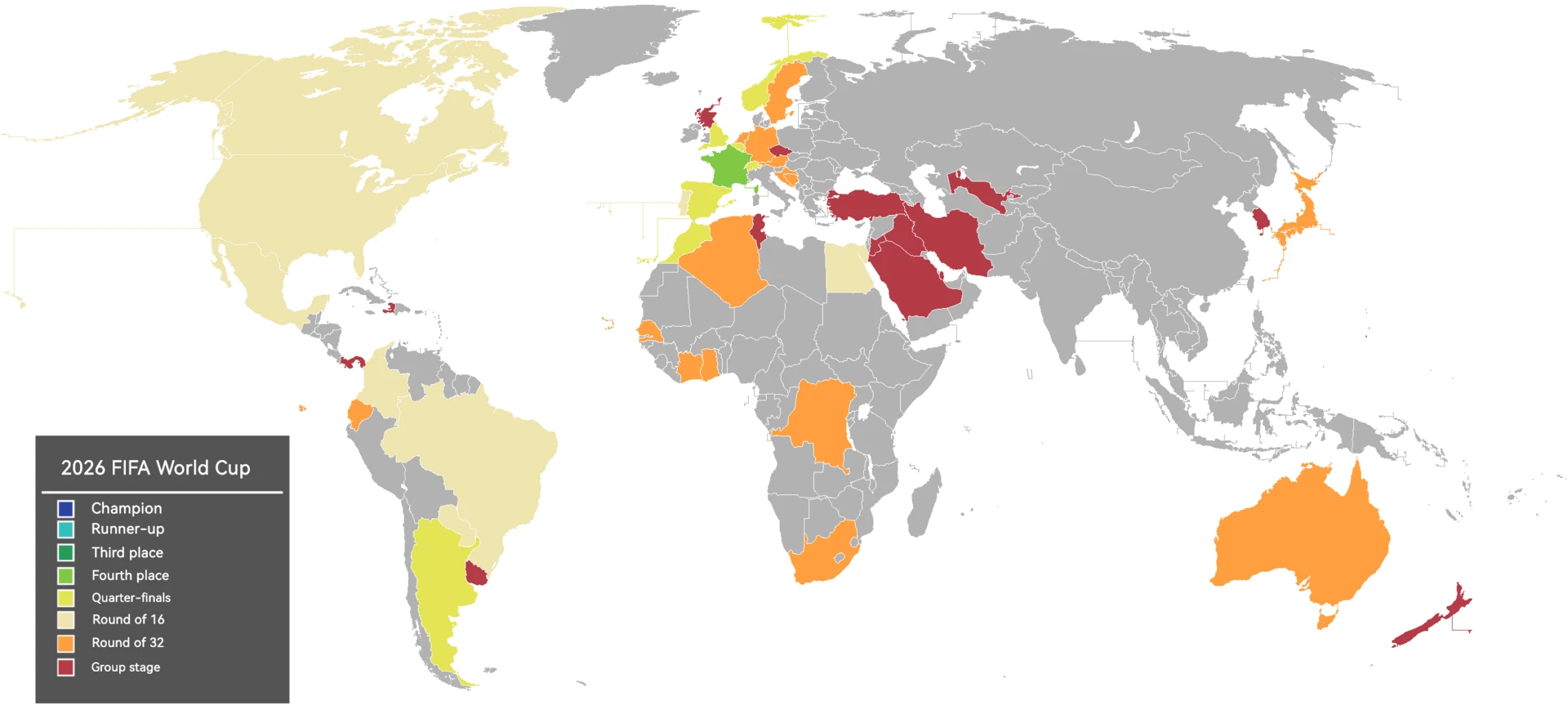
Sheffield’s World Cup history reaches back to 1966, when thousands of fans and the international press descended on the city for matches at Sheffield Wednesday’s Hillsborough Stadium. Hillsborough was one of the tournament’s host grounds, and Sheffield’s role in that summer still gives the city a direct line into England’s football memory whenever the World Cup returns.
That history matters because it links the modern lookup tool to something older than digital mapping. Sheffield was already part of the World Cup story before postcode search made local connections easier to trace, and the city has kept that association through tournament football, club rivalry and the way national teams keep drawing from the same urban football culture.
From memories to infrastructure in Darnall
The pipeline also depends on places where the next generation can actually play. On 5 May 2025, a multi-million-pound Gordon Banks Sports Hub was officially unveiled in Darnall, on the old Woodbourn Road football site, with funding that included a £2.1 million grant from the Premier League, The FA and the Government’s Football Foundation, plus £0.9 million from Sheffield City Council.
That investment gives the Sheffield story a practical edge. World Cup names are only the top of the pyramid; the base is made up of local pitches, coaching, community access and clubs that keep children in the game long enough for talent to emerge. In Sheffield, that path runs from neighbourhood facilities to Hillsborough and Bramall Lane, and on to the tournament squads that keep putting the city back on the map.
Sources
- [1]bbc.co.uk
- [2]thestar.co.uk
- [3]fifa.com
- [4]englandfootball.com