Politics
White House Ballroom Funding Fuels ICE Budget Standoff
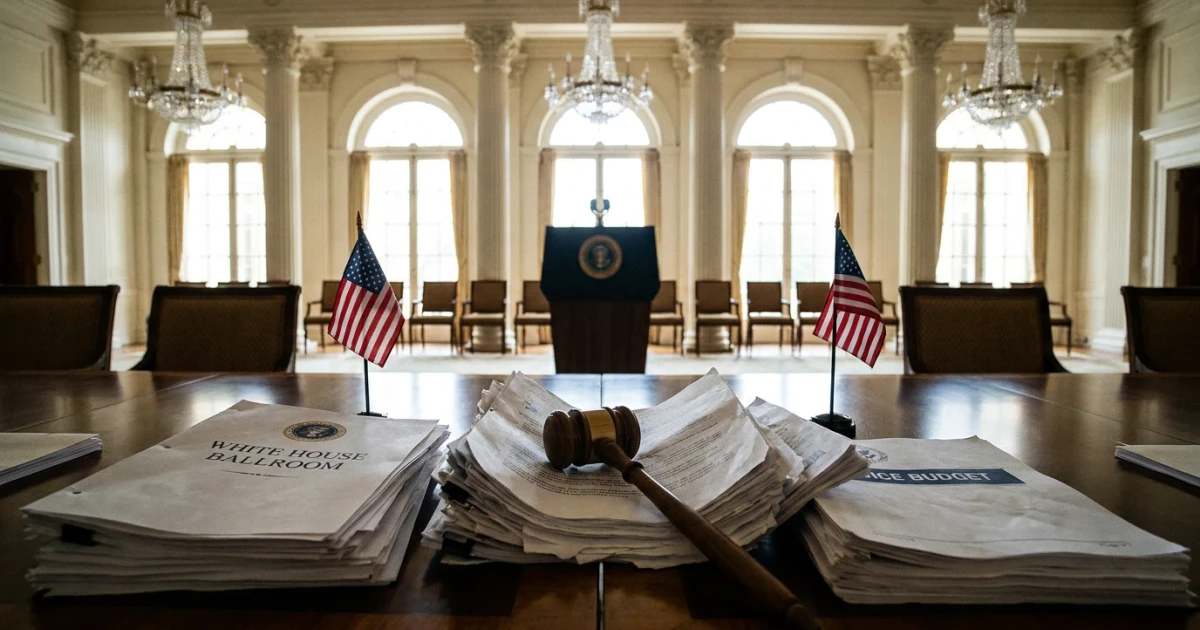
Negotiations over federal funding for the Department of Homeland Security have become increasingly contentious as a proposed $1 billion allocation for White House security—including a controversial ballroom renovation—has complicated efforts by Republicans to fund Immigration and Customs Enforcement (ICE) without Democratic backing. The dispute highlights broader tensions over federal appropriations and the politicization of capital projects at the Executive Residence.
Ballroom Renovation Sparks Partisan Disagreement
The proposed funding for White House security, unveiled by Republican lawmakers, includes resources not only for the Secret Service and physical security upgrades, but also earmarks for renovating the White House ballroom. According to The Washington Post, the ballroom project has become a focal point of disagreement, with some Democrats questioning the necessity and timing of such an expense amid broader budgetary pressures.
- $1 billion proposed for White House security, encompassing surveillance upgrades, personnel, and capital improvements, including the ballroom.
- The Executive Residence at the White House has a history of capital projects funded through appropriations, but large renovations have often attracted scrutiny.
- Republicans argue that the ballroom upgrade is part of necessary security modernization, while Democrats contend it is a luxury project that could be delayed in favor of essential services.
ICE Funding Tied to Wider Appropriations Battle
At the heart of the dispute is a GOP proposal to fund ICE operations without Democratic input. CBS News reported that Republican leaders are seeking to pass the Department of Homeland Security Appropriations Act, 2025 on a party-line basis, linking ICE funding with the White House security package. Democrats argue that this approach undermines bipartisan negotiation and risks politicizing law enforcement budgets.
- ICE is slated to receive funding increases for immigration enforcement and detention, according to the ICE FY 2025 Congressional Budget Justification.
- Efforts to pass appropriations without Democratic support have been met with resistance, with Democrats threatening to block the bill unless the ballroom funds are reconsidered.
- The dispute extends to the overall DHS budget, as highlighted by the CBO Cost Estimate, which projects significant outlays for both ICE and White House capital projects.
Broader Implications for Federal Spending
The controversy over the ballroom funding underscores larger debates about federal spending priorities. Both sources note that the ballroom allocation is emblematic of how capital projects can become political bargaining chips. Republicans maintain that security upgrades—including the ballroom—are necessary, while Democrats question whether such spending should take precedence over other urgent needs.
Historical data from USAspending.gov shows that White House security projects have seen fluctuating expenditures over past budgets, often reflecting the political climate. The Fiscal Year 2025 President’s Budget Request includes capital improvements for the Executive Residence, but the ballroom project stands out for its scale and visibility.
Key Points from the Debate
- Republicans are pushing to fund ICE independently, tying it to White House security appropriations.
- The ballroom renovation is a major sticking point, with Democrats demanding its removal from the bill.
- Both ICE and White House security funding are projected to rise in FY2025, but partisan disagreements threaten to delay passage.
Looking Ahead
As Congressional leaders continue to negotiate, the fate of both ICE funding and White House security upgrades remains uncertain. The ballroom project has become a lightning rod for criticism, illustrating how even seemingly routine capital improvements can escalate into broader political disputes. Analysts suggest that the outcome of these negotiations may set precedents for future appropriations battles over executive branch projects and law enforcement funding.
For readers tracking federal spending, more details on H.R.8752 and the associated budget justifications are available in official records and oversight reports. The ongoing debate is likely to influence not only the immediate budget cycle but also the tone of partisan cooperation in Congress for months to come.