Politics
White House Contact Sought to Influence Indiana Senate Race
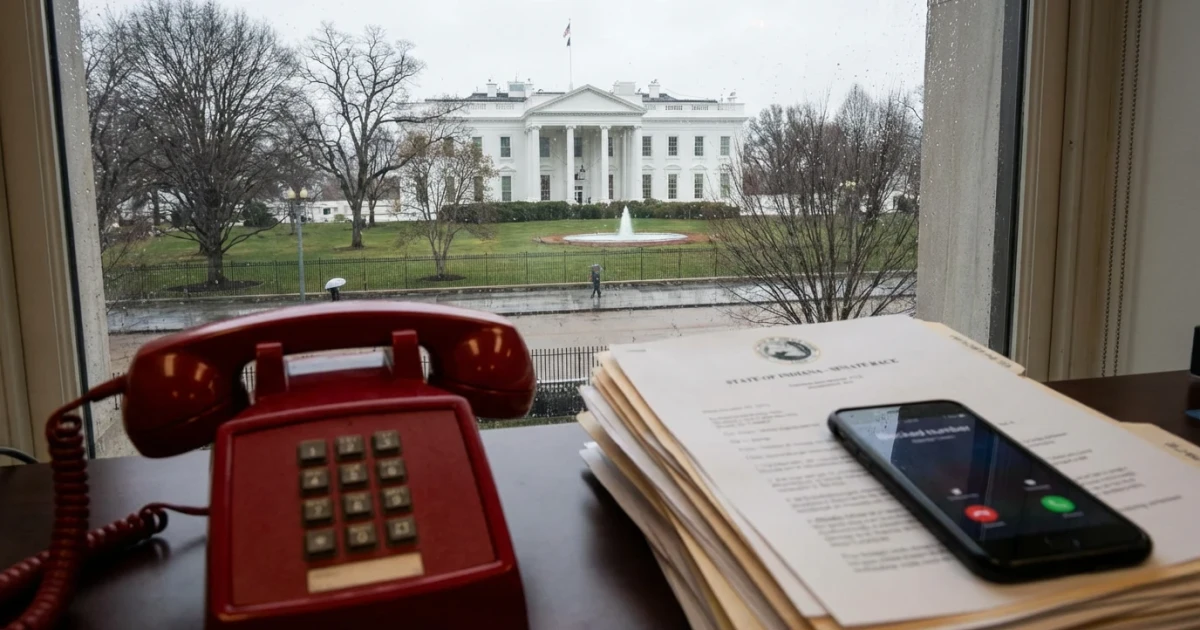
Recent reports from multiple news outlets reveal that White House officials contacted a Republican candidate in an attempt to persuade them to exit a competitive Indiana state Senate race. The communications, consisting of calls and messages, have sparked debate over the appropriateness and implications of federal involvement in state-level elections.
Evidence of Federal Outreach Emerges
Both the Indiana Capital Chronicle and WFYI have reported that the White House made direct efforts to encourage a Republican candidate to withdraw from an ongoing Indiana state Senate race. Details provided by the Indiana Capital Chronicle indicate that phone calls and text messages originating from federal officials targeted the candidate, though the motivations behind the outreach remain under scrutiny.
Nature and Context of the Communications
While the full content of the calls and messages has not been released, reporting by WFYI confirms that the White House's engagement was explicit in its aim: to push the Republican candidate out of the race. This effort comes amid a series of closely watched contests in the Indiana Senate, where partisan balance and internal party dynamics are at play. The state's official candidate listings document all registered candidates for this election cycle, allowing voters and observers to verify changes in the field.
Potential Motivations and Political Context
Although neither report specifies the exact reasoning behind the White House's actions, political analysts note that involvement in state legislative races by federal officials is uncommon and typically signals strategic interests. Indiana's legislative map, as outlined by the National Conference of State Legislatures, shows that several districts are highly competitive, and shifts in candidate participation could influence broader party control.
- Attempts to influence candidate fields are not unprecedented but are rarely so directly attributed to federal actors in state races.
- Indiana's recent turnout and results data suggest some districts have narrow margins, making every candidate's decision impactful for the overall contest.
Reactions and Ethical Questions
The surfaced communications have prompted concerns among local election observers and political experts about the boundaries separating federal and state political processes. Critics argue that such interventions, regardless of intent, could undermine public trust in the electoral process. Supporters of party coordination, however, contend that candidate realignment is a common feature of competitive politics, though typically managed at the state or local level rather than by the White House.
Implications for Indiana's Election Landscape
The controversy arrives at a pivotal moment for Indiana, where state Senate races are drawing increased attention and campaign finance activities are closely monitored through the Indiana Campaign Finance Database. With the official candidate list now public, any withdrawals or changes will be reflected in state records, ensuring transparency for voters and the media alike.
What Comes Next
As the story continues to develop, election officials and transparency advocates are likely to examine whether any ethical or legal lines were crossed by the White House's actions. The Indiana Inspector General provides oversight for such matters, including the review of potential undue influence or campaign conduct violations.
Ultimately, this episode highlights the ongoing tension between state and federal roles in electoral politics. The outcome of the Indiana Senate race—and the fate of the candidate at the center of this story—will be closely watched as voters prepare to head to the polls.