Politics
White House defends World Cup visa vetting amid referee deportation

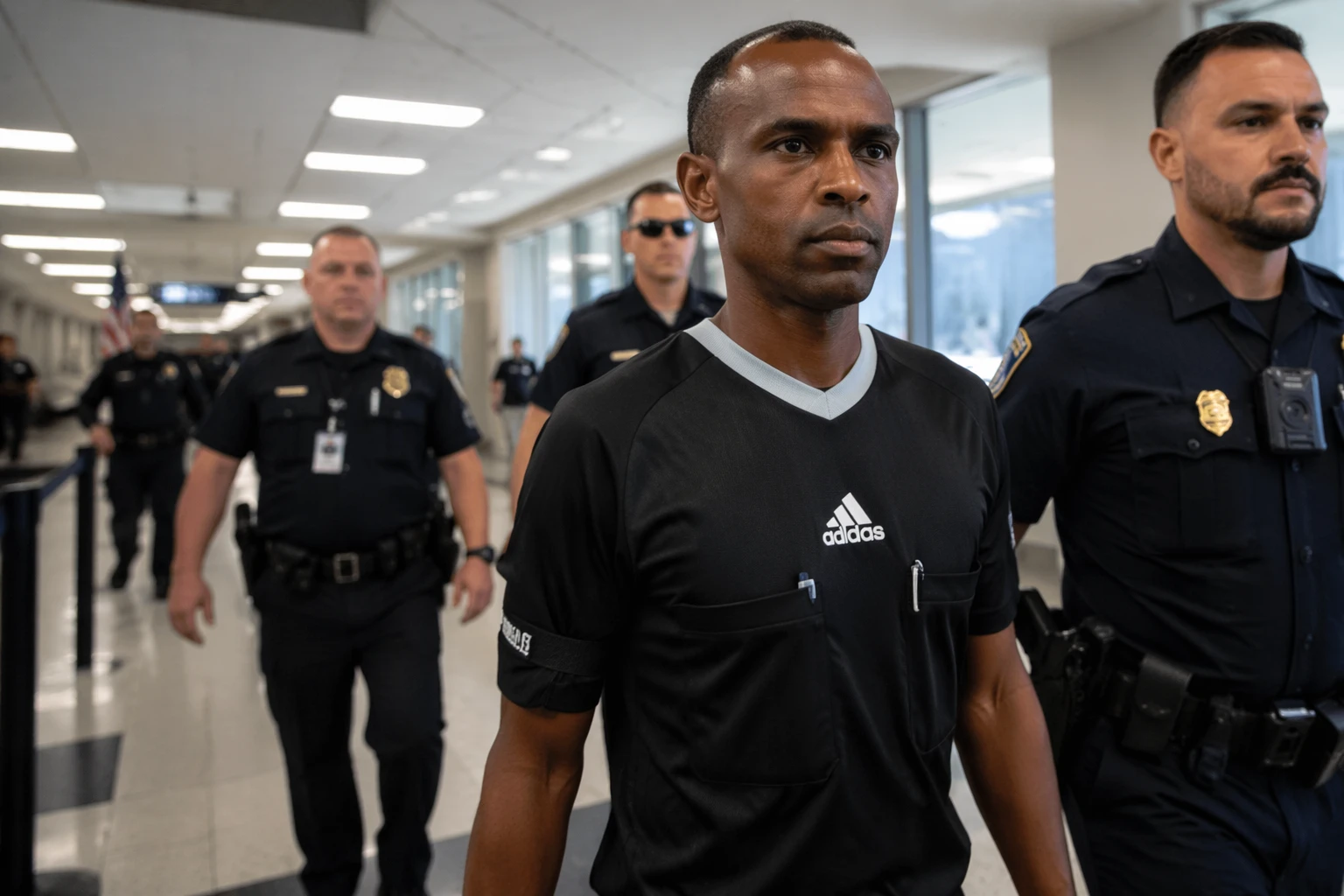
The White House is defending tight visa screening for the 2026 World Cup even as the tournament tries to project global openness across the United States, Canada and Mexico. Andrew Giuliani, who leads the White House Task Force on the World Cup, said the administration would not let “bad actors” into the country under the cover of the tournament after Somali referee Omar Artan was denied entry on security grounds.
FIFA selected 52 referees, 88 assistant referees and 30 video match officials for the tournament, the most extensive officiating lineup in World Cup history. Artan was among them, but U.S. authorities blocked his entry citing vetting concerns, according to reporting on the case. Giuliani said Artan had been talking to “very bad people,” a defense that pushed the episode beyond one official’s travel troubles and into a broader test of how the U.S. will balance a flagship sporting event with a harder line on border security.
The stakes are higher because this World Cup is not a single-host showcase. It runs from June 11 to July 19, 2026, with 48 teams and 104 matches spread across 16 host cities in the three-nation hosting arrangement. FIFA’s schedule shows Iran is set to face New Zealand on June 15 in Los Angeles, and the White House has confirmed Iran’s players will be allowed to enter the U.S. for their matches.
Giuliani framed that decision as a limited accommodation, saying admitting the Iranian team a day before matches would be a “goodwill gesture.” That position sits alongside the State Department’s warning to World Cup travelers to apply for visas early and its insistence that the visa process will be used to protect national security and public safety. The message is clear: the administration wants the tournament, but on its own terms.

The tension is especially sharp because visa rules already make room for some World Cup participants. For countries subject to visa-bond requirements, athletes and essential support staff can be exempted, while individual screening still applies. FIFA is also expected to pay Artan his full tournament fee despite the entry denial, underscoring the practical fallout when security vetting collides with a competition built on international access.
Sources
- [1]cbsnews.com
- [2]inside.fifa.com
- [3]fifa.com
- [4]state.gov
- [5]travel.state.gov
- [6]politico.com
- [7]usatoday.com