Entertainment
White House displays rescued Norman Rockwell sketches for first time
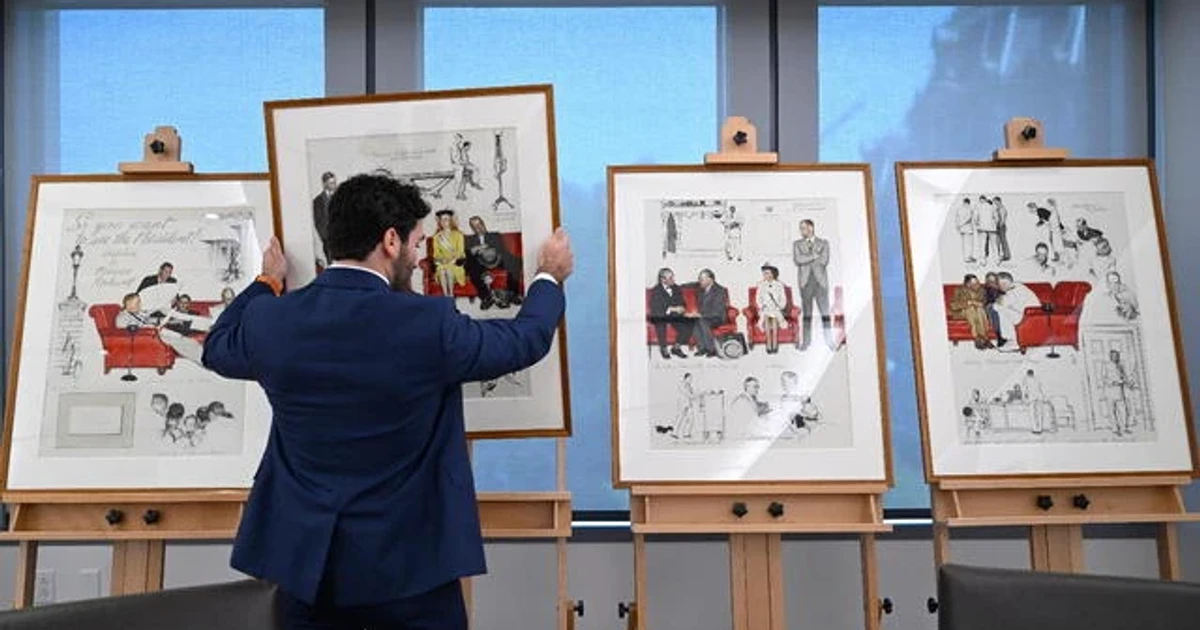
Norman Rockwell's four West Wing lobby sketches went on public view at The People’s House, a block from the White House, after the White House Historical Association paid $7.25 million in November 2025 to secure them for the public. The exhibit opened Thursday and is scheduled to remain through June 2027.
The works, titled So You Want to See the President!, were commissioned in 1943 by Stephen T. Early, Franklin D. Roosevelt’s press secretary, and first published in The Saturday Evening Post. Heritage Auctions described the set as Rockwell’s only known suite of four interrelated paintings on paper, a group that captures the steady traffic of senators, military personnel, press figures and even a Miss America waiting to see Roosevelt during World War II.
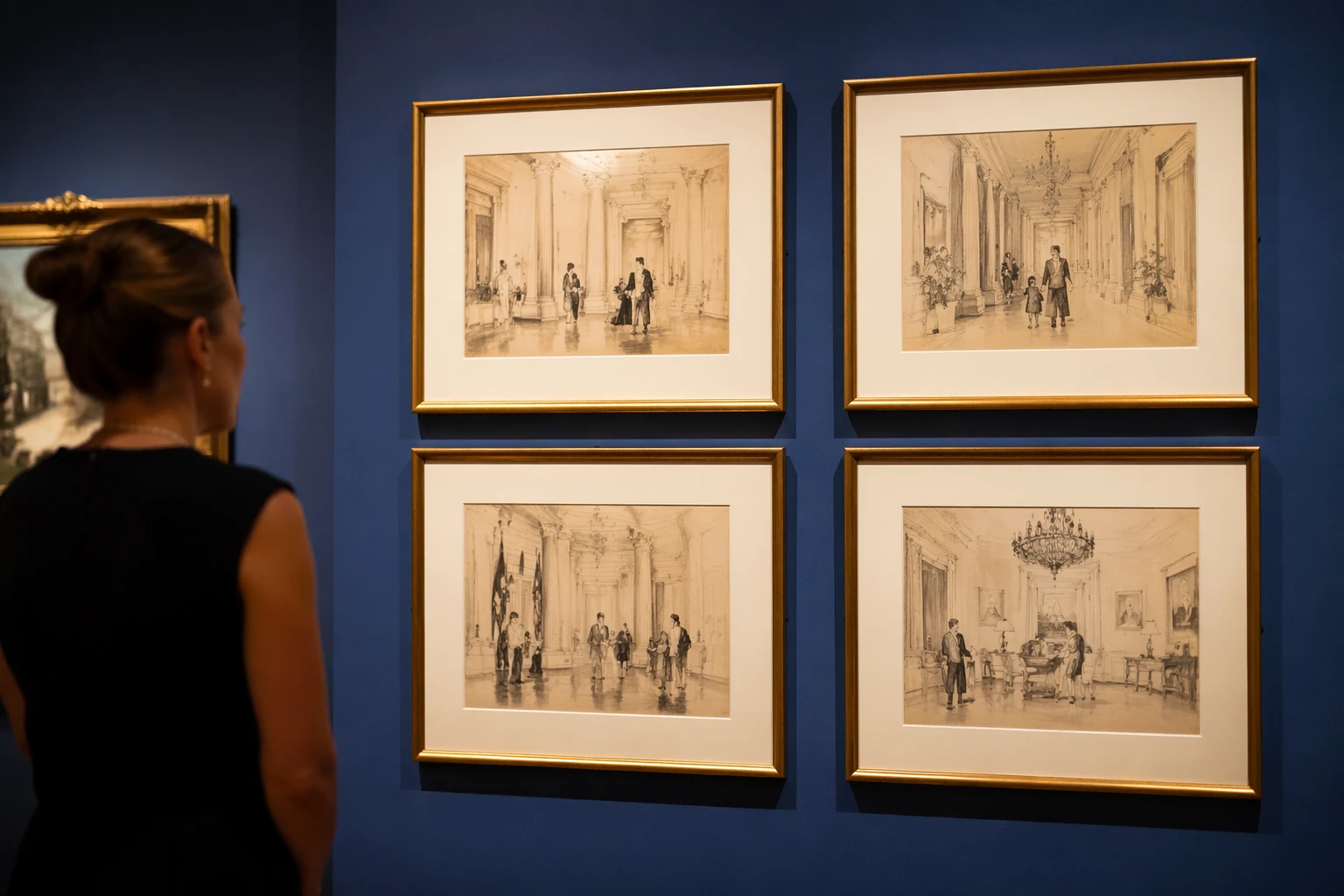
For decades, the panels hung in the White House visitor’s lobby under a long-term loan from the Early family, from 1978 until 2022. Presidents from Jimmy Carter to Donald Trump saw them there, along with staff members, world leaders and other visitors moving through the West Wing. Their public debut now shifts the sketches from a private presidential setting into a museum-style space built for broader access.
The White House Historical Association said it bought the series to coincide with America’s 250th anniversary year and called it the most significant single-artifact investment in its history. The People’s House built an interactive display with Iconic Moments and said it conducted extensive research to identify many of the people Rockwell placed in the panels, turning the work into both an art installation and a roster of wartime White House visitors.
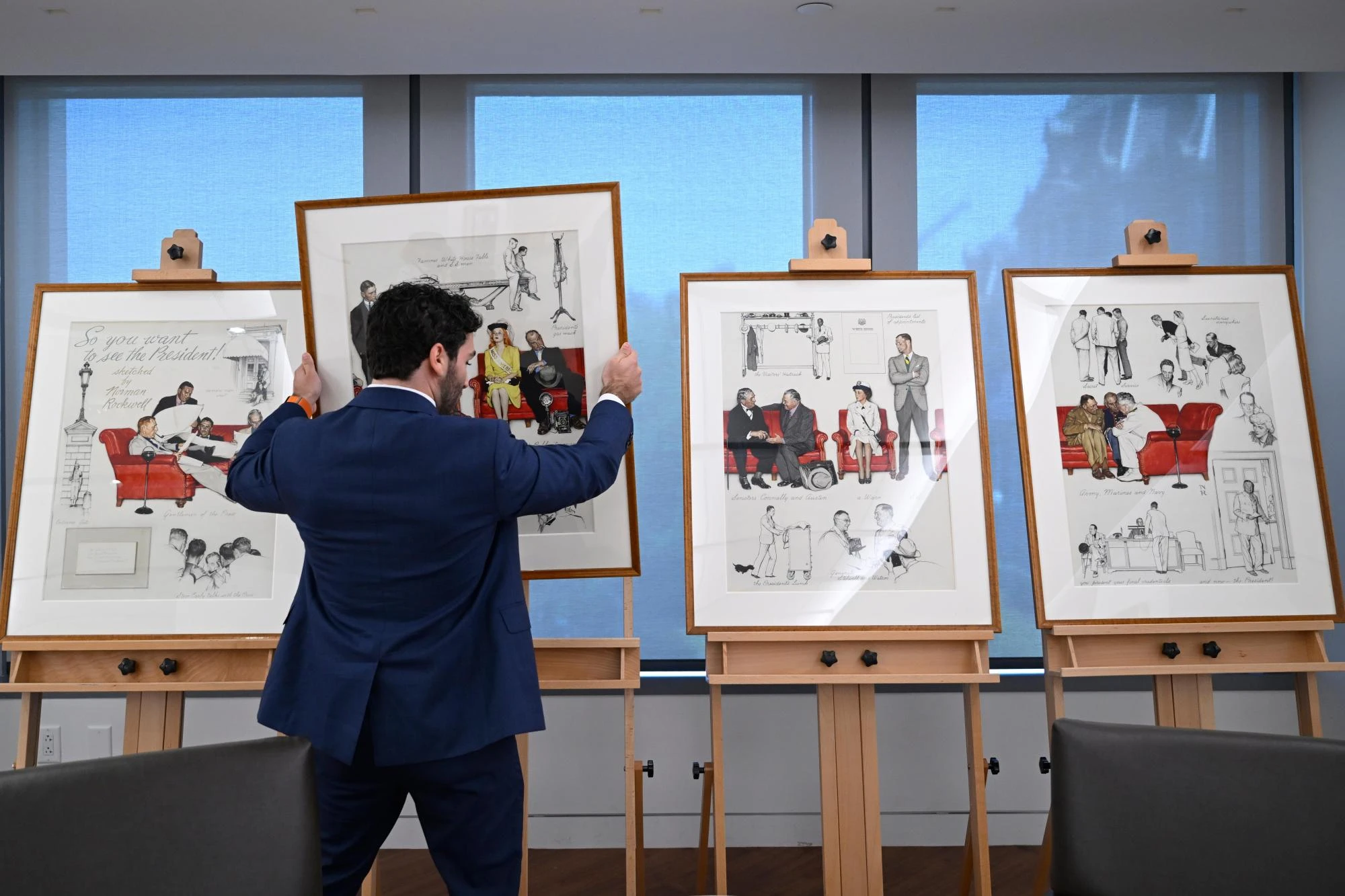
Stewart McLaurin, president of the association, said Rockwell spent hours people-watching in the White House lobby and later returned to gather more material after a fire destroyed his Vermont studio. That mix of observation and memory gives the sketches their unusual force, showing not just famous names but the human traffic around Franklin D. Roosevelt’s presidency, and the expectation that the White House could still feel open even in the middle of war.