Politics
Whitehouse, Khanna revive tax on Big Oil windfall profits
Sheldon Whitehouse and Ro Khanna revived a tax on Big Oil windfall profits as gasoline prices climbed in the wake of the Iran war, betting that the political case for punishing excess earnings is strongest when drivers feel the shock at the pump. The bill, reintroduced on March 17, 2026, would impose a 50% excise tax on crude oil profits above a 2025 Brent crude baseline and rebate the money to individual taxpayers.
The Senate version was referred to the Finance Committee. It also includes gas-price rebates and a fund designed to return revenue directly to consumers, an attempt to answer the long-running criticism that windfall taxes are more useful as protest than as relief. Whitehouse and Khanna said the point is to curb profiteering by oil companies and give Americans relief when global instability pushes prices higher.
The numbers behind the push are stark. In June, Whitehouse and Sen. Elizabeth Warren said 27 oil and gas companies were on track to collect more than $40 billion in first-quarter profit. They said gasoline prices had risen as much as 52% since the Iran war began, with the national average at $4.16 a gallon, up from $2.98 before the conflict. At $100 oil, they estimated industry windfall profits could hit $234 billion by the end of 2026.

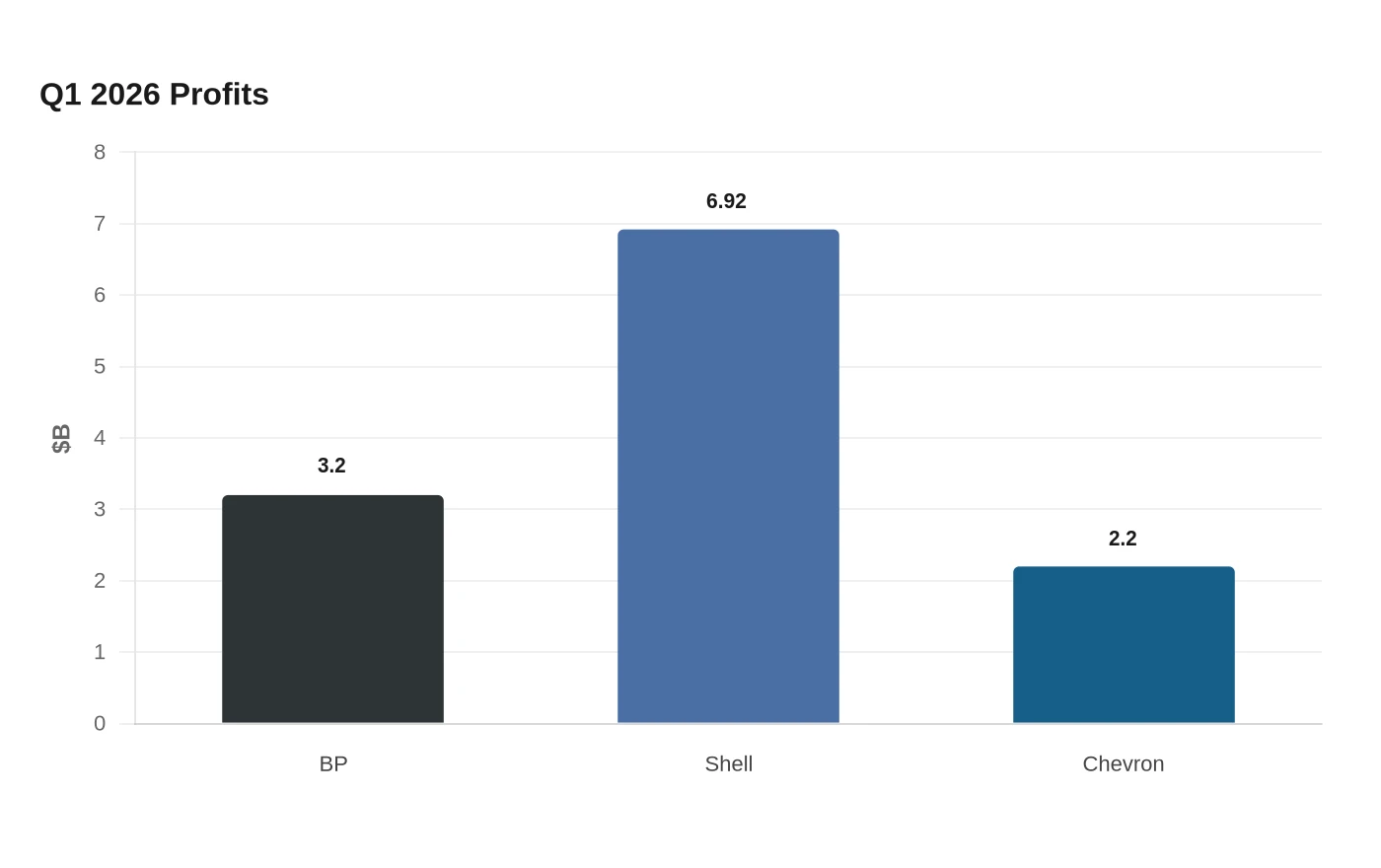
The debate is sharpened by the companies’ own earnings. BP reported first-quarter 2026 underlying replacement cost profit of $3.2 billion, more than doubling from the period a year earlier. Shell posted adjusted earnings of $6.92 billion for the first quarter, while Chevron reported $2.2 billion in first-quarter earnings, down from $3.5 billion in the first quarter of 2025. Together, the results show an industry still making substantial money even as some firms saw earnings move in different directions.
Supporters of the tax say that is exactly why the levy belongs in the debate: when war risk and supply shocks lift crude prices, they argue, the gains should not stay concentrated in corporate balance sheets while families absorb the higher fuel bill. Critics counter that oil companies already pay corporate income tax and that windfall taxes can backfire, either by discouraging investment or by failing to ease retail prices before the market moves again. The fight in Washington is over more than oil profits; it is over whether the government can turn a price spike into direct relief fast enough to matter.
Sources
- [1]npr.org
- [2]epw.senate.gov
- [3]govtrack.us
- [4]bp.com
- [5]cnbc.com
- [6]chevron.com