Politics
Who is Frankie van Heel, the woman behind Andy Burnham?
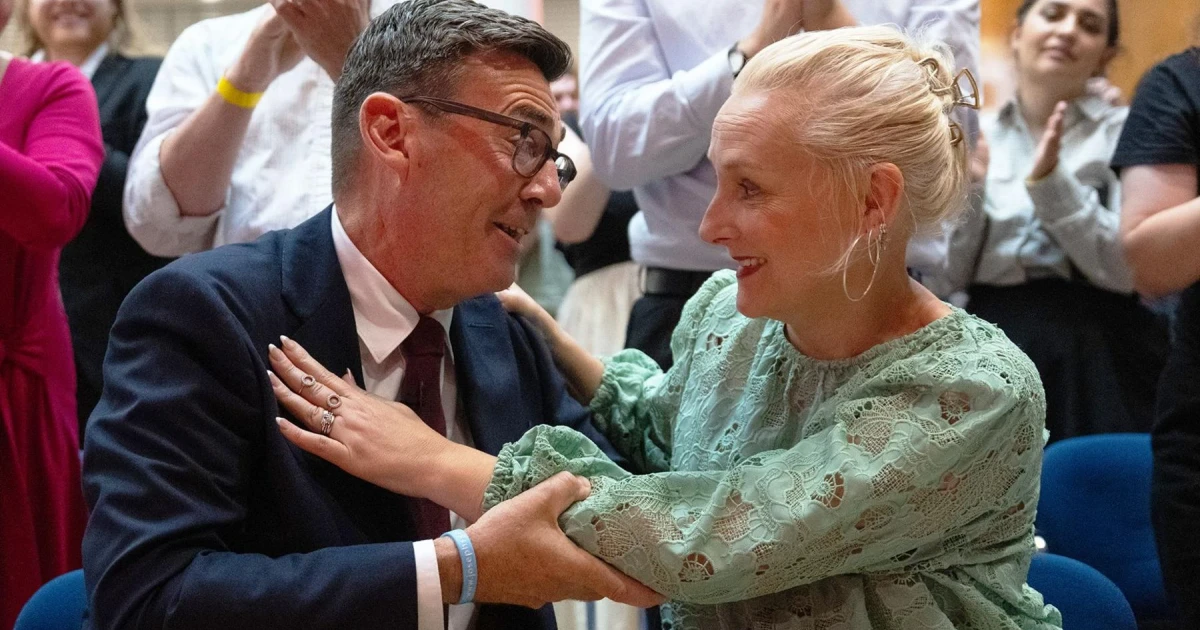
Andy Burnham’s partner, Marie-France van Heel, known as Frankie, has become part of the political conversation because her life sits close to two powerful forces: public image and public policy. She is a Dutch-born marketing executive who met Burnham at Cambridge University, and the couple have three children. As Burnham’s national profile has risen, so has curiosity about the woman beside him, and about where legitimate scrutiny ends and tabloid fascination begins.
Who Frankie van Heel is
Van Heel is the name that appears in formal profiles, but Frankie is the name that has followed her in public life. She met Burnham at Cambridge and has been in a relationship with him since their university days, which places their partnership long before the latest speculation about his future in national politics. That long timeline matters because it explains why she is now being examined not as a novelty, but as part of a mature political household.
BBC News captured the shorthand that has stuck with her, describing her as the “coolest girl in college” when she first started dating Burnham. That kind of line is easy to turn into gossip, but it also signals something more useful to voters: she has never been presented as a ceremonial spouse drafted in later by a party machine. She is a person with her own career, her own background, and a relationship that predates the contest for power.
Her professional life is not political theatre

Public profiles describe van Heel as a senior marketing executive with a long career in branding and marketing. That is the clearest answer to the question of what she actually does: she works in business, not in elected office, and her professional identity is distinct from Burnham’s public role in the Labour Party and Greater Manchester politics. Reports also note that she has generally stayed out of the spotlight, even though she has appeared at his side during high-profile political moments.
That separation is important. In a political family, not every spouse becomes a strategist, fundraiser, or campaign surrogate. Van Heel’s public role is closer to a private-sector executive who occasionally appears in the frame than to someone actively shaping speeches, policy lines, or party machinery.
Why Blind Date keeps resurfacing
The 1992 appearance on Cilla Black’s ITV dating show Blind Date has become the most shareable detail in the story, because it gives the public a before-and-after narrative that is easy to package. The Times’ description of her as the Dutch-born marketing executive who met “UK’s next prime minister” at Cambridge, then appeared on Blind Date, is the kind of juxtaposition that invites headlines about a political “first lady” long before anyone has asked what that role should actually mean.
That is where public interest starts to blur into tabloid curiosity. A dating-show clip from more than three decades ago tells voters nothing about competence, judgment, or policy, but it does reveal how politics turns private histories into public material once a partner becomes nationally important. The clip survives because it is entertaining; it keeps circulating because Burnham’s ambitions make every detail feel newly relevant.
The Be.EV question is the real public-interest issue
If there is a serious scrutiny point in van Heel’s story, it is her senior role linked to Be.EV in Greater Manchester. Be.EV is part of the electric vehicle charging sector, and that places her closer to a live policy area for Burnham, who has been closely associated with regional transport and EV charging matters. That connection does not prove wrongdoing, but it does justify questions about perception, influence, and whether public office and private sector interests can be cleanly separated.
The issue became sharper during arguments over the Greater Manchester Clean Air Zone. Burnham said claims linking his wife’s finances to the plan were “disgraceful,” after critics suggested she could benefit from the policy. The scheme itself would have charged some high-emission vehicles, not private cars, and the fact that it was delayed only intensified the political heat around anything touching transport and clean air policy.

Where legitimate scrutiny ends
The line is not complicated, even if political coverage often makes it feel that way. If a politician’s spouse holds senior roles in a sector tied to transport, charging infrastructure, or regional business deals, voters are entitled to ask about transparency, governance, and conflicts of interest. That is different from reducing the spouse to an old TV appearance, a college nickname, or a lifestyle profile dressed up as political analysis.
A recent profile also linked van Heel to a family health scare and asked what kind of public-facing role she might play if Burnham’s national stature grows. That angle belongs in the conversation only insofar as it explains how a politician’s partner may be pushed into public view without choosing it. Van Heel’s case shows the boundary clearly: her professional work is relevant, her family life is not a policy issue, and the public has a real interest in the first point and only a passing excuse for the second.
What emerges is not a celebrity profile, but a case study in how modern politics expands around a candidate’s household. Frankie van Heel is being watched because Burnham’s ambitions make her visible, but the only questions that deserve lasting attention are the ones about role, influence, and accountability.
Sources
- [1]bbc.co.uk
- [2]thetimes.com
- [3]goodhousekeeping.com
- [4]the-independent.com
- [5]facebook.com