Health
WHO report warns global cancer cases could reach 35 million by 2050
On July 8, the World Health Organization and the International Agency for Research on Cancer projected annual cancer cases could climb to nearly 35 million by 2050, up from an estimated 20.6 million new cases and close to 10 million deaths each year. Cancer now kills more than 26,000 people every day and remains the world’s second leading cause of death after cardiovascular disease.
Preventable and treatable drivers that governments still control include tobacco use, overweight and obesity, infections, vaccination programmes, early detection and treatment access. Stronger prevention against smoking, obesity and infections is central to slowing the rise, but underinvestment in cancer services is leaving many countries unable to respond.
In high-income countries, 87% of women with breast cancer survive five years after diagnosis, compared with about 42% in low-income countries. Fewer than one in three countries include cancer care in their universal health coverage packages, leaving diagnosis, treatment and palliative care out of reach for many patients.
WHO’s first-ever survey of people affected by cancer found at least 45% experienced financial hardship, more than half reported mental health challenges, and nearly all caregivers reported strain.
WHO’s February 2024 cancer release estimated 20 million new cases and 9.7 million deaths in 2022 and put 53.5 million people alive within five years of a cancer diagnosis. About one in five people will develop cancer in their lifetime, while only 39% of participating countries covered the basics of cancer management in financed core health services and just 28% covered palliative care.
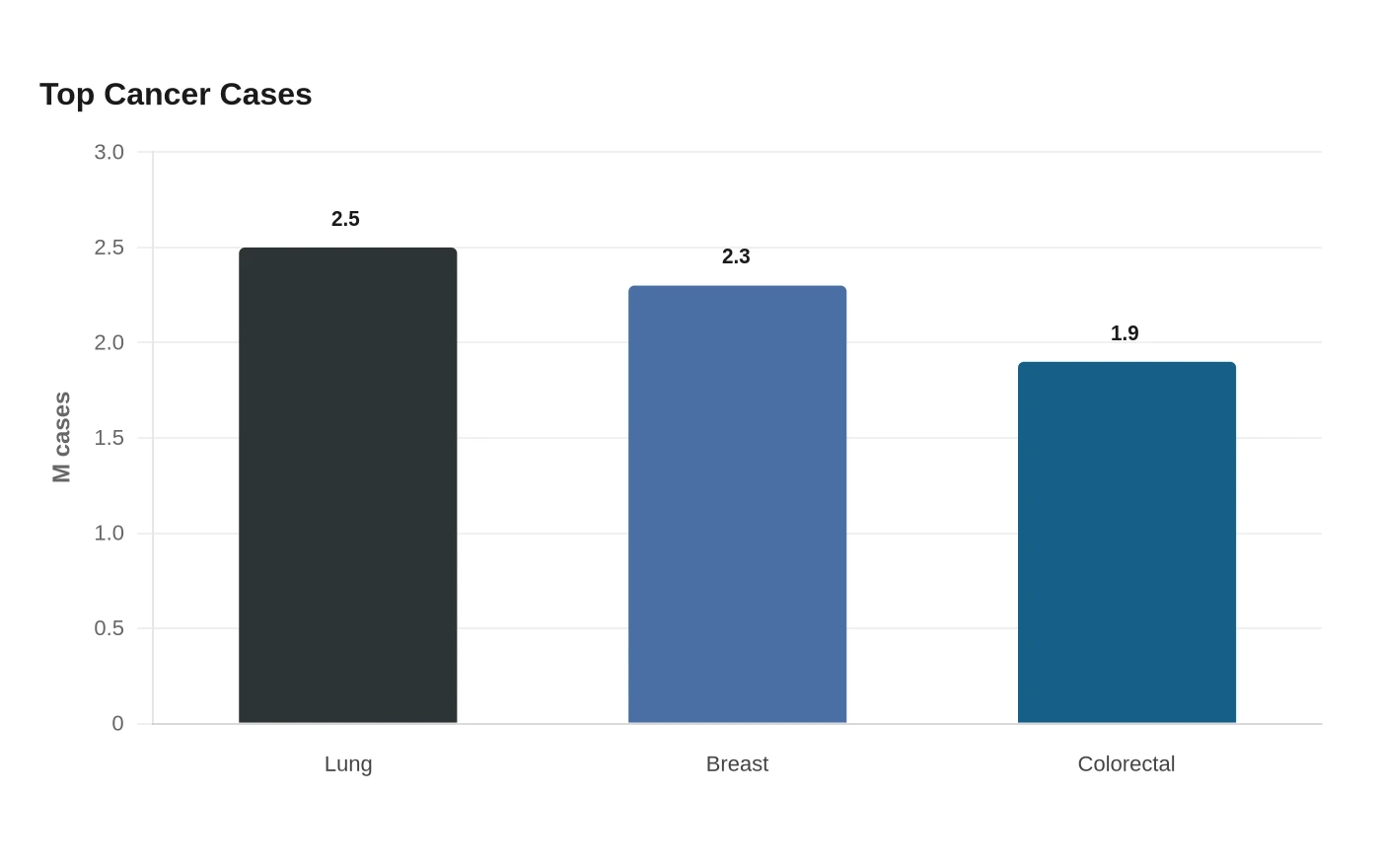
Lung cancer remained the most common cancer worldwide in 2022, with 2.5 million new cases, or 12.4% of the total. Female breast cancer ranked second at 2.3 million cases, followed by colorectal cancer at 1.9 million, and lung cancer was also the leading cause of cancer death, with 1.8 million deaths. The global estimates covered 185 countries and 36 cancers.
Sources
- [1]news.google.com
- [2]who.int
- [3]iarc.who.int