Business
Why a 3-year CD could pay savers more now

In June 2026, top advertised 3-year CD rates reached 4.28% APY, while the FDIC and FRED put the national 36-month CD rate cap at 1.33%. A 3-year certificate of deposit can still pay a meaningful premium over ordinary bank pricing while the Federal Reserve keeps its benchmark rate in a 3.5% to 3.75% range. The tradeoff is just as important as the yield: you are giving up access to cash in exchange for a fixed return.
Why the 3-year term is drawing attention
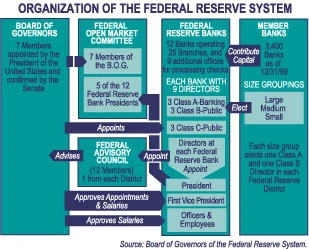
The Federal Open Market Committee kept the federal funds target range unchanged on June 17, 2026, at 3-1/2 to 3-3/4 percent. CD pricing tends to move with monetary policy, so a saver who locks in now is betting that today’s rate is good enough to keep for the full term. A 3-year CD locks that in: once the account is opened, the yield is fixed through maturity, which gives you certainty in a rate environment that could shift again.
On a $10,000 deposit, a 4.28% APY CD would grow to about $11,339.74 over three years, for roughly $1,339.74 in interest. At the 1.33% national 36-month rate cap, the same $10,000 would grow to about $10,404.33, or roughly $404.33 in interest, a difference of about $935.41.
Who a 3-year CD fits best
A 3-year CD makes the most sense for cash you know you will not need before maturity. That can include money sitting beyond an emergency fund, savings earmarked for a later goal, or a reserve you want to keep insulated from market swings and rate noise. The appeal is predictability, and the FDIC’s deposit insurance adds another layer of safety: deposits are automatically insured up to at least $250,000 per depositor, per ownership category, at each FDIC-insured bank.
No depositor has lost a penny of FDIC-insured funds since the agency was founded in 1933.
Who may be locking up cash too soon
A 3-year CD is a poor fit if the cash may need to move before the term ends. Early withdrawals on longer-term CDs can carry steeper penalties, and those penalties can eat part of the interest or, in some cases, cut into principal. That means the quoted APY is only useful if you can actually stay the course until maturity.
If you are building a home down payment, expect a job change, or want money ready for a large bill, locking into a 3-year term can be too rigid. The insurance protects your deposit from bank failure, but it does not protect you from the opportunity cost of missing a better use for the cash or the penalty for breaking the CD early.
How it stacks up against high-yield savings and Treasurys
A high-yield savings account still has the edge when flexibility matters most. It keeps cash accessible, so it works better for money you may need to move quickly, even if the rate can change over time. A 3-year CD, by contrast, swaps that flexibility for a fixed return, which is the right trade only when certainty matters more than access.
Treasurys offer a different kind of compromise. Treasury bills can run from four weeks to 52 weeks, and they can be held to maturity or sold before maturity; Treasury notes and bonds extend farther out, and all Treasury marketable securities are backed by the full faith and credit of the United States government. For savers who want government-backed income but a shorter horizon than three years, bills can be a cleaner fit than a CD; for longer horizons, notes and bonds can serve a similar role with different maturity choices.
Sources
- [1]cbsnews.com
- [2]federalreserve.gov
- [3]cnbc.com
- [4]fred.stlouisfed.org
- [5]fdic.gov
- [6]cdvalet.com