Science
Why Cosmic Voids May Harbor Unexpected Signs of Life
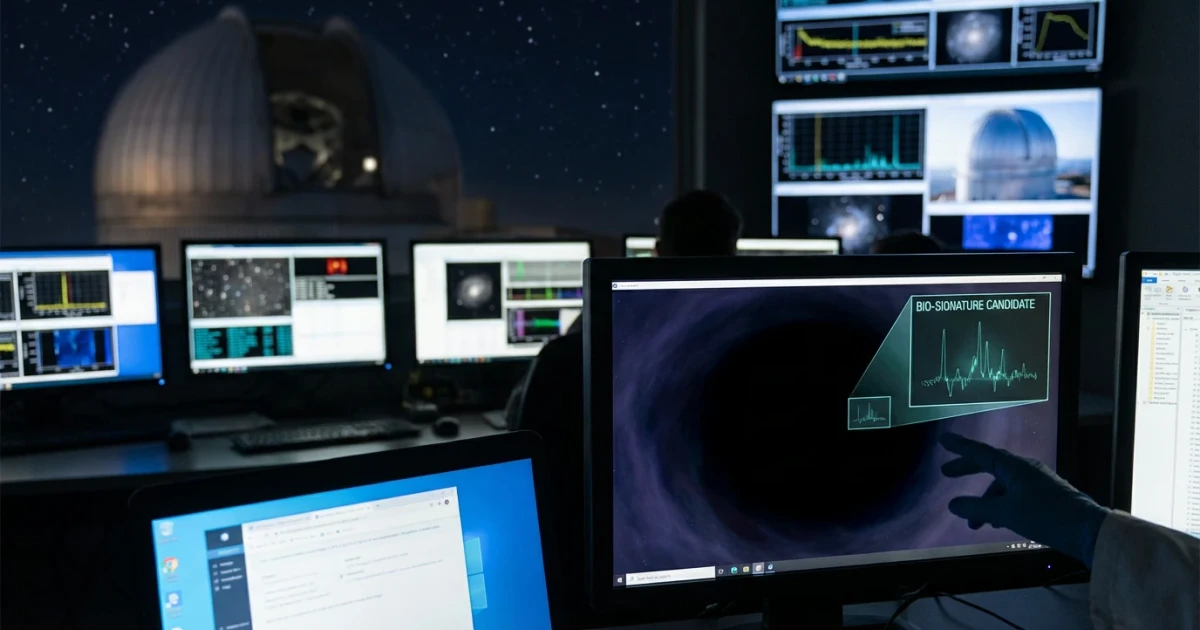
Cosmic voids—vast regions in the universe that contain far fewer galaxies than average—have long been considered barren, inhospitable expanses. However, new research is challenging this assumption, suggesting these "loneliest places" may actually offer unique opportunities for life to arise and persist.
Rethinking Life's Chances in the Universe's Emptiest Regions
Traditionally, astronomers have focused the search for life on environments rich with stars and planets, such as spiral galaxies or dense galaxy clusters. Cosmic voids, by contrast, make up about 80% of the universe's volume but contain only a tiny fraction of its mass, according to the NASA/IPAC Extragalactic Database. These vast regions are typically hundreds of millions of light-years across and sparsely populated by galaxies and stars.
- Voids account for the majority of the universe's volume, but only a minority of its galaxies.
- Typical galaxies in voids are more isolated, experiencing fewer gravitational interactions and mergers than those in denser regions.
Despite these challenges, recent studies—summarized in the preprint research paper on astrobiology in cosmic voids—argue that environmental stability and reduced cosmic hazards may actually make voids more favorable to life in certain respects.
Potential Advantages for Life in Cosmic Voids
One key hypothesis is that the relative isolation of galaxies in voids shields them from frequent galaxy collisions, supernovae, or intense radiation fields, all of which can threaten the development and sustainability of life. The Sloan Digital Sky Survey has mapped the large-scale structure of the universe, revealing how void galaxies tend to be less disturbed over billions of years.
- Fewer galaxy interactions can result in more stable planetary orbits.
- Lower rates of cosmic ray bombardment and supernovae reduce the risk of mass extinctions for hypothetical life forms.
This stability could allow biospheres to persist for longer timeframes, increasing the odds of complex life evolving undisturbed.
What the Data Shows: Galaxies and Planets in Voids
While voids are less densely populated, they are not entirely empty. Catalogs like the VizieR cosmic void dataset and the HEASARC Cosmic Voids Catalog have identified hundreds of voids and the galaxies within them. Observations from NASA's Hubble Space Telescope have even revealed massive voids that challenge theoretical predictions, as described in NASA's official feature on cosmic voids.
Some void galaxies host star formation and may possess planetary systems. The NASA Exoplanet Archive enables astronomers to search for exoplanets in a variety of galactic environments, though few have been found in confirmed void galaxies so far due to observational limits.
Challenges and Open Questions
Despite these intriguing possibilities, significant challenges remain. The scarcity of heavy elements in void galaxies could limit planet formation and the emergence of life, as most known life is based on elements like carbon, nitrogen, and oxygen. Additionally, the vast distances between galaxies in voids make interstellar communication or travel extremely unlikely.
However, as survey techniques and telescope sensitivity improve, researchers hope to better understand the true potential of these cosmic deserts. Further astrobiological modeling and observational campaigns may yet reveal whether life could indeed thrive in the universe's loneliest places.
Looking Ahead
As new data from telescopes and sky surveys become available, the question of life in cosmic voids is likely to gain further attention. By challenging assumptions about where life can flourish, scientists are opening new frontiers in the search for cosmic neighbors—and reconsidering what it truly means for a place to be "lonely" in the vast universe.