World
Why more British women are choosing not to have children
British women are making childbearing a harder yes to justify, and the reasons reach well beyond preference. Rising housing costs, expensive childcare, and climate anxiety now sit alongside shifting ideas about adulthood, while the fertility rate in England and Wales has fallen to its lowest recorded level for the third year in a row.
The numbers show a structural change, not a passing mood
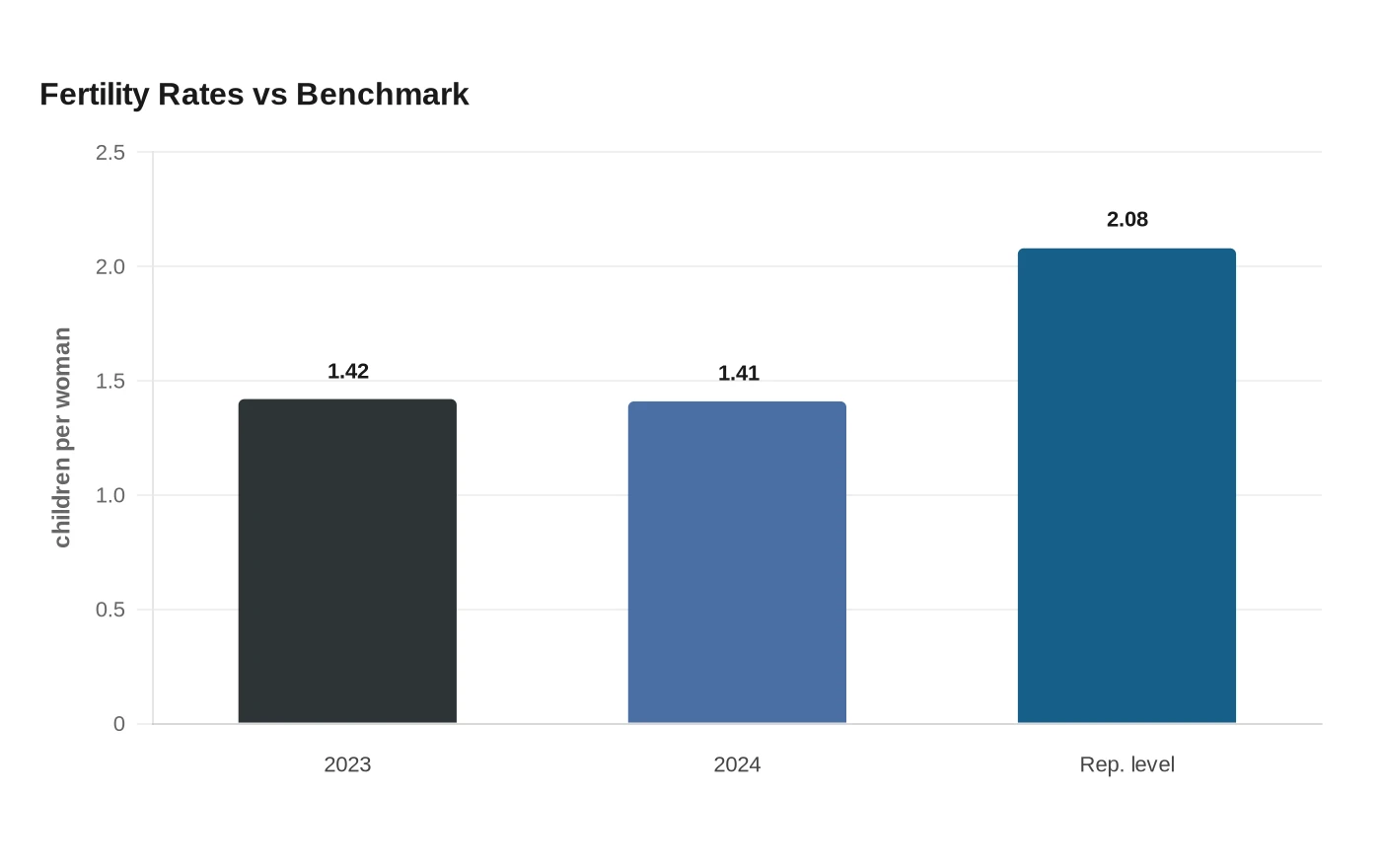
The Office for National Statistics says the total fertility rate in England and Wales fell to 1.41 children per woman in 2024, down from 1.42 in 2023. That decline continues a longer slide that began in 2010, and it leaves fertility well below the UK replacement level of about 2.08 children per woman.
That gap matters because it shows how far the country has moved from the level needed to keep population size steady over time without migration. It also explains why childbirth is increasingly being discussed not just as a personal milestone, but as a pressure point shaped by economics, housing and social expectations.
Cost now shapes the decision before parenthood even begins
Across survey evidence, the cost of raising children stands out as a decisive factor. One YouGov survey found that 39% of respondents said the expense of bringing up children was a reason for delaying or deciding against having them. That sits close to the practical calculations many women now make before they even reach the point of trying.
A separate YouGov finding sharpens the picture further: 28% of Britons aged 18 to 40 said they do not want children. That is not a marginal view among a small group at the edges of the debate. It suggests a substantial share of younger adults is opting out entirely rather than merely postponing the decision.

The cost issue is broader than a single bill or a single stage of life. It spans rent, mortgages, nursery fees, school-related expenses, and the reality that a child changes the household budget for years, not months. When those costs are measured against stagnant wages or uncertain job security, parenthood can look less like an assumed next step and more like a financial risk.
Housing and childcare have become gatekeepers to family life
The national fertility decline has not happened in isolation. Experts and local government bodies have linked lower birth rates to rising housing costs, childcare costs and the wider cost of living, which makes the decision to have children inseparable from whether a home is large enough, stable enough and affordable enough to raise them in.
London City Hall has put numbers on that shift in the capital. It says births in London peaked around 2012 and were 20% lower in 2023 than they were in 2012. Crucially, the city’s analysis says the decline has been driven by lower fertility rates rather than by fewer potential mothers, which points to a change in behaviour rather than just a change in the size of the female population.
That distinction matters for policy. If births are falling because women who could have children are choosing not to, then the issue is not only demographic. It is also about whether the conditions attached to parenthood have become too expensive, too uncertain or too demanding to meet comfortably.
Childlessness is increasingly tied to life planning, not just circumstance
The University of Southampton-led survey on childlessness and childcare, carried out in 2022 and 2023, gives a useful window into how these decisions are being formed. It collected fertility histories and partnership data from a representative sample of 7,000 people aged 18 to 59, helping show that childlessness is not explained by one simple factor or one life stage.
That kind of evidence matters because it tracks people across relationships, ages and household circumstances. It reinforces the idea that the choice to remain childfree is often made in the context of partnership stability, timing, finances and the broader shape of adult life, not in isolation from them.
The result is a more complicated picture than the old assumption that childlessness is mostly accidental or temporary. For many adults, the decision is becoming deliberate, informed by long planning horizons and by the sense that raising a child now requires a level of economic and emotional readiness that is harder to guarantee than it once was.
Environmental anxiety is becoming part of the family calculus
Another layer now enters the decision: concern about the future of the planet. A longitudinal UK study has examined whether green concerns such as climate change and biodiversity loss deter people from having children, which shows this is treated as a live research question rather than a niche sentiment.
For some would-be parents, climate anxiety adds a moral and emotional cost to the financial one. The question is no longer only whether a family can afford a child today, but whether it is responsible to bring a child into a world marked by environmental instability, extreme weather and long-term uncertainty.
That does not mean climate concern is the only driver of fertility change, or even the main one. It does mean the choice is increasingly weighed against collective risks that previous generations did not discuss in the same terms, and that changes how parenthood itself is imagined.
The definition of adulthood is shifting with the fertility rate
The decline in fertility tells a broader national story about adulthood and fulfillment. Where parenthood once operated as the default endpoint of adult life, more women are now treating it as one option among several, each with its own cost, risk and trade-offs. That change is visible in the 28% of younger Britons who say they do not want children, and in the larger share who delay or decide against them because the economics do not work.
In practice, this means women are evaluating not only whether they want a child, but whether they want the version of adulthood that childrearing now requires. Housing insecurity, childcare bills, and climate uncertainty have made that calculation more explicit, and the record-low fertility rate suggests those pressures are reshaping behaviour at scale.
The demographic signal is clear. England and Wales are now well below replacement fertility, and the slide has continued for more than a decade. Behind that line sits a quieter shift: for a growing number of British women, not having children is no longer a fallback or a failure of timing, but a reasoned response to the conditions attached to parenthood today.
Sources
- [1]bbc.co.uk
- [2]ons.gov.uk
- [3]yougov.com
- [4]independent.co.uk
- [5]london.gov.uk
- [6]southampton.ac.uk
- [7]sciencedirect.com