Science
Why NASA Is Building a Space Station Around the Moon
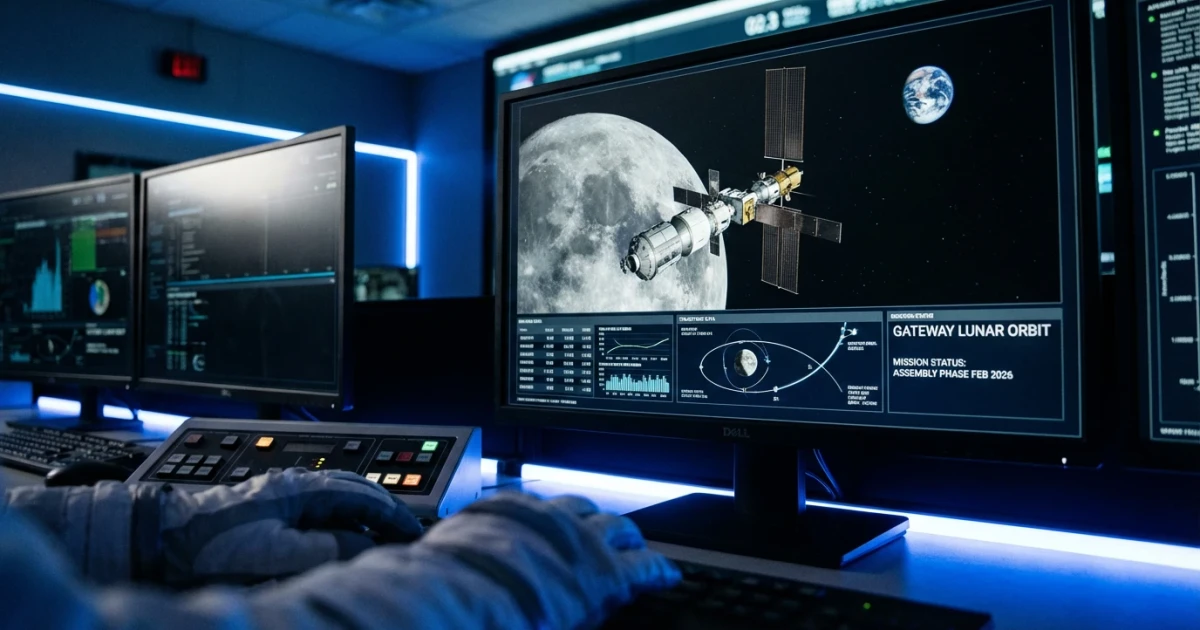
NASA and its international partners are moving forward with an ambitious plan to build a small space station in orbit around the Moon, known as the Artemis Gateway. The project, a cornerstone of the Artemis program, is designed to serve as a staging point for human missions to the lunar surface and, eventually, to Mars. But what is the real purpose of a space station around the Moon, and how will it change the future of space exploration?
Gateway: A Hub for Lunar and Deep Space Missions
The Artemis Gateway will function as a multi-purpose outpost in lunar orbit. Unlike the International Space Station, which orbits Earth, Gateway will circle the Moon in a highly elliptical "near-rectilinear halo orbit," providing frequent access to the lunar surface, especially the South Pole region—an area of intense scientific interest due to potential water ice reserves.
- Gateway will support long-duration missions by astronauts, allowing them to live and work in lunar orbit for up to three months at a time.
- The station will serve as a communications relay, enabling high-bandwidth links between Earth, the Gateway, and landers on the Moon's far side or at the poles.
- Gateway will also act as a refueling and resupply depot, making it easier to reuse lunar landers and prepare for future Mars missions.
International Collaboration and Technical Ambitions
Gateway is a joint project, with major contributions from the European Space Agency (ESA), Japan, Canada, and other partners. The station's design is modular, allowing each partner to provide key elements:
- NASA is building the Power and Propulsion Element and the Habitation and Logistics Outpost.
- ESA is developing the International Habitation Module, which will provide living quarters for astronauts and scientific research facilities.
- Canada is supplying the advanced Canadarm3 robotic system.
- Japan will contribute life support and resupply capabilities.
Scientific Opportunities and Research Priorities
According to recent research, Gateway will enable a wide range of scientific investigations that are not possible from Earth or the current ISS. These include:
- Studying the effects of deep space radiation and microgravity on the human body for extended periods, informing future Mars missions.
- Performing astronomy observations free from Earth's interference.
- Testing new technologies in a true deep space environment, such as autonomous systems, advanced life support, and propulsion.
- Supporting lunar surface missions by coordinating landing, sample return, and science operations remotely.
The list of planned experiments for Gateway includes studies on heliophysics, planetary science, human health, and technology demonstration—offering a platform for international research collaboration.
Logistical Challenges and Future Prospects
Building and operating a space station so far from Earth presents significant challenges, from crew safety to resupply logistics. Gateway will rely on a combination of robotic and crewed missions, with visiting spacecraft like NASA's Orion capsule delivering astronauts and supplies during each Artemis mission cycle. The station's small size—roughly one-sixth the volume of the ISS—means careful planning is required to maximize its utility.
Looking Ahead
The Artemis Gateway is scheduled for construction later this decade, with the first modules launching as soon as the mid-2020s. As a stepping stone to the lunar surface and beyond, Gateway is poised to become an essential part of the human spaceflight infrastructure, advancing science, exploration, and international cooperation in deep space.