US News
Why office temperatures feel colder for women, and others too

Many office buildings settle into the low 70s in summer, but that number is only part of the story. A thermostat reading that looks reasonable on paper can still feel too cold at one desk and just right at another, especially when cooling is uneven, the air is moving, or the nearest vent is doing all the work.
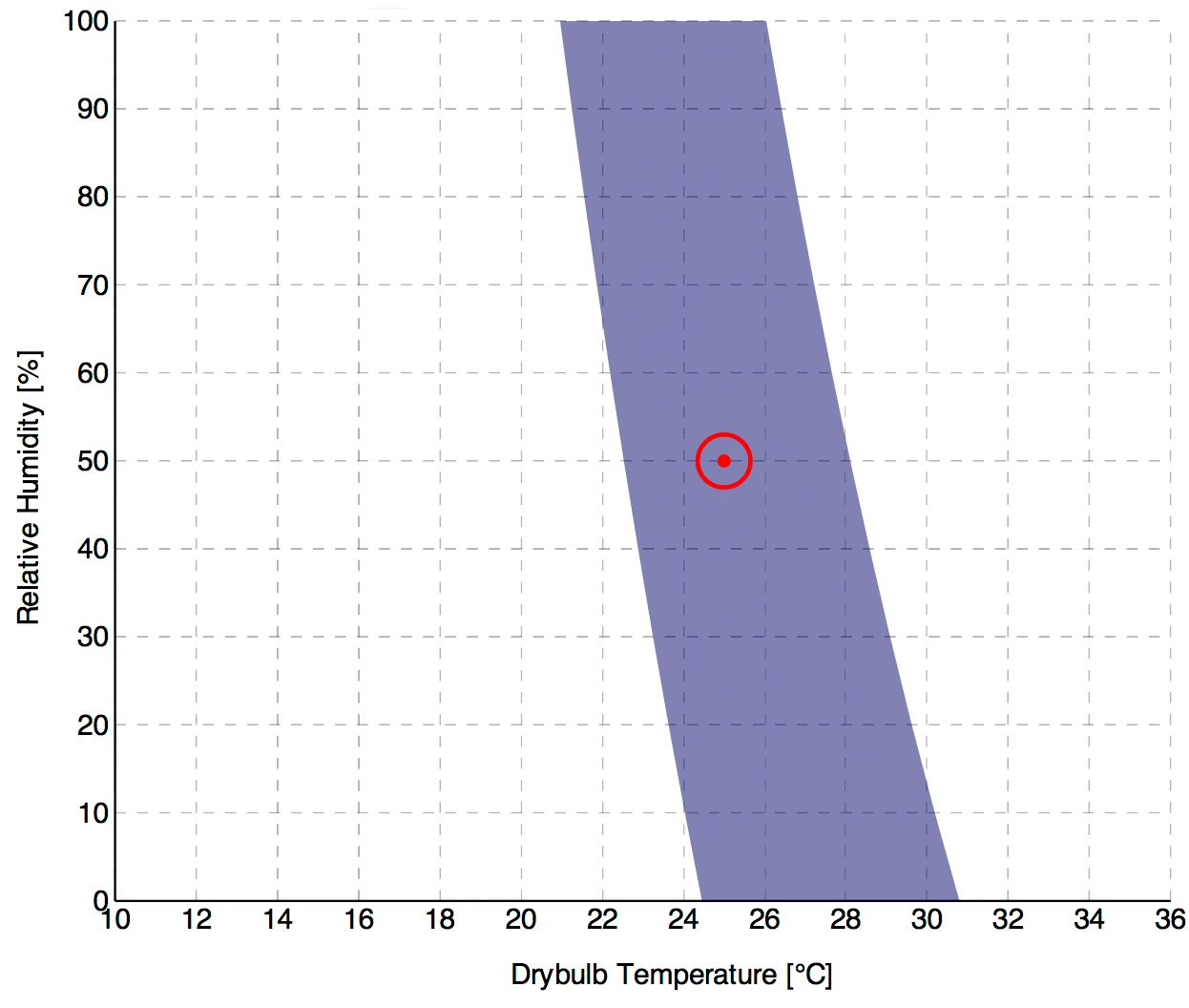
OSHA does not require employers to provide air conditioning, but it does recommend workplace temperature control in the range of 68 to 76 degrees Fahrenheit. That guidance sits alongside ASHRAE Standard 55, the central thermal-comfort benchmark for occupied indoor spaces, which is meant for design, operation, and commissioning in buildings and other occupied places. The standard applies to healthy adults in indoor spaces designed for human occupancy for at least 15 minutes, and it treats comfort as a mix of temperature, thermal radiation, humidity, air speed, personal clothing, and activity level.
Why one thermostat does not equal one experience
A single number on a wall does not tell you how a room actually feels. OSHA says comfort depends on more than air temperature alone, including humidity, air movement, building configuration, and the design, operation, and maintenance of the HVAC system. In practice, that means the same office can produce very different experiences depending on where someone sits, how the system is balanced, and whether a zone is over-served or under-served.
That matters because office cooling is often built around an average that does not describe everyone in the room. Research and commentary have long argued that thermal-comfort models were historically built around the body and clothing assumptions of an average man, which helps explain why some workers feel chilled in spaces that others describe as normal. The problem is not just personal preference; it is built into how many indoor environments were planned and tuned.
Why women report colder offices more often
The gender gap is not anecdotal. A 2021 study using occupant surveys and Twitter data found that office temperatures were 1.8 times more likely to be dissatisfactory for women than men. The same body of work found that complaints about cold offices were more common in summer, when cooling systems are doing the most work and indoor setpoints can drift toward levels that feel aggressive to many occupants.
That evidence matters because comfort shapes daily work. A workplace that leaves some employees distracted by cold air or uneven temperatures is not simply managing a personal inconvenience; it is shaping perceived fairness, daily morale, and sometimes productivity. The dispute becomes more visible when employees notice that the same setpoint leaves one person reaching for a sweater while another is still comfortable.
The hidden engineering behind a cold desk
The air around you is not just a function of the thermostat. A desk placed directly beneath a diffuser, near a return, or in a zone with poor circulation can feel colder than the room average, even when the office as a whole is within the recommended range. OSHA’s emphasis on humidity, air movement, and HVAC maintenance reflects that reality: buildings can be technically “set” to the right temperature while still distributing comfort unevenly.
The history of ventilation standards also shows how old assumptions still shape modern offices. OSHA’s technical manual says ASHRAE established recommended ventilation rates in 1973, then amended the standard in 1975 to specify a minimum of 5 cubic feet per minute of outdoor air per person for building design. That legacy matters because today’s offices are still governed by design choices made decades ago, when air delivery, occupancy patterns, and expectations about comfort were more uniform than they are now.
What workers can realistically do when management controls the thermostat
When you cannot change the setpoint yourself, the strongest argument is specific. Note where the cold is worst, whether it happens at certain times of day, and whether it tracks a vent, a perimeter wall, or a poorly served zone. That information gives building management something actionable: rebalance the system, inspect airflow, or adjust a zone instead of treating the complaint as a vague preference.
It also helps to frame the issue in the language facilities teams use. OSHA’s 68 to 76 degree recommendation, ASHRAE Standard 55, and the standard’s six comfort factors give employees a concrete basis for a request. The point is not to demand one perfect temperature for everyone, but to ask for a distribution that does not systematically chill the same people over and over.
Practical steps are often limited to the tools already available in the building: • Ask whether the desk is under a supply vent or in an under-served zone. • Request a check of airflow, not just the thermostat reading. • Point to persistent summer complaints, especially if the same people are affected. • Use clothing and personal adjustments as a short-term buffer, but press for system fixes when the pattern is recurring.
Comfort, equity, and energy are tied together
The case for warmer, better-balanced summer settings is not just about comfort. Researchers at the University of California, Berkeley Center for the Built Environment have said overcooling is a widespread problem in warm-weather offices across the United States, and they have argued that raising summer thermostats to align with thermal-comfort guidelines could reduce gender bias in setpoint temperatures. That is an unusual but important intersection of equity and building operations: a small adjustment can change who feels comfortable without undermining the basic needs of the room.
Energy use is part of the same calculation. Thermostat choices affect building efficiency and operating costs, so office cooling is never only about personal preference. Managers are deciding how to balance worker comfort, temperature extremes, and energy demand, and OSHA makes clear that employers remain responsible for protecting workers from those extremes. In that sense, the cold office is not a trivial workplace quirk. It is a management decision with consequences for fairness, operations, and who gets to feel at ease at their own desk.
Sources
- [1]nytimes.com
- [2]osha.gov
- [3]ashrae.org
- [4]nature.com
- [5]vcresearch.berkeley.edu