Health
Why people turned hostile toward health workers in the 1918 flu pandemic
In Sheffield, the 1918 flu left behind more than death tolls. The city’s archives preserve a Peps Pills advertisement from the 31 October 1918 issue of the Sheffield Independent alongside ambulance and cemetery images, a reminder that the pandemic was a civic crisis as much as a medical one. That same crisis generated suspicion, strain and, in some places, hostility toward the people trying to care for the sick.
The scale of the shock
The 1918 influenza pandemic killed an estimated 50 million people worldwide and attacked one fifth of the world’s population, according to the U.S. National Archives. With that level of sickness, every hospital ward, home and street became part of the emergency.
Sheffield Libraries Archives and Information treated the pandemic as a major local historical subject when it compiled a research guide in 2009. Local newspapers and contemporaneous images in the guide show how quickly influenza became visible in daily life. When a city’s paper is carrying pill advertisements on one page and reports of ambulances and cemeteries on the next, fear is no longer abstract.
Why fear often turns against health workers
Hostility toward health workers during epidemics grows from a mix of fear, overload and uncertainty. In Mark Honigsbaum’s work on the 1918-19 pandemic, the Northcliffe press and the British medical profession prioritized avoiding panic among civilians even as dread increasingly became attached to influenza.
When authorities and the press focus on stoicism, they may limit open discussion of risk, staffing failures and hospital conditions. In a crisis where the public sees ambulances, funerals and sick neighbors, a message of calm can look like denial. That disconnect does not eliminate fear; it can redirect it toward nurses, doctors and ambulance crews who are seen as the most visible face of an invisible threat.
Some hospitals were paralyzed by a lack of healthcare workers because hospital-acquired infections took staff out of circulation. When caregivers become patients, frustration rises fast, and the people still on duty are left to absorb anger about overcrowded wards, unanswered questions and the inability of medicine to keep pace.
Nurses carried much of the burden, and too often without recognition
Research from the University of Huddersfield on the Spanish influenza pandemic of 1918-1920 documents the unspoken contributions of professional nurses. Nurses were central to care, yet their labor was frequently under-acknowledged even as they faced exposure, exhaustion and impossible workloads.
The historical record shows that the pandemic depended on nursing skill far more than many contemporaries admitted. In practical terms, that meant long shifts, intimate contact with the sick and a higher personal risk of infection. In social terms, frontline workers were asked to carry the burden of the epidemic while remaining almost invisible unless something went wrong.
The pattern did not end in 1918
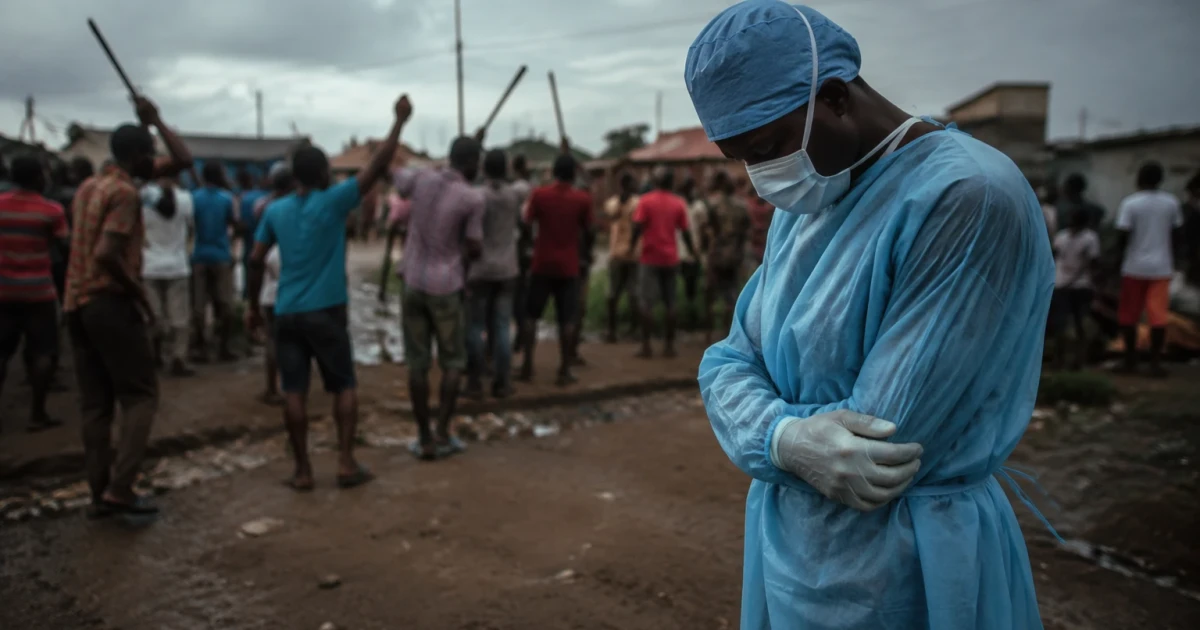
Modern outbreaks have repeated the same dynamic with brutal consistency. During the COVID-19 pandemic, in the first three years at least 255 healthcare workers around the world were attacked, 18 were killed, 147 were injured and 86 facilities were damaged.
Ebola has produced the same reaction in a different form. During the 10th Ebola response in the Democratic Republic of the Congo, attacks on health care occurred. By April 2019, there had already been two separate attacks within a short span. Armed violence in an outbreak zone is an extreme expression of the same instinct that drives threats, harassment and blame: the belief that the people carrying out a response are somehow responsible for the crisis.
The World Health Organization has made both prevention and response part of its health-security agenda, with separate efforts focused on stopping attacks on health care and preventing violence against health workers.
What institutions can do before anger hardens
The 1918 record suggests that backlash is easier to prevent than to reverse. Institutions that want to protect frontline workers need to act before rumor, exhaustion and visible collapse create a target.
• Communicate plainly and early. Honigsbaum’s work shows how efforts to avoid panic can leave dread to spread on its own. Public officials need honest updates about hospital strain, staffing gaps and local risk, rather than reassurance that looks disconnected from lived reality.
• Protect staff from becoming patients. The 1918 pandemic paralyzed hospitals when healthcare workers were lost to hospital-acquired infections. Infection control, adequate protective equipment and strict workplace safety are not internal matters only; they are public stability measures.
• Make frontline work visible and valued. The University of Huddersfield research on nurses during 1918-1920 shows how much the response depended on workers whose labor was easy to overlook. Public recognition, fair staffing and support for nursing leadership help reduce the sense that care work is disposable.
• Secure facilities and transport routes early. In the first three years of COVID-19, at least 255 healthcare workers were attacked, 18 were killed, 147 were injured and 86 facilities were damaged. Hospitals, clinics, ambulances and vaccination sites need physical security plans before tensions rise.
• Treat hostility as a warning sign. A city reading the pandemic through ambulance scenes, cemetery images and newspaper ads is already living with public fear. Once that fear is translated into blame, the response becomes harder to manage and the health system becomes less safe for everyone.
Sources
- [1]nytimes.com
- [2]sheffield.gov.uk
- [3]archives.gov
- [4]pmc.ncbi.nlm.nih.gov
- [5]eprints.hud.ac.uk
- [6]researchgate.net
- [7]redcross.org.uk
- [8]archives.nyc