Entertainment
Why Protest Concerts Are Fading from the American Spotlight
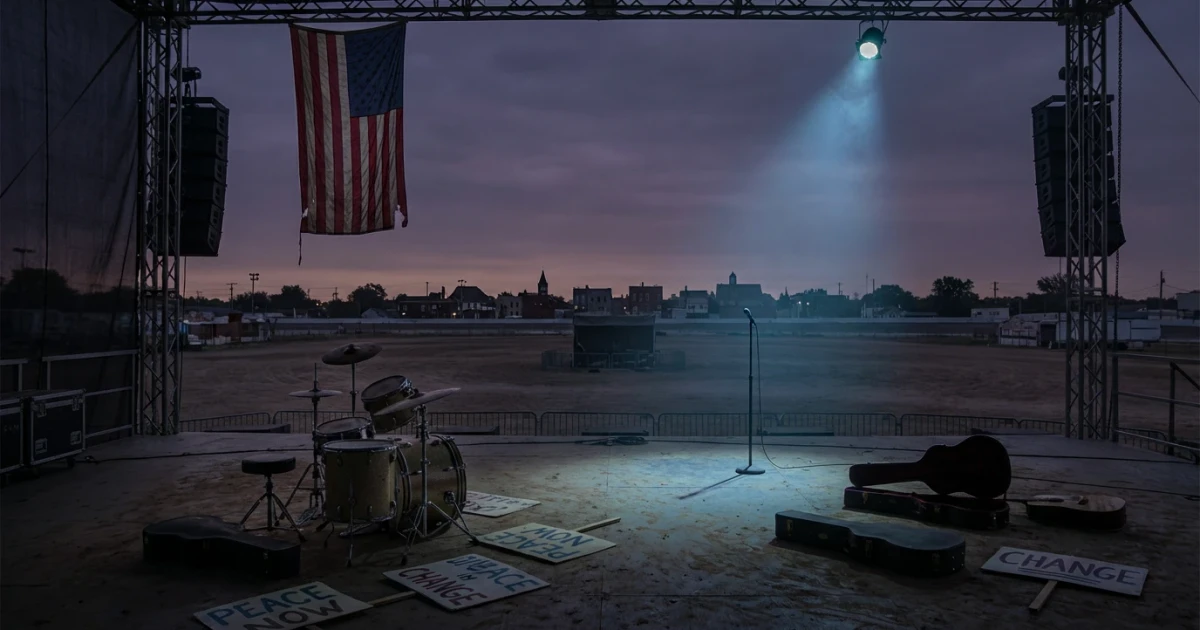
Protest concerts were once a defining feature of the American cultural landscape, rallying thousands for social justice causes and serving as powerful platforms for dissent. In recent years, however, these large-scale gatherings have receded from the national stage, prompting observers and music historians to ask: What happened to the great American protest concert?
The Rise of the Protest Concert
From the Vietnam War era to the Civil Rights Movement, protest music and concerts played a central role in galvanizing public opinion. Legendary events like the 1969 Woodstock festival and the 1985 Live Aid concert drew massive crowds, blending music with calls for change. According to Smithsonian Magazine’s history of protest music, such gatherings were more than entertainment—they were moments of solidarity and political expression.
These events often featured folk, rock, and soul artists whose lyrics challenged the status quo. Recordings and broadcasts of protest concerts, as archived by the American Archive of Public Broadcasting, show how music was intertwined with activism and collective action.
Changing Landscape of Music and Activism
Despite a renewed wave of social activism in the 2020s, including the Black Lives Matter demonstrations, large-scale protest concerts have become rare. The Atlantic’s recent analysis points to several factors behind this shift:
- Fragmentation of the music industry: With the rise of streaming platforms, audiences are spread across countless genres, making it harder to unite listeners around a single event or message.
- Decline in traditional concert culture: The COVID-19 pandemic accelerated the move toward virtual events, reducing the frequency of mass in-person gatherings.
- Shifting modes of protest: Many artists now express dissent through social media, viral singles, or targeted benefit shows rather than massive festivals.
The Library of Congress’s folk song collection notes that protest music itself hasn’t disappeared. Instead, it has evolved, with new artists incorporating political themes into their work, but often without the communal concert experience of earlier decades.
Protest Music’s Commercial and Cultural Impact
While protest anthems like "Alright" by Kendrick Lamar or "This Is America" by Childish Gambino have achieved commercial success, rarely do these songs anchor major live events. The Billboard Hot 100 shows that political music can still reach mainstream audiences, but it often does so in isolation—through individual releases rather than collective concerts.
Research from the National Endowment for the Arts highlights a generational divide: younger listeners are more likely to encounter protest music online than at communal gatherings. This shift has implications for political engagement and the ways music shapes social movements.
What’s Lost—and What’s Next?
The Atlantic suggests that while the spirit of protest remains alive in American music, the era of the mass protest concert may be behind us. The unique atmosphere of these events—where music, activism, and community converged—has yet to be replicated in the digital age.
However, the tools for organizing and spreading political messages are more accessible than ever. As technology continues to reshape cultural participation, it remains to be seen whether new forms of protest concerts will emerge, blending the immediacy of in-person gatherings with the reach of digital media.
For those seeking to revisit or understand the legacy of protest concerts, resources like the American Archive of Public Broadcasting and the Library of Congress’s folk song collection offer a window into the moments when music moved a nation.