Science
Why Rockets Follow Curved Paths During Launch
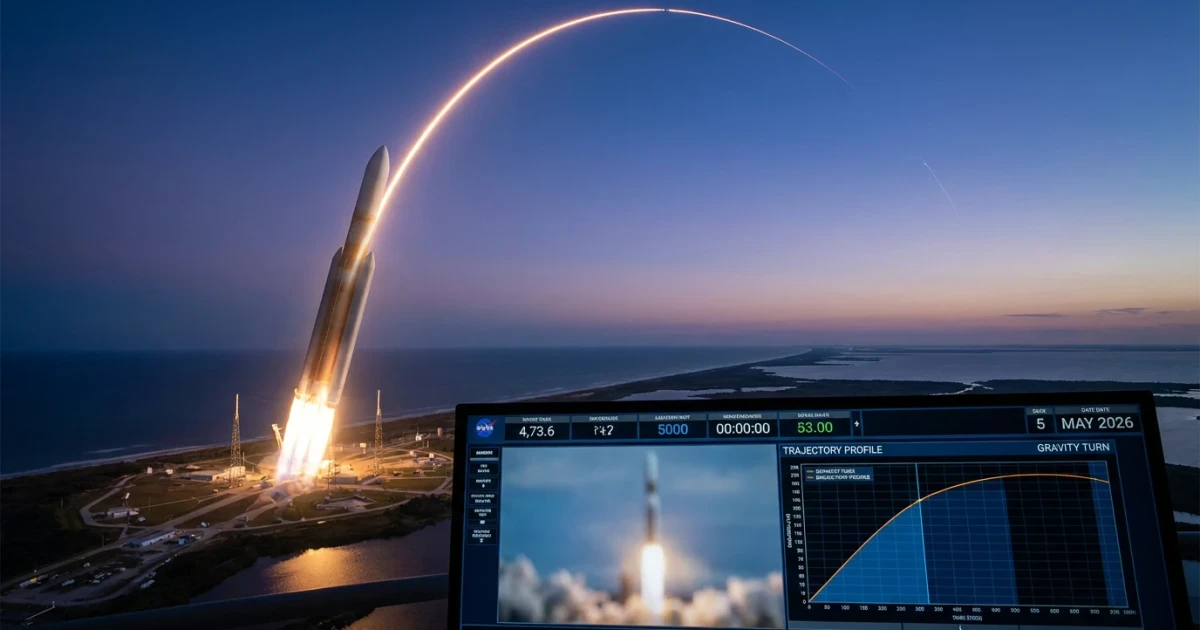
When rockets launch toward space, they rarely shoot straight up. Instead, their flight paths curve dramatically within seconds of liftoff, capturing public fascination and prompting questions about the science behind this trajectory. Drawing from explanations provided by bgr.com and official space agency resources, this article unpacks why rockets follow curved paths rather than vertical ascents—and what those curves mean for engineering, physics, and mission success.
The Physics Behind Rocket Trajectories
The curved path, known in aerospace engineering as the gravity turn, is essential for maximizing efficiency. Rockets begin their journey pointing straight up to escape the thickest part of Earth's atmosphere. However, as they accelerate, they tilt and follow a curved trajectory to:
- Reduce aerodynamic stress: Traveling upright initially helps minimize exposure to high-speed air resistance, but tilting reduces drag as the rocket climbs.
- Optimize fuel usage: By curving, rockets use less energy to overcome gravity, as explained in NASA's launch vehicle trajectory design research. The gravity turn allows most of the rocket’s thrust to accelerate it horizontally, which is necessary for orbital velocity.
- Achieve orbital insertion: To stay in orbit, a spacecraft must travel sideways at about 28,000 km/h around Earth, not just upwards. The curved path transitions the rocket from vertical ascent to horizontal speed.
Engineering and Safety Considerations
Curved trajectories are carefully planned using mathematical models and mission simulations. According to the European Space Agency, the trajectory minimizes structural stress and avoids dangerous zones, such as populated areas or aircraft corridors. This path also ensures the rocket's stages and boosters fall into designated safe regions.
During launch, mission control monitors the rocket's attitude (orientation) and velocity, constantly adjusting its path to account for wind, weather, and real-time conditions. The official NASA Space Launch System reference guide illustrates how modern launch vehicles employ complex guidance systems to follow these trajectories precisely.
Mission Planning: Beyond the Straight Line
Different missions require unique trajectory designs. For example, launches to the International Space Station use a specific profile to match the station's orbit, as detailed in NASA's launch profiles. Similarly, commercial launches like those by SpaceX document their azimuths and curves in their launches data to optimize for payload weight, destination, and safety.
- Curved paths allow rockets to use Earth's rotation for a boost, saving fuel.
- Flight computers calculate the optimal angle for each mission, adjusting the course for weather, payload, and destination.
- Curved launches are standard for both crewed and cargo missions, regardless of destination.
Public Perception and Common Misconceptions
Many observers expect rockets to travel straight up, assuming this is the fastest path to space. However, as sources like bgr.com emphasize, the curved trajectory is a deliberate design for efficiency and safety—not just a spectacle. The spectacular arc seen on launch videos is the result of precise engineering and decades of physics research.
Conclusion: The Science of Curves
Rockets curve after launch to conserve fuel, minimize stress, and achieve the necessary horizontal speed for orbit. This trajectory is calculated for every mission, balancing physics, engineering, and safety. As launch technology advances, trajectory planning continues to evolve, making each launch a testament to human ingenuity and scientific understanding. Readers interested in deeper technical details can explore NASA's educational rocket explainer and ESA's rocket path explainer for further insights.