US News
Why sibling relationships shape children’s well-being and growth
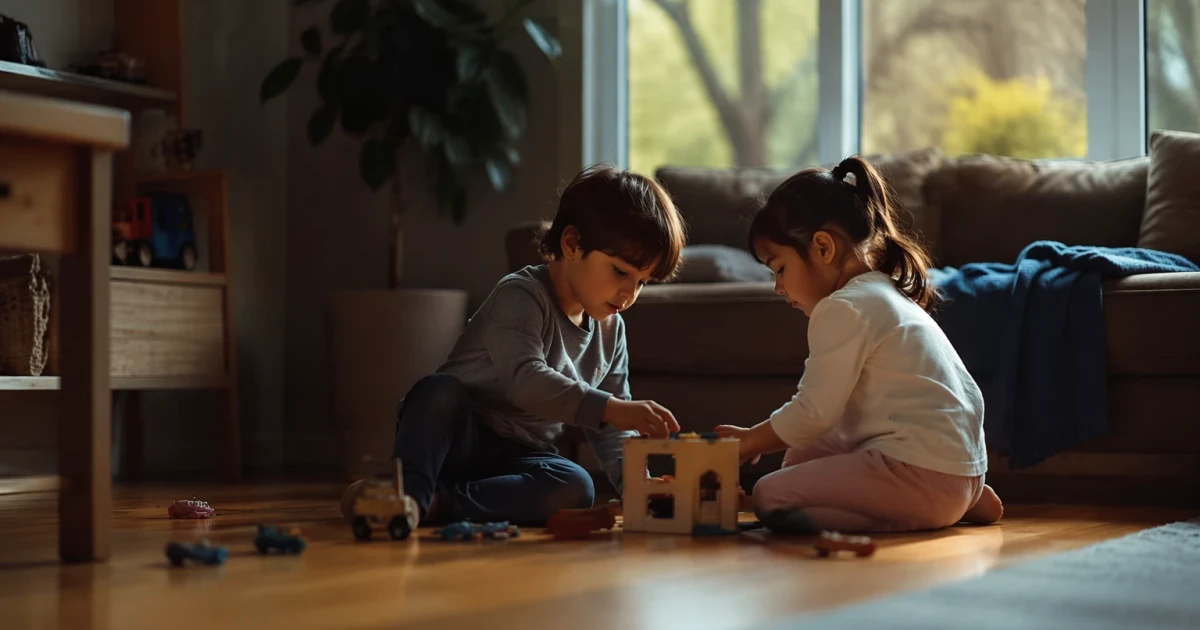
In the United States, eight in 10 children are growing up with a sibling, and children spend more out-of-school time with siblings than with anyone else, including parents and friends. Siblings are one of the most powerful forces in a child’s daily life, yet they are often treated as background noise in parenting conversations. The sibling bond becomes a long-running training ground for how children handle closeness, disagreement, and care.
Why siblings matter so much
The practical influence of siblings starts with time. Because children are together for so many hours outside school, siblings become the people who see the unguarded version of each other: the frustration after a bad day, the urge to control a game, the impulse to comfort or to compete. That daily proximity is part of why sibling relationships can shape well-being over a lifetime, not just in childhood.
Psychologists Laurie Kramer and Megan Gilligan describe sibling relationships as something that continues from childhood into adulthood. Siblings can remain emotionally relevant long after parents have stepped back from the center of daily life. When those relationships are warm and supportive, they can become a stable source of belonging across many stages of life.
What siblings provide that parents often cannot
Parents can offer protection, guidance, and structure, but they cannot fully duplicate the role of another child in the home. Siblings create a setting where children practice negotiation in real time, argue over unfair turns, and then learn how to come back together. Growing up with siblings helps children develop negotiation and problem-solving skills, and siblings also help children learn to understand the feelings of others.
A child who has to work out who gets the last snack, how to divide a shared space, or how to recover after a fight is rehearsing the same social skills needed in classrooms, friendships, and later workplaces. Siblings also supply companionship in a way adults rarely can, because they often share the same routines, spaces, and family history.
Emotional buffering and informal caregiving
Sibling relationships can also provide a kind of emotional buffering. When a child is upset, a sibling may be the first person nearby who can listen, distract, or simply sit in the same room. That support does not replace a parent’s role, but it can fill gaps when adults are busy, stressed, or unavailable.
Strong, positive, and supportive sibling relationships can support well-being throughout life, and parenting approaches matter. In practice, that means the family climate around siblings can either strengthen a child’s social development or leave harmful patterns unchecked.
When sibling ties help, and when they hurt
Sibling relationships are not automatically beneficial. They can be a source of resilience, but they can also become a source of stress if rivalry is constant or if one child repeatedly dominates the other.
Smaller age gaps among siblings are associated with more conflict, but also a closer relationship. That pattern makes sense in daily life. Children close in age are more likely to want the same toys, the same attention, and the same space, which can increase friction. At the same time, they may share interests and developmental stages, which can intensify familiarity and emotional closeness.
Conflict itself is not the problem. The concern is when fighting becomes the only script, or when one child is consistently cast as the aggressor and the other as the target. In those homes, the lesson children absorb is not how to repair after conflict, but how to expect injury or inequality.
How parents can protect the good and reduce the harm
The parenting role is less about eliminating sibling conflict and more about shaping what children learn from it. Parents help most when they treat sibling relationships as meaningful social environments, not minor squabbles to ignore. That means noticing patterns, not just incidents.
• Make room for children to solve low-stakes disagreements on their own, so they can practice negotiation and problem-solving.
• Step in when conflict turns repetitive, physical, or clearly one-sided, especially if age gaps or power differences make fairness harder to manage.
• Avoid favoritism, because children quickly read unequal attention as a family rule, even when parents intend no harm.
• Create chances for siblings to cooperate, since shared tasks can turn competition into teamwork.
• Watch for parentification, when an older child is expected to function like a second parent rather than a sibling, because that can burden a child who should still be allowed to be one.
Children do not just learn from what parents say. They learn from how family power is distributed, how disputes are handled, and whether care is mutual or extracted from one child to another.
Sources
- [1]nytimes.com
- [2]apa.org
- [3]theconversation.com
- [4]zerotothree.org
- [5]psychologytoday.com