Lifestyle
Why Some Americans Still Keep Their Landline Phones
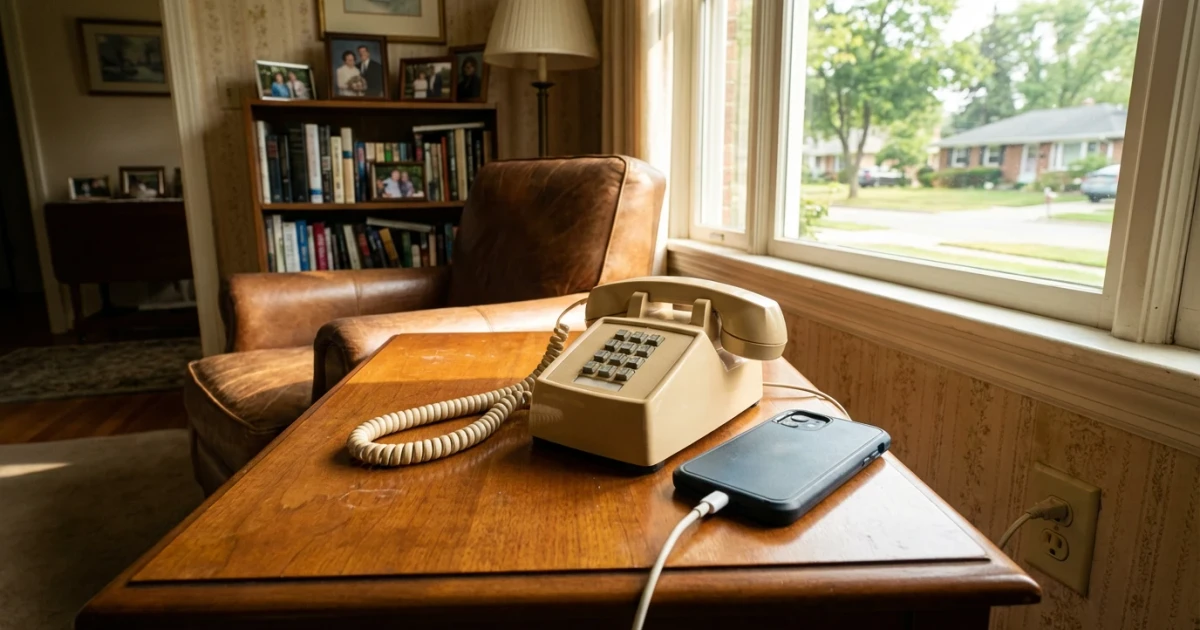
As smartphones and wireless technology dominate the ways Americans communicate, landline telephones have become something of a relic in many households. But for some, especially older adults, keeping a landline is less about nostalgia and more about practicality, tradition, and personal conviction—even in the face of changing cultural norms.
Landlines in Decline, but Not Extinct
The number of landline telephone subscriptions in the United States has dropped precipitously since the turn of the century. According to Statista, subscriptions have fallen from over 186 million in 2000 to fewer than 60 million by the early 2020s, reflecting a nationwide shift toward mobile phones and internet-based communication.
- In 2003, nearly 95% of U.S. households had a landline.
- By 2022, the National Health Interview Survey reported that fewer than 30% of households still maintained a landline.
Yet, as a recent essay from VegOut describes, some individuals remain unapologetic about their choice to keep a landline phone well into their sixties and beyond. The author, 62, shares that she has stopped apologizing for her decision, noting the surprise or bemusement on people's faces when they learn she is not embarrassed by it.
Convenience Culture and Changing Attitudes
The rise of mobile phones is not just about better technology, but about the broader influence of what the VegOut author calls "convenience culture." This idea suggests that society's embrace of the fastest, newest, and most portable communication tools has led many to view older technologies as obsolete or even cumbersome.
Analysis from NPR points out that some people keep their landlines for reasons of reliability, especially during emergencies or power outages when cell service may be disrupted. Others value the simplicity of a dedicated phone line, free from the distractions of apps and notifications that come with smartphones. In some cases, landlines offer clearer call quality, or they serve as a vital connection for those with hearing or mobility challenges.
Security, Privacy, and Community Connection
For older adults, landlines can provide a sense of security. The FCC's Trends in Telephone Service report notes that landlines are often more reliable for 911 calls, as they are tied to a fixed address. This can be crucial for seniors living alone or for households in rural areas with spotty cell reception.
Privacy is another consideration. Some users prefer landlines because they are less susceptible to certain types of digital tracking or spam calls, compared to mobile numbers. The Pew Research Center's report on Americans and digital knowledge highlights that while most Americans are comfortable with new technologies, a significant portion remain wary of privacy risks and the pace of change.
Stigma and the Choice to Keep a Landline
The experience described in VegOut reflects a subtle social stigma around older technology. The essayist notes that people's reactions—sometimes surprise, sometimes amusement—reveal how deeply convenience culture has shaped expectations. Yet, for those who keep landlines, the decision is often about maintaining a sense of autonomy and continuity. As the VegOut author points out, the choice not to be embarrassed by a landline can be empowering.
Looking Ahead: The Future of the Landline
While the overall trend points toward eventual extinction for traditional landline phones, their complete disappearance is not yet inevitable. Data from the U.S. Census Bureau and the International Telecommunication Union shows that millions globally still rely on fixed-line services, often for reasons of necessity rather than preference.
In the end, the persistence of landlines among older adults is a reminder that technological adoption is not always linear or universal. Personal values, life experience, and practical needs continue to shape communication choices in a rapidly changing world. As convenience culture drives many to discard the old in favor of the new, those who keep their landlines offer a quiet counterpoint: Sometimes, the best connection is the one that works for you.