US News
Why some parents are giving kids landlines for childhood development
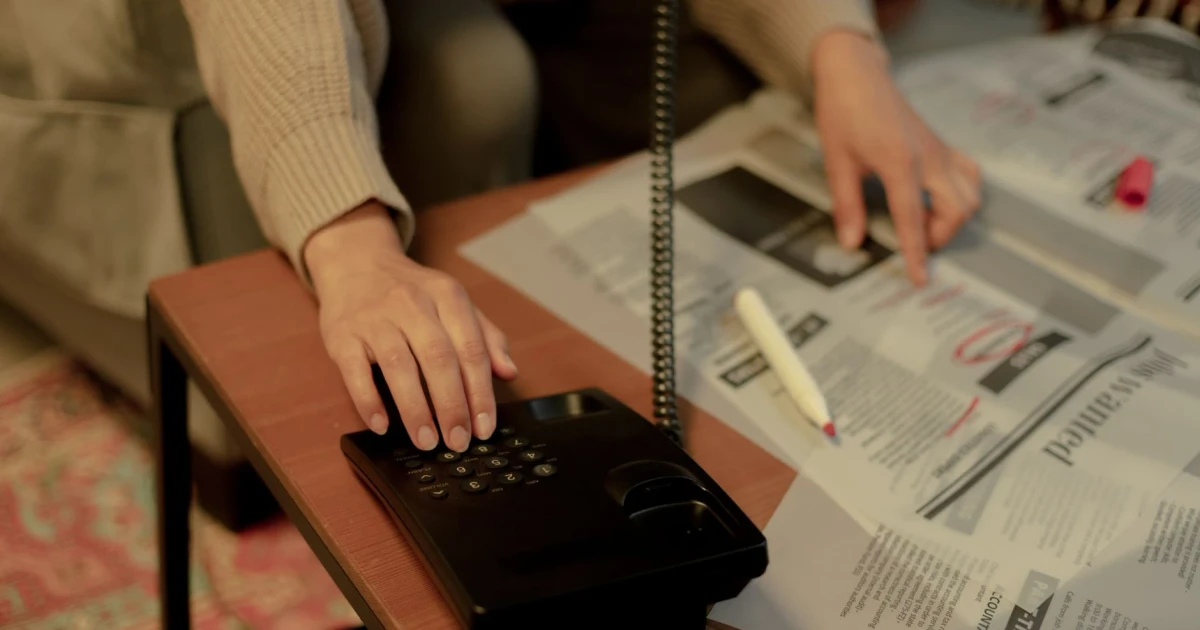
Parents who are putting landlines back into the house are not chasing nostalgia so much as they are chasing a quieter kind of practice. They want their children to make plans, answer a ring, listen, take turns, and speak without the pull of notifications, apps, and social feeds. The strongest evidence does not say a landline is magic. It does suggest that more back-and-forth conversation, and less screen interruption, can support language, attention, and social connection.
Why families are dusting off dial tone
In one Maine community, a parent who was worried about smartphones started nudging neighbors to join her on landlines, and about two dozen families eventually did. She said the goal was to give kids a dependable way to connect without handing them a smartphone, and she reported that her daughters became better at conversations once they were using a home phone instead of her cell. A recent Fast Company feature on Tin Can, a Wi-Fi landline-style phone for kids, described the same impulse in more polished form: give children a way to socialize on their own terms, but without the digital noise.
That appeal is partly practical. Virginia Tech child psychology expert Rosanna Breaux says middle school, around ages 12 or 13, is often when adolescents may be ready for their own phone, but she also warns that cell phones change social communication by making it more frequent, immediate, and saturated with text and social media. In the same discussion, associate professor Koeun Choi said landlines can help adolescents focus on the conversation and build active listening skills, while also making communication more visible to parents.
What parents think kids are losing in a text-first world
The concern is not simply screen time. It is the shape of communication itself. Temple researchers Kathy Hirsh-Pasek and Sherri Hope Culver say landlines preserve the simple act of calling and chit-chatting with friends while avoiding constant notifications, advertisements, and visual stimulation. Culver also argued that using a landline can force a broader conversation among families about media habits, which she said builds community and helps parents know more about their children’s social lives.
That is why parents keep returning to the same list of skills: listening, timing, turn-taking, and confidence in a live conversation. They also point to what disappears when a child borrows a parent’s smartphone to call a friend, only to wander off with it and disappear into filters, apps, or other distractions. In the Maine example, the parent behind the landline push said smartphones can expose children to inappropriate content, online bullying, and attention-draining habits.
What the evidence says, and what it does not
The best research supports the broader idea that voice matters. In a University of Texas at Austin study, people who connected by phone rather than email felt significantly closer to the other person and were no more awkward than they had expected. The same research found that when strangers talked by voice or video chat, they felt more connected than when they texted. A separate study in the Journal of Computer-Mediated Communication found that, among 385 Spanish emerging adults and more than 10,000 reported interactions, phone calls were rated higher than face-to-face interactions, while text-based and social media interactions were rated lower.
That still stops short of proving that a landline itself improves childhood confidence. What it does show is that voice-based exchange can produce stronger bonds and a better interaction quality than text, at least in the adult and young-adult studies that have been measured. For children, the most relevant evidence comes from research on conversation, not hardware: Harvard and MIT researchers found that when families increased back-and-forth exchanges over nine weeks, children showed measurable gains in brain development, language development, and executive function. A University of Washington study also found that social interaction in infants increased brain activity in attention-related regions and predicted later language growth.
The screen side of the equation matters too. The U.S. Surgeon General’s advisory says early screen exposure carries developmental and cognitive risks, that screen use in early life is linked to poorer language outcomes, and that excessive screen time can disrupt sleep, which is central to learning and behavior. That does not mean every device is harmful, but it does help explain why some parents treat the landline as a boundary-setting tool rather than a throwback.

How families are making landlines work
The families seeing the most success are not using landlines in isolation. Temple’s Culver said the phone has no value unless friends have one too, which is why the trend often spreads through neighborhoods and parent networks rather than individual households. Virginia Tech’s Breaux makes a similar point about shared landlines outside the child’s bedroom, saying they can create healthier boundaries around school, social life, and family life while keeping communication visible.
A few practical patterns come up again and again:
• Put the phone in a shared space, not behind a closed door. That keeps conversations visible and prevents the device from becoming another private screen.
• Build a parent network first. The landline works best when other families agree to it, so children can actually call one another.
• Treat it as practice, not prohibition. Choi cautions against using landlines as a complete ban on technology and says open conversation and guided use work better than strict restriction.
• Keep the conversation active. Temple’s experts stress that even a simple call can become a place to learn how to make plans, solve misunderstandings, and talk without visual distraction.
The bottom line for parents
The case for kids and landlines is not really about old hardware winning a culture war. It is about giving children a lower-friction place to rehearse a high-value skill: speaking and listening to another person in real time. The evidence is strongest for conversation itself, weaker for the landline as a standalone developmental tool, and strongest of all for the idea that children learn social fluency by doing more of the talking, not by typing through it.
Sources
- [1]abcnews.com