Health
Why standard time is healthier than permanent daylight saving time

Morning light is the strongest daily cue for circadian timing, which is why sleep and circadian-rhythm experts favor standard time over permanent daylight saving time. The American Academy of Sleep Medicine calls permanent standard time the optimal choice for health and safety and backs eliminating daylight saving time altogether.
Why the body prefers standard time
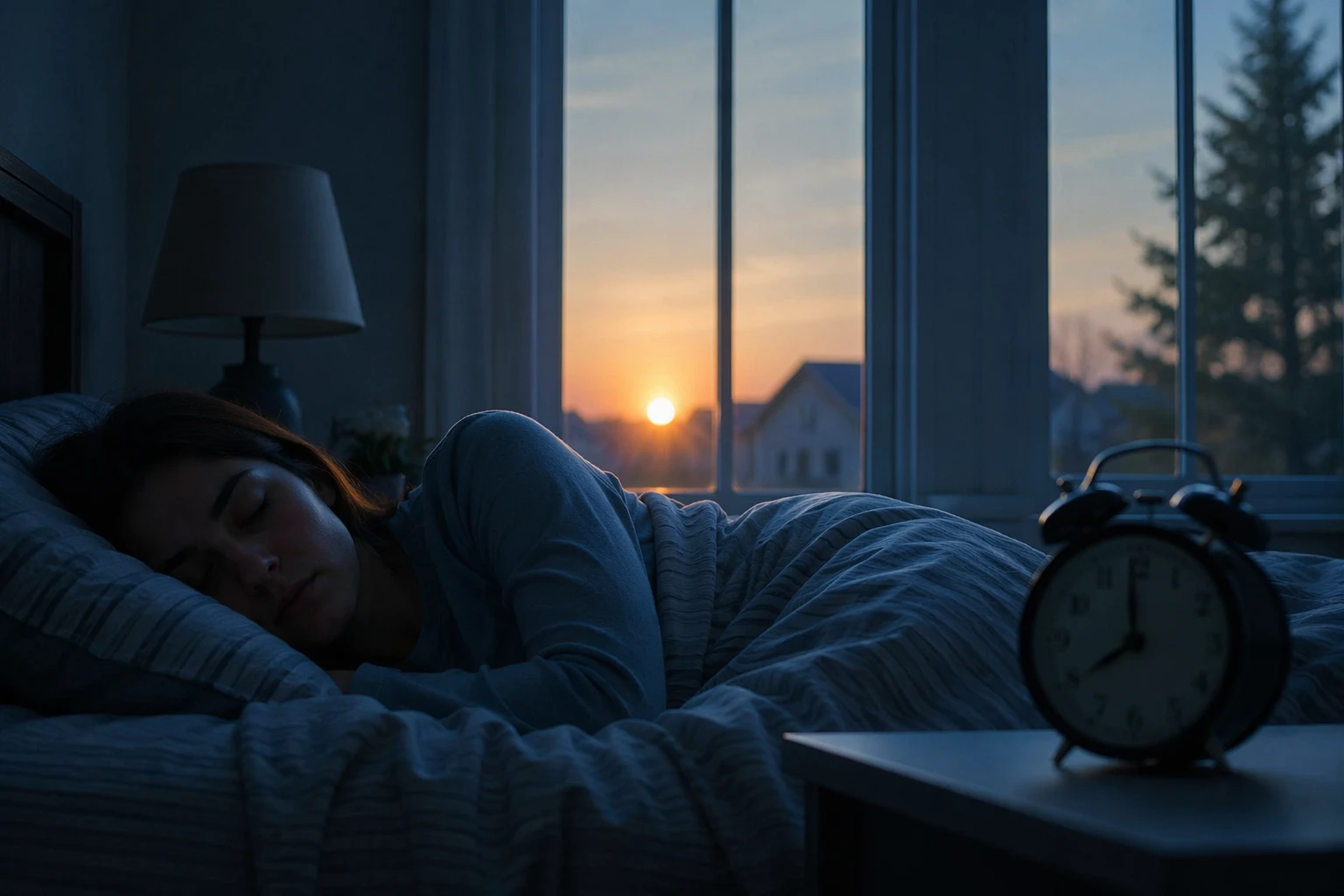
When clocks jump forward and back each year, the shift can disrupt sleep duration and the timing of the sleep-wake cycle, which is why sleep specialists see the biannual switch as more than a scheduling nuisance. Public-health and sleep researchers link the transition to cardiovascular health, traffic safety, productivity and mental health.
A permanent standard-time system would better match circadian biology, while daylight saving time pushes morning light later and leaves people waking in darkness for more of the year, the AASM argues.
• cardiovascular strain after sleep disruption • more traffic accidents after the clock change • lower productivity during the adjustment period • mental-health effects tied to lost sleep and circadian misalignment
Studies also connect the clock switch to lower productivity and higher health care costs. Sleep-medicine groups have become some of the loudest advocates for leaving daylight saving time behind rather than making it permanent.
The United States has tried permanent daylight saving time before
This debate is older than the current Congress. Daylight Saving Time first became national policy during World War I, returned during World War II and later produced enough confusion that, by 1965, time zones across the country were erratic. The federal government has been revisiting the same question ever since: how much clock-shifting is worth the trouble.
The most important test came in 1974, when President Richard Nixon signed a year-round daylight saving time law as part of the response to the 1973 oil crisis. The idea was to save energy by stretching evening daylight, but the experiment lasted less than a year. It became unpopular quickly because winter mornings were darker, children were going to school in darkness and complaints about the schedule mounted fast.

By the end of the 1970s, federal support for permanent daylight saving time had been abandoned and the policy was reversed.
Why the issue keeps resurfacing
Permanent daylight saving time remains politically tempting because it offers what looks like an easy win: more light in the evening and one fixed clock all year. That message has broad appeal, which is one reason the issue keeps returning even after the 1974 backlash. But the health case runs in the other direction, and sleep experts have been unusually consistent about it.
The American Academy of Sleep Medicine is not alone. The Save Standard Time campaign and allied sleep-medicine advocates have pushed the same message in legislative testimony, arguing that a year-round standard-time schedule is healthier than permanent daylight saving time.
How the policy fight has spread across the country
Legislative materials show that about 42 states have entertained or passed bills related to year-round daylight saving time. The debate has moved through statehouses in Maryland, Iowa, Kansas, California, Maine and New York, and it has also surfaced in Washington state and Washington, D.C. Arizona and Hawaii already observe standard time year-round, which gives lawmakers two built-in examples of states that do not change clocks.
The issue has also appeared in local and regional settings, including Baltimore City, Maryland, and San Francisco, California. In Congress, hearings have repeatedly circled the same question: whether to lock the clock or keep the biannual switch.
Sources
- [1]news.google.com
- [2]webexhibits.org
- [3]pbs.org
- [4]smithsonianmag.com
- [5]nbcnews.com
- [6]thehill.com
- [7]aasm.org
- [8]pmc.ncbi.nlm.nih.gov
- [9]congress.gov
- [10]mgaleg.maryland.gov
- [11]akleg.gov
- [12]seuc.senate.ca.gov