Politics
Why the Equal Rights Amendment still has not become law

Alice Paul drafted the first Equal Rights Amendment in 1923. More than a century later, it still lacks the final constitutional step that would turn political consensus into binding law.
How the ERA got to constitutional limbo
Some version of the proposal appeared in every session of Congress until 1971. Congress then approved the modern version on March 22, 1972, sending it to the states with a seven-year ratification deadline. In 1978, Congress and President Carter extended that deadline to June 30, 1982. Those dates now sit at the center of the dispute: supporters say the amendment’s meaning should control, while opponents say the missed deadlines control the outcome.
A constitutional amendment needs approval from three-fourths of the states, which meant 38 ratifications were required. Between 1972 and 1977, 35 state legislatures approved the ERA. That left the amendment three states short, even before the original deadline expired.
Why late ratifications changed the fight
The dormant campaign revived decades later when Nevada ratified the ERA in 2017, Illinois in 2018, and Virginia in 2020. Those approvals kept the ERA in the political spotlight and gave supporters a fresh argument that the amendment still had unfinished business. They also intensified the legal question that has never gone away: can ratifications that arrive after a deadline still count?
In a January 6, 2020 opinion, the Department of Justice’s Office of Legal Counsel concluded that Congress had the constitutional authority to impose a deadline on ERA ratification and that, because the deadline had expired, the ERA resolution was no longer pending before the states. Supporters continue to insist that the amendment remains viable, while opponents say the deadline issue is decisive.
What supporters say is at stake
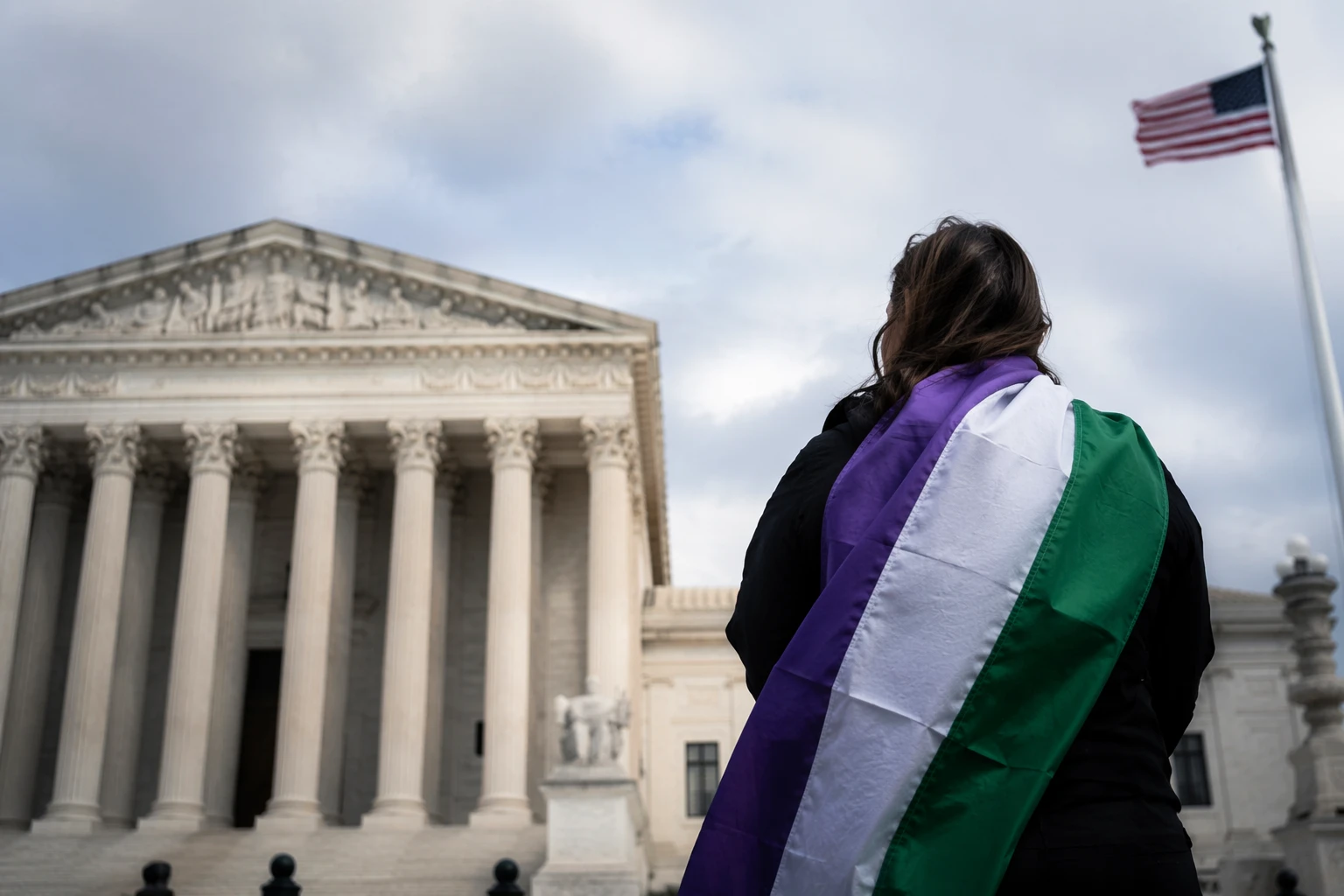
Supporters, including the National Organization for Women and the ERA Coalition, argue that women are still not guaranteed equal rights under the U.S. Constitution. A constitutional guarantee, they argue, would strengthen claims tied to equal pay, job opportunities, political power, education, and health care, especially when courts are asked to evaluate sex discrimination.
The ERA Coalition is a diverse coalition of nearly 300 partner organizations representing 80 million people, by its own count. For supporters, the amendment would give advocates a sturdier constitutional basis in disputes where statutory protections can shift with Congress, the courts, or the White House.
Why opponents say the amendment is still unfinished
Opponents, including Eagle Forum, argue that the ERA failed to be ratified by the deadlines Congress set and later extended. That position rests on a plain reading of the constitutional process: Congress proposed an amendment, set a deadline, extended it once, and the states still did not reach 38 ratifications before the clock ran out. From that perspective, Nevada, Illinois, and Virginia arrived too late to change the amendment’s legal status.
The opposition also has a long political lineage, shaped for decades by Phyllis Schlafly, whose anti-ERA activism helped turn the amendment into a national battleground.
Why the ERA’s limbo matters in court
As long as the ERA is unresolved, lawyers and judges must work within a patchwork of statutory protections and court precedents when sex discrimination claims arise. A ratified ERA would give advocates a direct constitutional text to invoke in cases involving workplace inequality, educational access, health care disputes, and reproductive rights, rather than relying only on more limited legal tools.
Sources
- [1]cbsnews.com
- [2]congress.gov
- [3]archives.gov
- [4]eracoalition.org
- [5]now.org
- [6]eagleforum.org