US News
Why the United States still clings to the death penalty

The United States sits inside a shrinking global minority that still carries out executions. More than two thirds of countries have abolished the death penalty in law or in practice, yet the U.S. still authorizes it in some states and continues to use it even as support falls and death sentences dwindle.
America’s outlier status
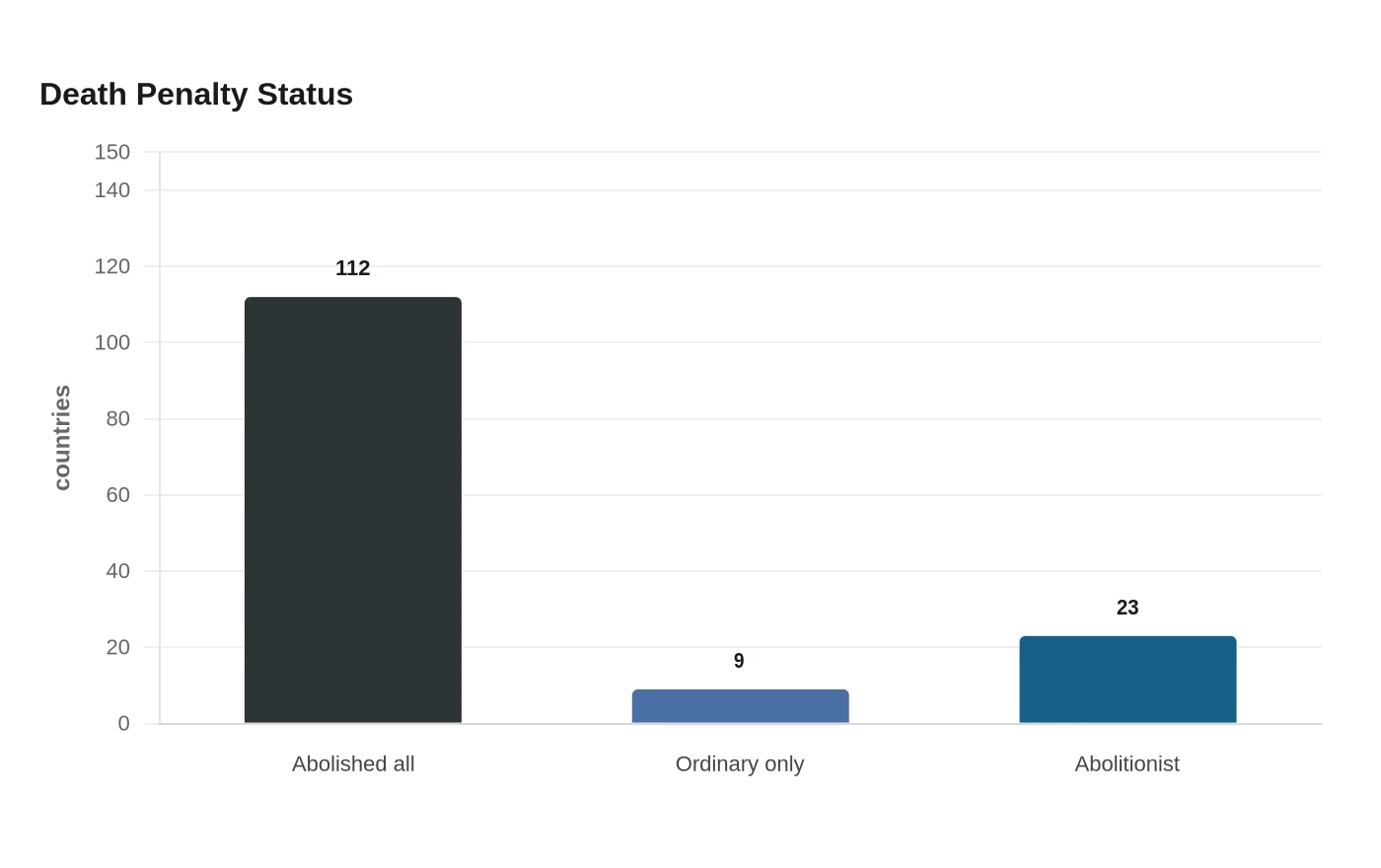
The global map has moved sharply away from execution. The World Coalition Against the Death Penalty’s 2024 facts and figures counted 112 countries that had abolished the death penalty for all crimes, nine more that had abolished it for ordinary crimes only, and 23 that were abolitionist in practice because they had not executed anyone in at least 10 years. Amnesty International’s global report, published in April 2025, recorded at least 1,518 executions worldwide in 2024, a 32% jump from 1,153 the year before.
The American numbers look small beside that world total, but they still matter because the country remains aligned with the retentionist camp. The Death Penalty Information Center said the U.S. executed 25 people in 2024 and sentenced 26 more to death, marking the tenth straight year with fewer than 30 executions and fewer than 50 death sentences. DPIC also said the death-row population had its largest one-year percentage decline in nearly half a century, and shrank more than at any other time in more than two decades.
Public opinion has moved too. Gallup polling cited by Equal Justice Initiative put support for capital punishment at 53% in 2024, the lowest level since the early 1970s, with younger people driving much of the decline. The punishment survives not because Americans broadly rally around it, but because the political and legal machinery that sustains it remains intact in a few key places.
How the modern system survived Furman and Gregg
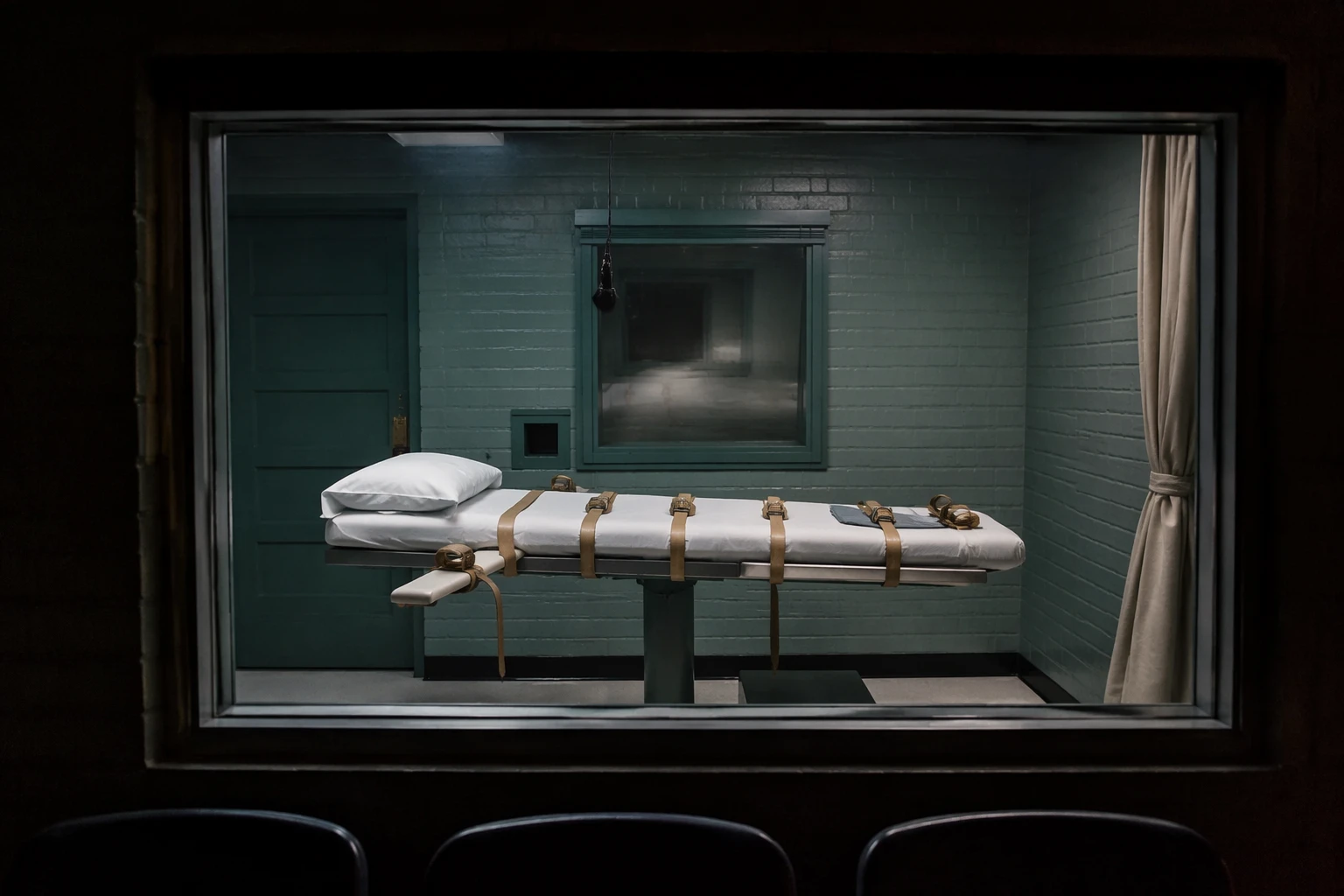
The modern death penalty was interrupted, but not ended, by the Supreme Court. In Furman v. Georgia in 1972, the Court halted the existing system. Four years later, Gregg v. Georgia upheld revised state statutes and restarted executions, effectively stopping more than 630 scheduled executions at the time and giving states a constitutional roadmap to bring capital punishment back.
That restart left the country with a patchwork system instead of a uniform national policy. Death Penalty Focus says that as of 2025, 23 states and Washington, D.C., had abolished the death penalty, 27 states retained it along with the federal government and the U.S. military, and California, Oregon and Pennsylvania maintained formal moratoriums. That split explains why the U.S. can look abolitionist in one region and punitive in another, with the death penalty now concentrated in a smaller group of states that still treat it as a usable tool.
Why a few states still drive executions
Florida has become the clearest example of how regional politics can keep executions moving. The Associated Press reported that Florida executed Edward J. Zakrzewski and carried out its ninth execution of 2025, and that about 61% of U.S. executions that year were concentrated in Florida, Texas and South Carolina. When that much of the national total comes from just three states, the death penalty no longer looks like a broad American consensus. It looks like a regional practice reinforced by state-level institutions.
Georgia shows how deeply rooted that practice can be. DPIC’s Georgia page lists 36 people on death row and 77 executions in the state since 1976. The numbers underscore a larger pattern: retention survives where governors, attorneys general, and local prosecutors are willing to move cases forward, and where state politics rewards toughness more than restraint.
Prosecutorial culture keeps the machinery moving
The death penalty does not continue on autopilot. It depends on prosecutors willing to ask for death and on elected offices that can turn those requests into political statements. DPIC has pointed to Louisiana as a stark example, saying one county and two prosecutors were responsible for three-quarters of recent death sentences amid charges of prosecutorial misconduct.
California offers another view of how prosecutorial practices can expose the system’s instability. In Alameda County, as many as 35 death penalty cases from the past 30 years have come under review after a deputy district attorney found notes from the 1993 death penalty conviction of Ernest Dykes. In Orange County, Death Penalty Focus said a death sentence was taken off the table in a trial tainted by prosecutorial misconduct. Those cases show that legal challenges do not just test death sentences after the fact. They reveal how the decisions to seek death are shaped by offices, individual prosecutors and the culture of the courthouse.
Victims’ rights arguments make abolition politically harder
Support for the death penalty also endures because politicians still invoke victims’ rights when they defend it. In practice, that argument is often less about whether executions solve crime than about whether elected officials can afford to appear insufficiently responsive to murder victims’ families. The result is a political shield for capital punishment, especially in states where prosecutors and sheriffs campaign on being tough on violent crime.
Yet victims’ advocates are not monolithic, and the human cost of capital cases can cut the other way. Ohioans to Stop Executions says the length of death penalty cases can force families to relive the trauma of the killing for decades, since each hearing and appeal reopens the original loss. That tension helps explain why the victims’ rights frame remains so powerful in public debate: it gives supporters of capital punishment a language of compassion, even as the process itself can prolong grief and delay any finality.
A punishment out of step with the rest of the democratic world
The death penalty persists in the United States because it is anchored in state politics, prosecutorial discretion, and regional identity, not because public support is strong or because the legal landscape is stable. The country’s place in the world is increasingly unusual: most democracies have moved away from executions, while the U.S. keeps a system alive that is geographically narrow, politically charged and increasingly hard to defend on fairness grounds.
That combination, rather than any broad national mandate, is what keeps capital punishment on the books and on the docket.
Sources
- [1]nytimes.com
- [2]worldcoalition.org
- [3]amnestyusa.org
- [4]deathpenaltyinfo.org
- [5]deathpenalty.org
- [6]eji.org
- [7]dppolicy.substack.com
- [8]amnesty.org
- [9]georgiaencyclopedia.org
- [10]apnews.com