Health
Wildfire smoke from Canada and Minnesota threatens millions across Midwest and Northeast
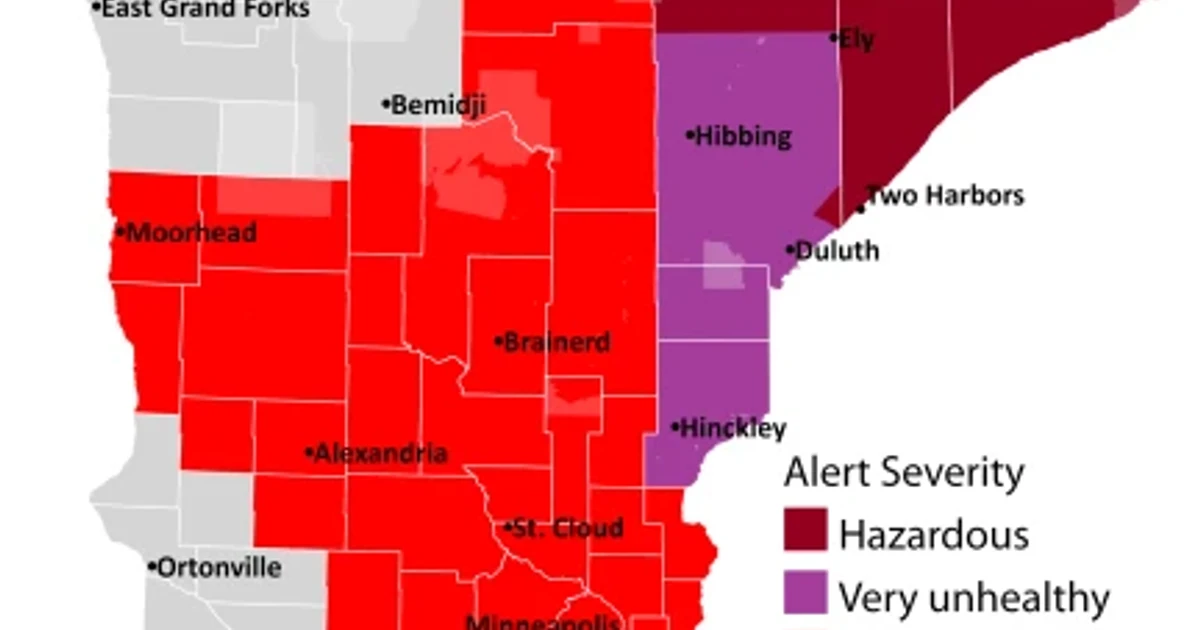
Minnesota’s Pollution Control Agency issued an air quality alert for July 14 through July 17 as smoke from large wildfires in Canada and northern Minnesota spread across east central, central, west central, southeast, north central, northwest and northeast Minnesota. Northeast Minnesota could reach the maroon AQI category, its hazardous-for-everyone level, while the Twin Cities metro area, Alexandria and Two Harbors were also under the warning.
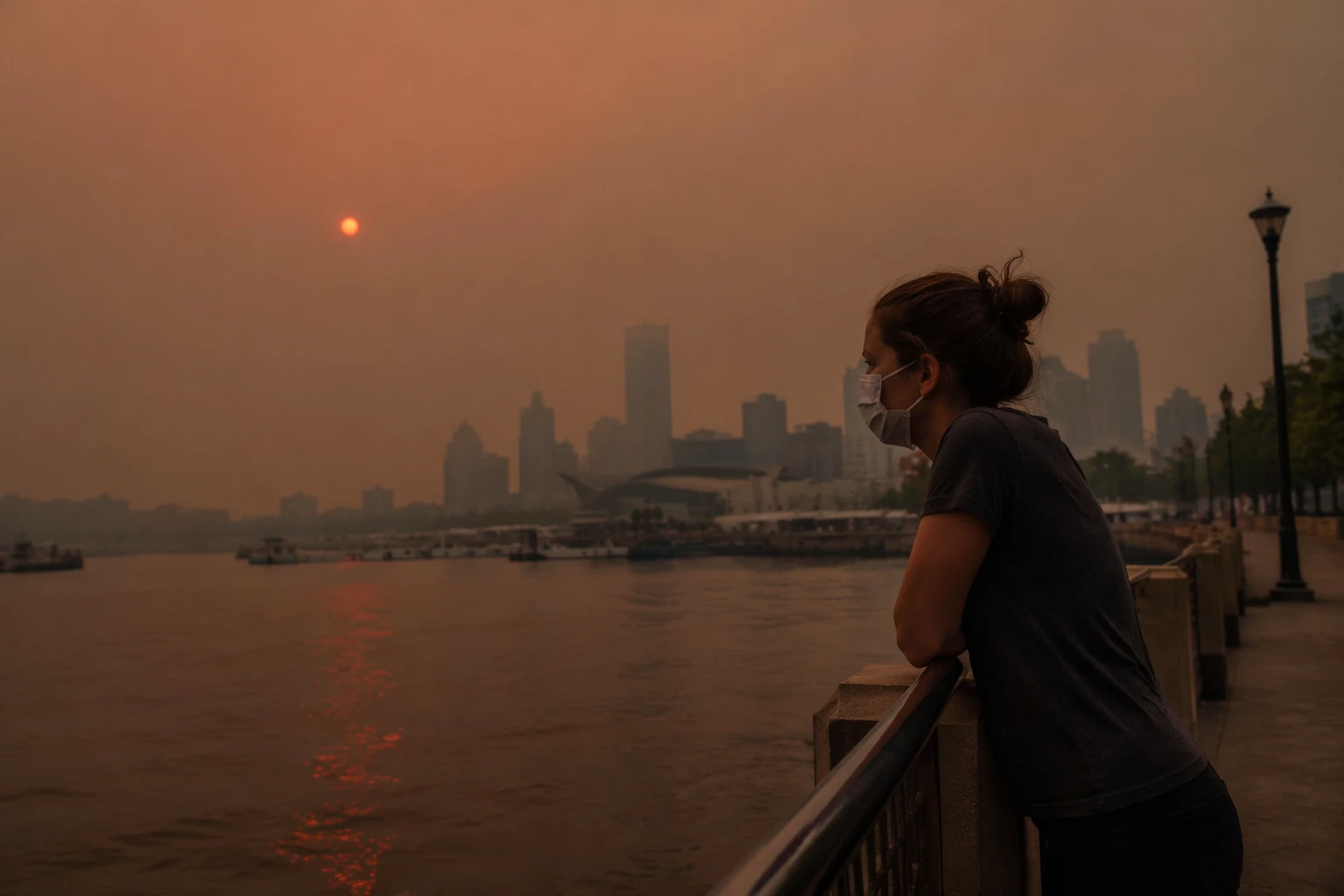
By Wednesday afternoon, the smoke plume was expected to reach parts of the East Coast, New England, northern Pennsylvania, Detroit and Milwaukee. More than 100 million people were in the affected zone across the Midwest and Northeast. In Maine, residents reported yellowish and brownish skies as the haze pushed far from the burn areas. A favorable jet stream pattern can move smoke horizontally from the Great Lakes into New England.
Fine particulate matter, or PM2.5, is the biggest threat from wildfire smoke exposure. Short-term PM2.5 exposure is linked to respiratory and cardiovascular harm and premature mortality, according to the U.S. Environmental Protection Agency. Wildfire smoke can travel far from where fires burn, and children, people with chronic conditions and pregnant people face higher risk, according to the Centers for Disease Control and Prevention. One meteorologist called the overlap of smoke and heat “not good from a health perspective.”
The smoke arrived as fire activity intensified in northern Minnesota. There were 17 active wildfires in Northeast Minnesota as of July 14, including three inside the Boundary Waters Canoe Area Wilderness, and evacuations were underway in St. Louis and Lake counties. The U.S. Forest Service also issued an emergency closure for parts of the Boundary Waters Canoe Area Wilderness.
North of the border, the Canadian Interagency Forest Fire Centre reported 836 active fires and 1.9 million hectares burned year-to-date as of July 14 and 15. On July 9, the Canadian federal government warned that the wildfire situation was worsening, and a climate scientist described the combination of severe drought and heat on both sides of the border as “a perfect storm” for fast-growing fires.
Sources
- [1]apnews.com
- [2]pca.state.mn.us
- [3]epa.gov
- [4]cdc.gov
- [5]wbur.org
- [6]wdio.com
- [7]ciffc.net
- [8]ciffc.ca
- [9]newswire.ca
- [10]airnow.gov