US News
Wildfires near Spokane destroy hundreds of buildings, spark air concerns
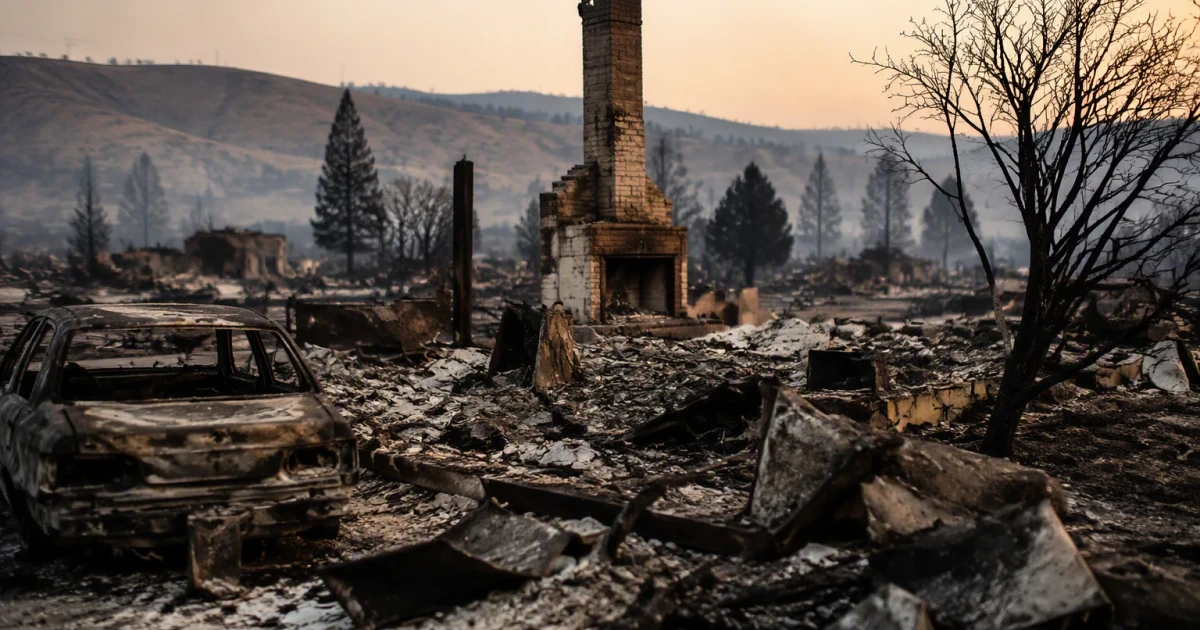
Fire crews around Spokane had already seen the damage climb past 800 buildings as the region’s fast-moving wildfires forced mass evacuations and sent smoke across Washington. One fire, the Old Trails Fire, also led to the arrest of Spokane resident Aaron F. Farinacci, 37, on suspicion of first-degree arson, deepening scrutiny of how the blazes began.
The scale of the evacuations grew quickly. Early counts put the eastern Washington fires at about 600 structures and roughly 5,000 homes evacuated, then a later tally raised the total to at least 700 buildings and some 67,000 people ordered out around the state’s second-largest city. The fires have turned entire neighborhoods into evacuation zones and left local officials racing to contain flames while tracking where the smoke was drifting next.
Washington state officials responded with an emergency burn ban across the state through noon on Sept. 30, 2026, a sign of how dry and volatile conditions remained. The Washington State Department of Ecology warned that smoke from the fires was spreading across the state, adding another layer of danger for residents already dealing with loss of homes and property. The ban also underscored how quickly one regional fire outbreak can become a statewide air-quality emergency.
The threat was not confined to Washington. In Northern California, smoke from the Woodside Fire in Sonoma County combined with prolonged triple-digit heat to worsen smog and ground-level ozone around Sacramento and the Central Valley, with unhealthy air expected for sensitive groups through the weekend. Governor Gavin Newsom also moved to send additional firefighting resources and specialized personnel to Washington and Oregon as the fire situation strained crews on both sides of the coast.
The smoke problem has stretched far beyond one city or one state. More than 100 wildfires in Canada have added to poor air across the continent, reinforcing a pattern that climatologists have tied to more extreme fire conditions. For schools, outdoor workers and households with children, asthma or other respiratory risks, the immediate issue is no longer just where the flames are burning, but how long hazardous air will linger downwind.
Sources
- [1]cbsnews.com
- [2]abc11.com
- [3]wlfi.com
- [4]ecology.wa.gov
- [5]news.caloes.ca.gov
- [6]abc10.com
- [7]nytimes.com