Politics
William Lawrence wins Michigan primary to challenge vulnerable Republican Tom Barrett

William Lawrence won the Democratic primary in Michigan’s 7th Congressional District and will challenge Republican Tom Barrett in one of the House’s most closely watched battlegrounds. The Lansing-based seat has become a national test of whether Democrats can turn out a progressive base in a district that still leans more moderate in a general election.
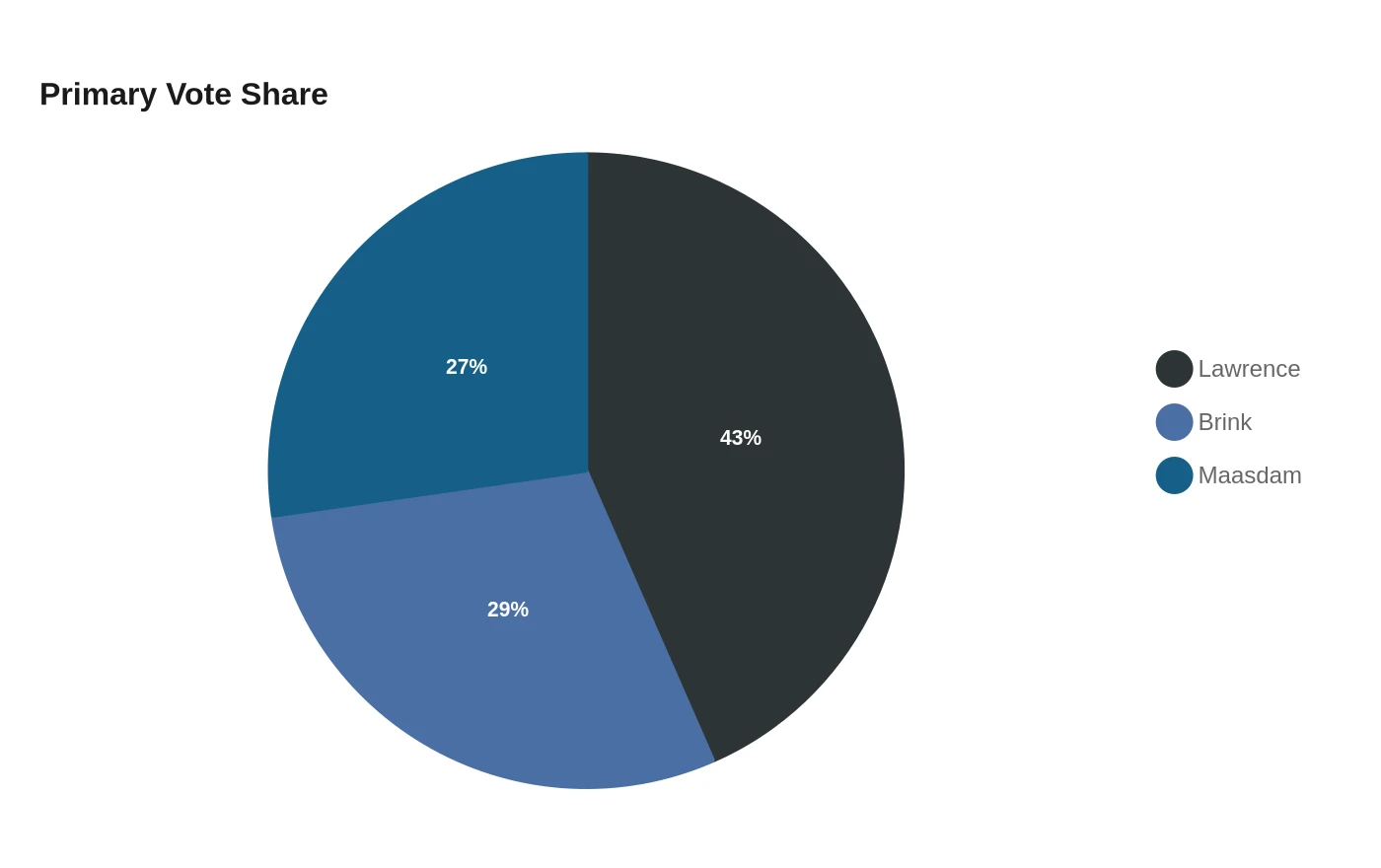
Lawrence, a co-founder of the Sunrise Movement and a climate activist with deep Lansing-area roots, defeated Bridget Brink, the former U.S. ambassador to Ukraine, and Matt Maasdam, a retired Navy SEAL. The Associated Press called the race at 11:23 p.m. with 55% of the vote counted, showing Lawrence at 43%, Brink at 29% and Maasdam at 27%.
The district stretches across all of Clinton, Eaton, Ingham, Livingston and Shiawassee counties, plus parts of Eaton, Genesee and Oakland counties, giving it a mix of Lansing, suburbs and exurban communities that often decide Michigan elections. Cook Political Report has said Democrats have opportunities to flip as many as three Michigan House districts, including the 4th, 7th and 10th, underscoring how much national control of the House could hinge on this seat.
Barrett’s vulnerability is real, but so is the challenge Lawrence now faces. Barrett defeated Curtis Hertel 50.3% to 46.6% in 2024, a narrow result that put the district on every national map for 2026. Integrity Index pegged Barrett’s fundraising at about $6.3 million, compared with about $3.0 million for Brink, $2.1 million for Maasdam and $1.1 million for Lawrence, a gap that highlights how quickly Democrats will need to consolidate money and organization behind their nominee.
Lawrence’s victory also sharpened the ideological contrast inside the party. The Hill said Lawrence was backed by Sen. Bernie Sanders, while Brink had endorsements from former Michigan Govs. Jennifer Granholm and Jim Blanchard. Local coverage cast Lawrence as an afterthought early in the cycle who benefited from a progressive wave, a sign that the activist wing can still dominate in low-turnout primaries even in a seat Democrats must win in November.
That tension now defines the broader Democratic strategy in battleground suburbs. Lawrence’s campaign emphasized housing affordability, a pressure point for renters and first-time buyers across the Lansing area, along with data centers, an issue that has begun to shape debates about land use, jobs and energy demand. His general-election case will depend on whether those themes can travel beyond the primary electorate and compete with Barrett’s appeal in a district where small shifts in the suburbs could decide who controls the House.
Sources
- [1]nytimes.com
- [2]thehill.com
- [3]wlns.com
- [4]politico.com
- [5]freep.com
- [6]michiganpublic.org
- [7]cookpolitical.com
- [8]integrityindex.us
- [9]270towin.com
- [10]ballotpedia.org