Entertainment
Wonder Woman’s origin story reveals a wartime feminist icon
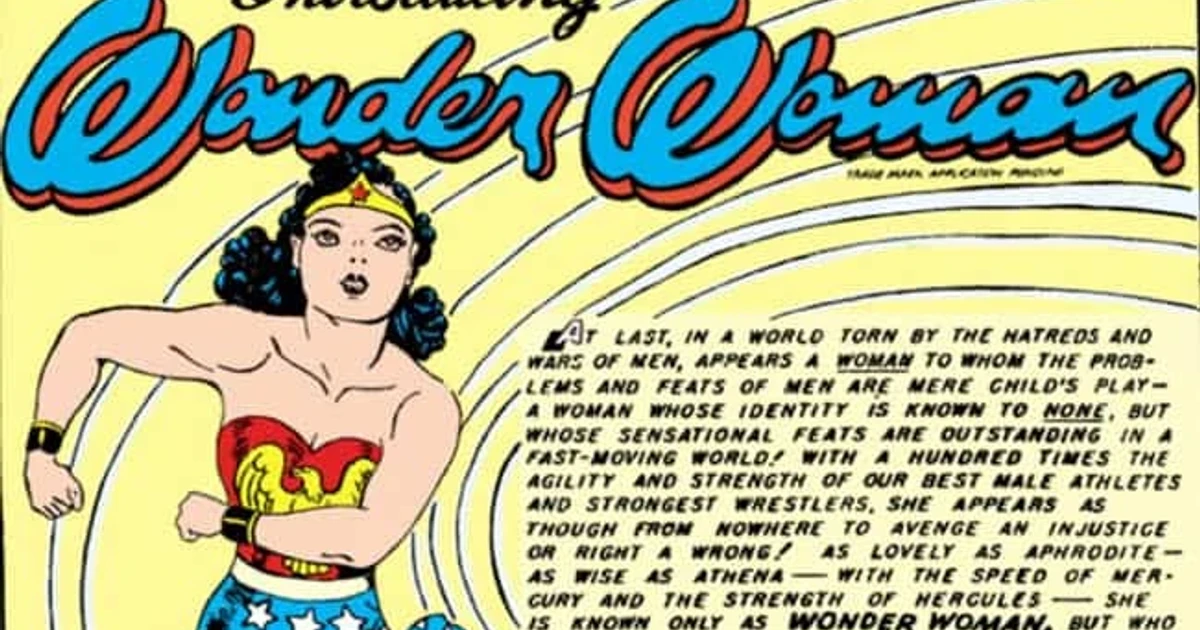
Wonder Woman did not enter American culture quietly. She arrived in a comic-book backup story just as the United States was moving toward war, and her creation fused patriotism, feminism and pop mythology into one striking figure. The result was a heroine who challenged the idea that American power had to look male.
A debut timed to a country in transition
Wonder Woman first appeared in All Star Comics #8 in the backup story “Introducing Wonder Woman,” published by All-American Publications, a predecessor to DC Comics. The issue carried a cover date of December 1941 and January 1942, and it went on sale on October 21, 1941, placing her entrance squarely in the tense months around America’s entry into World War II. That timing matters because the character was born into a culture already debating sacrifice, leadership and who would represent national strength.
Her initial appearance was only the beginning. Wonder Woman soon returned in Sensation Comics #1 in January 1942, then received her own title, Wonder Woman #1, in June 1942. Those rapid follow-ups show how quickly the character moved from a novelty in the back pages to a central part of comics’ wartime imagination.
William Moulton Marston’s theory of female power
The mind behind Wonder Woman was William Moulton Marston, who also used the pen name Charles Moulton. Marston was not just a comic-book writer; he was a psychologist connected to early lie-detector research with his wife, Elizabeth Holloway Marston. That background shaped the way he thought about truth, authority and persuasion, and it helped produce a superhero who was meant to stand for a different kind of strength.
Marston believed women should embody leadership, not follow it, and he built Wonder Woman around that conviction. He described the character as “psychological propaganda” for a new type of woman, a phrase that captures both the boldness of the project and the cultural argument it was making. In Marston’s hands, a superheroine was not a side experiment. She was a direct challenge to the assumption that power had to be masculine to be legitimate.
The family story behind the mythology
Wonder Woman’s origin also reflects an unusual family dynamic that shaped the character in ways readers only later began to appreciate. Historical accounts say Marston lived with Elizabeth Holloway Marston and his partner Olive Byrne, and both women influenced Wonder Woman’s creation. That triangle of influence gave the character a layered identity: part academic theory, part domestic reality, part mythic wish for a world in which women’s intelligence and force would be taken seriously.
The mythology that grew around her matched that complexity. Wonder Woman was imagined as an Amazon warrior, tied to a female-led society and later associated with Themyscira, a setting that reinforced the idea of women governing their own world. Another account of her origin describes her as an Amazon sculpted from clay by her mother, a creation story that makes her less a derivative of male heroes than a being shaped by female hands. That detail matters because it gives her a symbolic birth that is itself a rebuttal to patriarchal power.
From comic-book debut to cultural institution
Wonder Woman’s rise from All Star Comics #8 to her own series made her DC Comics’ first major female superhero. That milestone mattered far beyond publishing history, because the industry had spent years treating male heroes as the default face of action, courage and national defense. Wonder Woman changed that balance by proving a female lead could anchor a franchise and carry the burden of a public symbol.
Her endurance in American popular culture comes from that contradiction. She is both a product of World War II-era feminism and a wartime storytelling machine, a character designed to reassure readers while also unsettling old ideas about who could lead. The fact that she remained recognizable across generations shows how adaptable that original concept was, even as the language of gender and power changed around her.
Why the origin still speaks to American arguments about strength
Wonder Woman’s creation reveals that debates over patriotism were never only about soldiers, flags or battlefield victory. They were also about the moral authority to define strength in the first place. By placing a woman at the center of a national fantasy, Marston and the women around him pushed American culture to imagine leadership as something more than force and command.
That is why her origin still feels unusually modern. It joins a wartime setting, a feminist thesis and a family story into one of the clearest examples of how popular culture can carry political meaning without sounding like a speech. Wonder Woman endures because she was built to answer a question that has not gone away: if America wants a symbol of strength, why should that symbol look only one way?
Sources
- [1]cbsnews.com
- [2]cbs.com
- [3]smithsonianmag.com
- [4]history.com
- [5]dcuniverseinfinite.com
- [6]pbs.org