World
World Court Affirms Protection for Workers’ Right to Strike
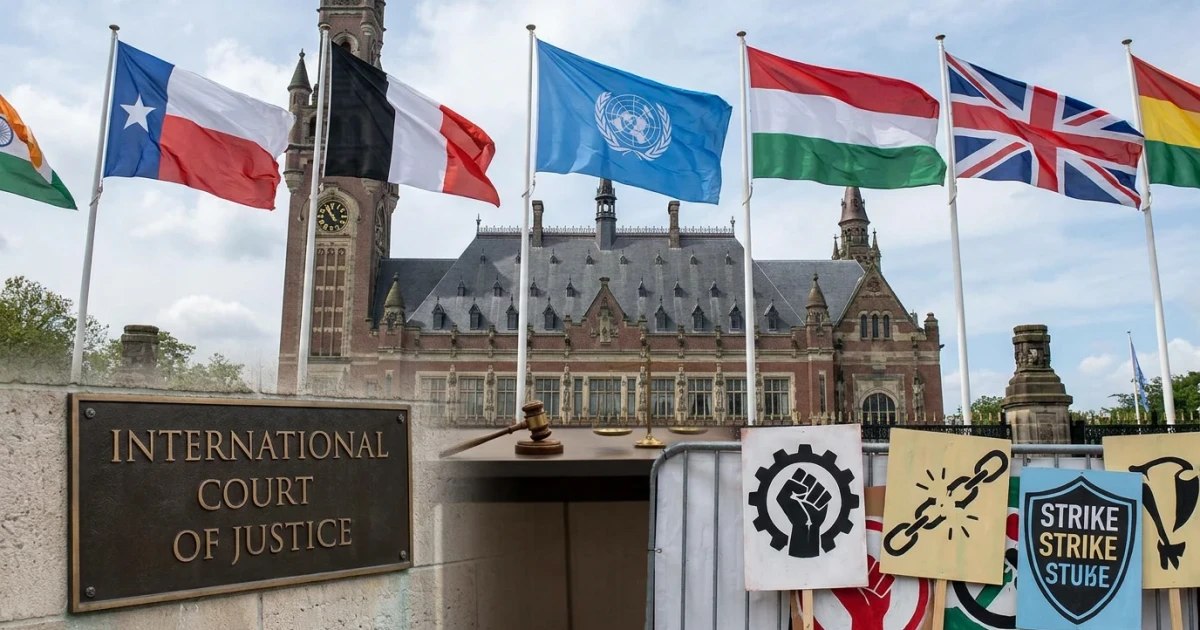
The International Court of Justice (ICJ) has issued a landmark decision affirming that international law protects workers’ right to strike, referencing key labor treaties. The ruling, reported by both ICLG and PBS, clarifies the legal standing of collective action by workers and is expected to influence labor policies globally.
ICJ Decision Highlights Core Labor Protections
According to coverage by ICLG, the ICJ stated that existing international law—including the widely recognized ILO Convention No. 87—explicitly protects the right to strike as part of broader principles of freedom of association. PBS also emphasized that the court pointed to this treaty as a central pillar in safeguarding worker rights, noting its widespread ratification and influence in shaping national labor legislation.
- ILO Convention No. 87 is a foundational treaty on freedom of association and labor organizing, ratified by over 150 countries.
- The ICJ’s interpretation aligns with longstanding recommendations from the International Labour Organization (ILO).
- The decision clarifies legal ambiguities faced by workers and unions, especially in countries where the right to strike has been contested.
Legal and Global Impact
The ICJ’s ruling is expected to have broad implications. Both sources indicated that the decision will likely affect national laws, prompting some governments to strengthen legal protections for striking workers. It also provides unions with a clearer legal basis when advocating for labor rights, especially in regions where strike activity has been restricted or penalized.
ICLG noted that the court’s affirmation gives legal weight to ongoing labor disputes and collective bargaining efforts. PBS added that the ruling could shape future international negotiations and labor standards, reinforcing the principle that the right to strike is not merely a domestic issue but one recognized at the highest levels of international law.
Context: Strikes and Collective Bargaining Globally
The right to strike is a cornerstone of labor activism and negotiation. According to ILO statistics, strike activity varies widely by country, influenced by legal frameworks and economic conditions. In many nations, workers rely on strikes to push for improved wages, safer working conditions, and fair treatment.
- Recent ILO wage data shows that collective action has been linked to gains in average pay and benefits.
- The ICJ’s ruling may strengthen the position of unions and workers seeking to negotiate through collective bargaining.
Legal Framework and Treaty Interpretation
Both outlets underscored that the ICJ’s decision interprets international treaties as offering explicit protection for the right to strike. This aligns with analysis from the ILO’s legal review, which has long argued that strike action is an inherent part of freedom of association, as codified in international agreements.
For countries that have ratified ILO Convention No. 87, this decision reinforces their obligations to uphold and protect the right to strike. Nations that have yet to ratify or implement these standards may face increased international scrutiny.
Looking Ahead: Labor Rights in Focus
The ICJ’s ruling comes at a time when labor rights are under renewed scrutiny, with workers in various sectors staging high-profile strikes for improved conditions worldwide. As PBS and ICLG suggest, this legal clarification may embolden unions and workers to organize, negotiate, and advocate more confidently for their interests.
Observers anticipate that governments, employers, and labor organizations will closely review the implications of the decision, with potential updates to national laws and international labor standards. For workers, the ruling provides reassurance that their right to strike is recognized not just domestically, but as a fundamental principle of international law.
Further details and official documentation of the ICJ’s ruling can be accessed via the International Court of Justice case records.