World
World Court Marks 80 Years Amid Global Legal Challenges
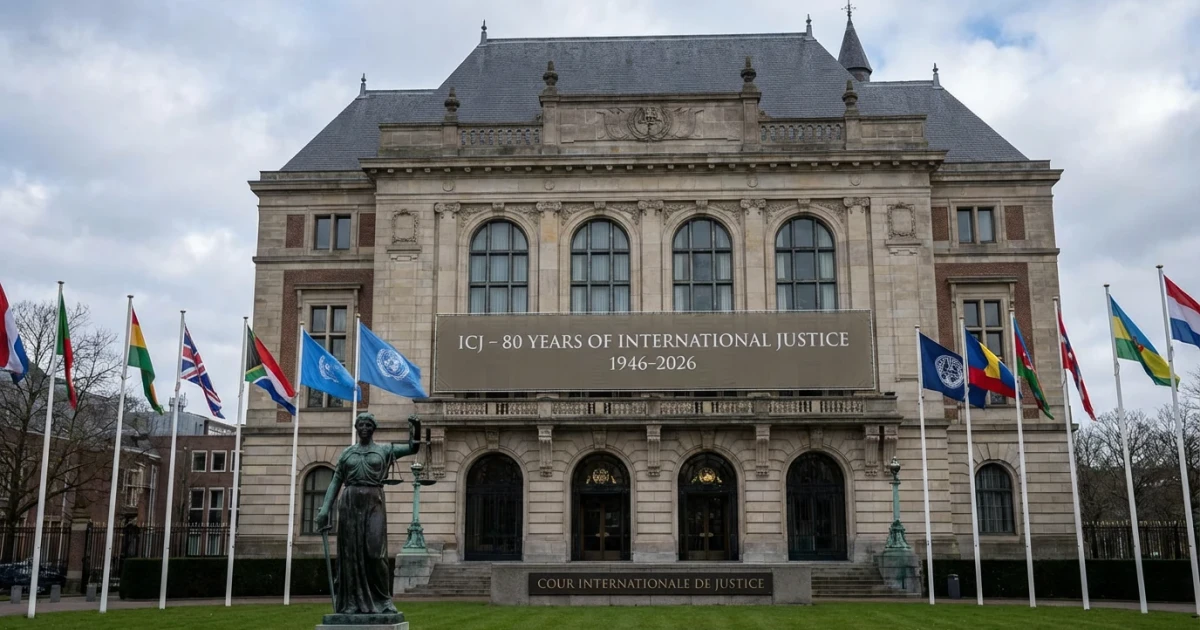
The International Court of Justice (ICJ), known as the World Court, is marking its 80th anniversary this year, a milestone that comes at a time when the international legal order faces mounting pressures and scrutiny. Established in 1946 as the principal judicial organ of the United Nations, the Court’s role in settling disputes between states and offering legal opinions remains central to the UN’s mission. Yet, as reported by PBS, the celebration is tempered by concerns over the effectiveness and reach of international law in an increasingly polarized world.
The ICJ’s Founding and Evolution
The Charter of the United Nations established the ICJ in the aftermath of World War II, reflecting a global commitment to peaceful dispute resolution and the rule of law. Over the past eight decades, the Court has presided over more than 180 contentious cases between states, as well as issuing numerous advisory opinions that have helped clarify key points of international law.
- The Court’s jurisdiction covers a broad array of issues, from territorial disputes and maritime boundaries to allegations of genocide and environmental harm.
- According to recent ICJ yearbooks, the Court has seen a steady increase in cases related to human rights, self-determination, and environmental protection.
- The ICJ’s rulings are binding on parties to the case, but the Court lacks direct enforcement powers, relying on states and the UN Security Council to carry out its judgments.
Strains on the International Legal Framework
As highlighted by PBS, the 80th anniversary comes at a time when the global legal order is under significant strain. Recent years have witnessed rising tensions between states, challenges to the Statute of the International Court of Justice, and questions about the willingness of nations to submit to or comply with the Court’s decisions. Some high-profile cases have seen major states rejecting or ignoring ICJ judgments, raising concerns about the erosion of international legal norms.
Analysts note several factors contributing to these strains:
- Geopolitical rivalries have complicated the resolution of disputes, as seen in cases involving powerful states or contested regions.
- The rise of unilateral actions and the questioning of multilateral institutions have undermined the authority of international courts and the United Nations system.
- Political polarization and shifting alliances have made consensus on international law more difficult to achieve and enforce.
Achievements and Enduring Challenges
Despite these challenges, the ICJ continues to play a vital role in upholding international law. Its decisions have clarified legal principles and provided states with peaceful avenues for resolving disputes. The Court’s advisory opinions have informed global debates on decolonization, nuclear weapons, and climate change, influencing both legal scholarship and state practice.
At the same time, the effectiveness of the ICJ depends on the cooperation of states and the international community. Without mechanisms for enforcement, the Court’s authority can be challenged, especially in cases involving powerful or non-compliant parties. The growing complexity of international disputes—ranging from cyber warfare to environmental crises—demands continued adaptation and support for the legal framework the ICJ represents.
Looking Forward
As the World Court marks its 80th year, the international community faces a critical juncture. The enduring value of the ICJ lies in its ability to offer impartial legal judgment and a forum for peaceful resolution—a mission that remains as relevant today as it was in 1946. Yet, sustaining this legacy will require renewed commitment from states, ongoing reforms, and greater public understanding of the Court’s role in the international system.
For readers interested in exploring the ICJ’s history, decisions, and the evolving role of international law, the Peace Palace Library Research Guide offers extensive resources, while the United Nations provides further background on international law and justice initiatives.
As global challenges multiply, the work of the ICJ will remain a barometer of the international community’s dedication to the principles of law and justice.