World
WTO rules could help nations avoid endless trade wars
In 1930, the Smoot-Hawley Tariff Act raised U.S. tariffs on more than 20,000 imported goods to record levels. Trade wars do not stay neatly between two capitals. Once tariffs, quotas and export controls start moving, the bill spreads into higher import costs, scarcer choices and more unstable security policy. The World Trade Organization’s rules-based system remains one of the few checks on that spiral, even as great-power rivalry pushes more governments toward bans and retaliation.
How the world learned the cost of runaway protectionism
The modern trading order was built in response to that collapse. Other countries answered in kind, and the spiral of tariffs, quotas, foreign exchange controls and discriminatory trade arrangements helped deepen the Great Depression-era slide into protectionism.
That history is the reason the postwar rules exist at all. The General Agreement on Tariffs and Trade was created in 1947 as the first major framework for lowering trade barriers and disciplining retaliation, and the World Trade Organization launched in 1995 as its institutional successor. The point was not free-for-all globalization. It was to give governments a place to argue over trade without turning every dispute into a chain reaction of price shocks and political escalation.
What the WTO data says about the present strain
WTO data platforms now cover applied tariffs, bound duties and trade flows across 150-plus to 170-plus economies, depending on the dataset, which makes it possible to see where barriers are rising and where they are easing.
Trade restrictions remain high, but trade-facilitating measures have increased in recent years. Between mid-October 2022 and mid-October 2023, the WTO found that the value of world merchandise trade covered by new trade-facilitating measures far exceeded the value affected by new trade-restrictive measures, showing that the system still produces some liberalization even while tensions remain elevated.
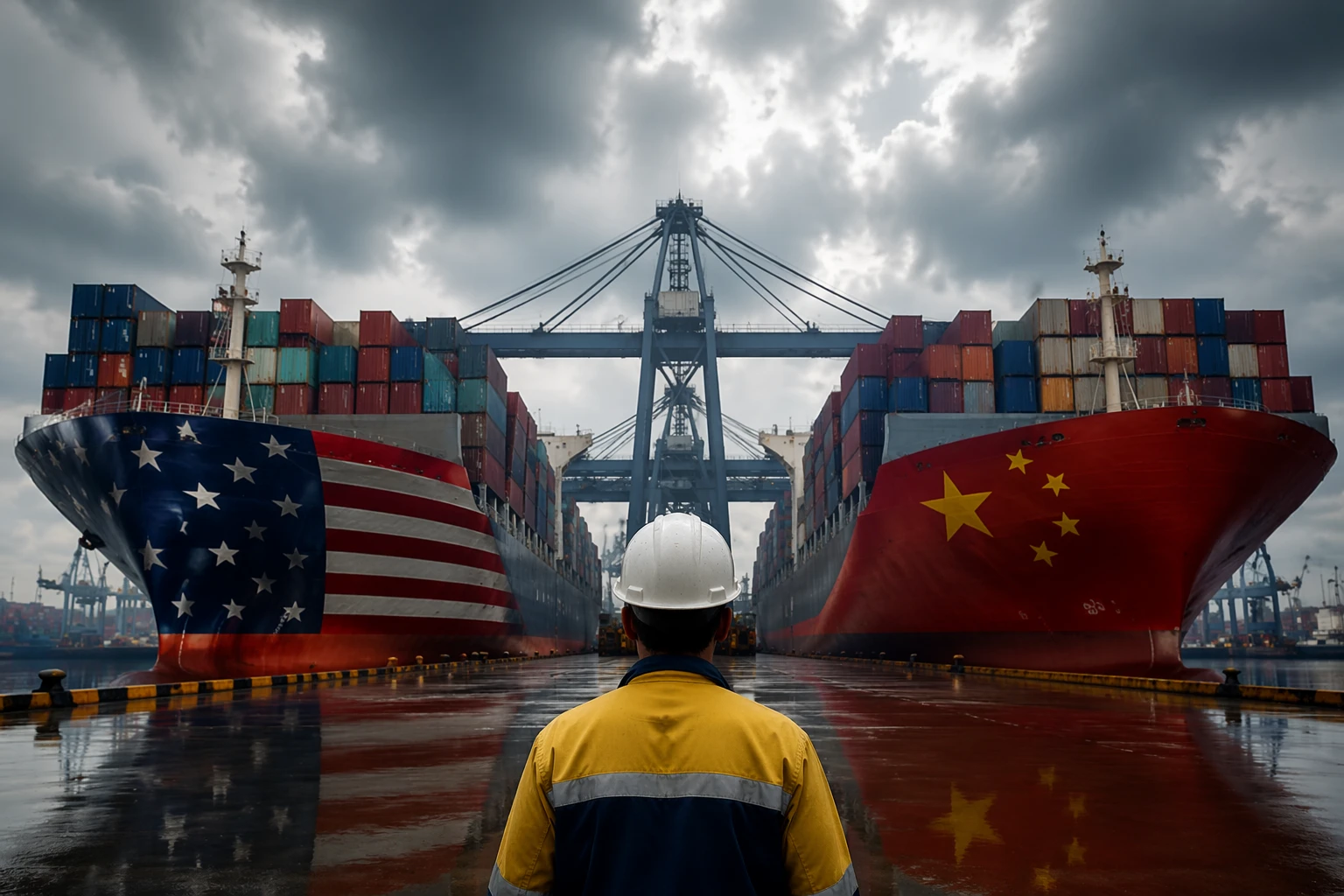
The problem is that facilitation and restriction are now happening at the same time, often in the same policy debate. One ministry may cut red tape while another imposes licensing limits or security screening, leaving firms to navigate a more complicated and less predictable trading environment. For importers, exporters and consumers, that complexity is itself a cost.
The U.S.-China trade war showed how fast escalation spreads
The clearest recent example came in the U.S.-China trade war. The World Bank found that the two countries collectively raised tariffs on about $450 billion in trade during 2018 and 2019, a scale large enough to reshape supply chains, sourcing decisions and business planning far beyond the two economies themselves. Tariff escalation did not stop there. The 2020 U.S.-China agreement left tariffs elevated, and U.S. export controls on national-security-sensitive products widened the confrontation.
Tariffs and export controls change the logic of trade. A tariff is a visible tax on cross-border commerce; an export control can block access to advanced inputs, machinery or sensitive technology entirely. Once those tools become normalized, every company with an international supply chain has to price in the risk that a commercial dispute can suddenly become a security dispute.
Trade escalation is no longer only about unfair competition or market access. It is increasingly tied to national-security arguments, which makes compromise harder because governments can justify restrictions not as temporary bargaining tactics but as permanent defenses.
Why the 2026 outlook is more fragile than it looks
The WTO expects world trade to slow in 2026 after stronger-than-expected growth in 2025, which was lifted by surging trade in AI-enabling products. Headline trade figures can improve even as the policy environment deteriorates. A technology boom can mask the drag from tariffs, export controls and broader geopolitical tension for a time, but it does not remove the underlying fragility.
The risks extending into 2026 are not only commercial. Geopolitical tensions and energy-price risks are part of the slowdown outlook, and those pressures make it easier for governments to justify intervention. When supply chains are already strained, even a narrow restriction can ripple through prices, industrial output and investment decisions.
The IMF’s economic case is plain: open, stable and transparent trade policies support growth and resilience, and they matter for climate change, food security and underdevelopment. Food importers depend on predictable access, climate investment depends on cross-border equipment and materials, and poorer economies need rules that reduce the power of larger states to shut markets on a whim.
What guardrails are eroding now
The hardest part of today’s rivalry is that it borrows the language of safety while weakening the rules that keep markets usable. WTO economists and IMF experts say the multilateral system is being tested by both trade wars and real wars, which makes liberalization harder and makes bans, controls, sanctions and other barriers easier to defend. The line between legitimate security policy and routine economic retaliation gets blurrier each year.
Sources
- [1]nytimes.com
- [2]documents1.worldbank.org
- [3]thedocs.worldbank.org
- [4]tmdb.wto.org
- [5]data.wto.org
- [6]imf.org