Science
X-ray Imaging Unveils Fluffy Baby Dinosaur in Korea
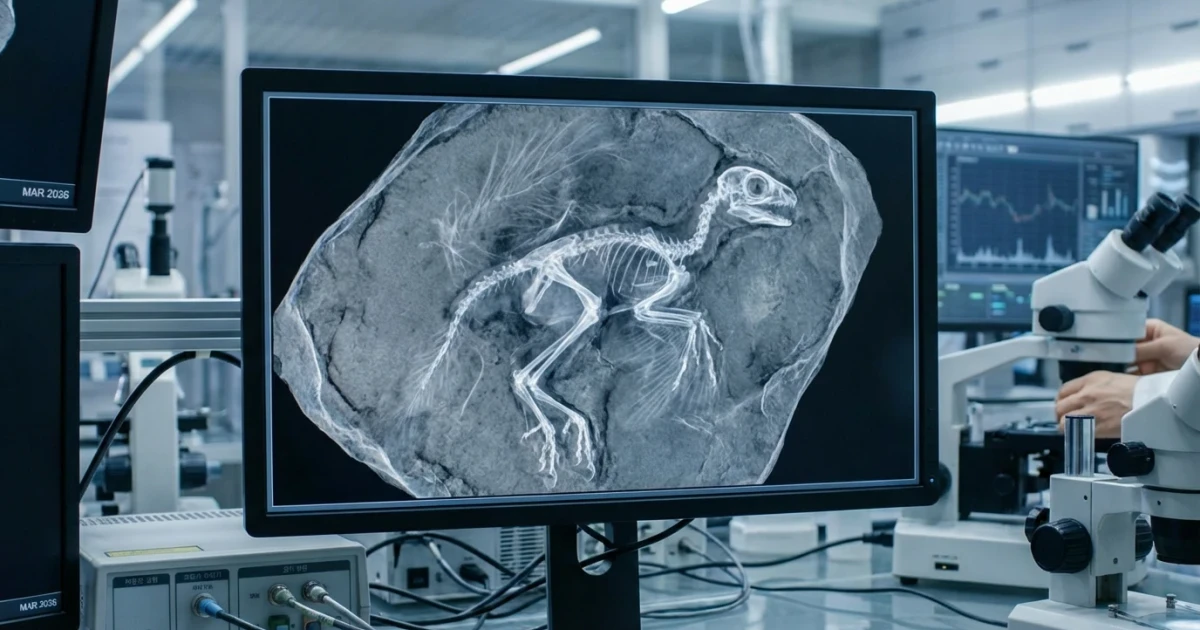
Paleontologists in Korea have announced the discovery of a new species of feathered baby dinosaur, identified through advanced X-ray imaging of a remarkably preserved fossil. The find, notable for its fluffy appearance and diminutive size, has been affectionately named after a popular Korean cartoon character, reflecting both its scientific significance and cultural resonance.
Discovery Through X-ray Imaging
The fossil, unearthed in Korea, was analyzed using state-of-the-art X-ray imaging techniques that enabled scientists to study its internal structures in unprecedented detail. This non-destructive method allowed researchers to distinguish fine details of the bones and feathers, revealing features previously invisible in traditional fossil examinations. According to peer-reviewed research, the use of high-resolution X-ray imaging is revolutionizing the study of paleontological specimens, particularly those as delicate as juvenile dinosaurs.
A Fluffy and Adorable New Species
The newly discovered dinosaur stands out for its soft, down-like feathers, which have been preserved alongside the skeletal remains. This fluffy appearance, coupled with the fossil’s juvenile size, inspired the research team to name the species after a well-known Korean cartoon character, underscoring both the animal’s cuteness and its popularity with the public. The official announcement by the Korean government highlights the collaborative effort between paleontologists and cultural experts in choosing a name that resonates with audiences of all ages.
Significance for Dinosaur Research
This discovery adds to the growing list of dinosaur species identified worldwide, contributing valuable data to global biodiversity records. The presence of feathers on such a young specimen further supports the view, detailed in recent evolutionary studies, that feathered dinosaurs were not uncommon and may have played a role in thermoregulation and display even at early life stages. The Paleobiology Database documents only a handful of similarly well-preserved feathered juveniles, making this find especially significant for understanding dinosaur development and the evolution of feathers.
Key Details About the Discovery
- The fossil was found in Korea and examined using high-resolution X-ray imaging.
- It represents a new species of small, feathered dinosaur, with downy plumage preserved.
- The species is named after a famous Korean cartoon character, linking science with popular culture.
- This discovery provides new insights into the appearance and biology of juvenile dinosaurs, particularly their feather coverage.
Broader Impact and Future Research
The find not only enriches Korea’s paleontological record but also encourages further exploration of the region’s fossil beds, which have yielded a number of significant dinosaur discoveries in recent years. As noted in the Dinosaur Fact Database, advances in imaging and analytical methods are rapidly expanding scientists’ ability to identify and study new species, particularly from previously underexplored areas.
While more detailed scientific analysis is expected to follow, the identification of this fluffy baby dinosaur marks a step forward in our understanding of dinosaur diversity and development. Its connection to Korean pop culture also promises to spark public interest in paleontology and inspire educational outreach efforts.
As researchers continue to investigate the fossil and its implications, the discovery underscores the value of combining modern technology with interdisciplinary collaboration, offering new windows into the ancient world—and bringing a touch of cuteness to the science of dinosaurs.