Technology
Xbox, Switch 2 and Steam Deck prices rise amid market pressures
Microsoft has raised U.S. Xbox console prices by as much as $150, with the new pricing taking effect August 1, 2026. Nintendo has also reset its pricing for the Switch 2 in the United States, lifting the system from $449.99 to $499.99 beginning September 1, 2026, while Valve’s Steam Deck OLED has seen regional price increases through Komodo in Japan, South Korea and Taiwan.
The Xbox increase, announced June 25, adds $100 to 512 GB models and $150 to 1 TB models. Microsoft’s support materials say local pricing can differ by country because of exchange rates and other market conditions, a reminder that console pricing is increasingly managed market by market rather than treated as a single global number.
Nintendo gave a similar explanation on May 7, saying the Switch 2 revision reflected “various changes in market conditions” that it expects to continue over the medium to long term. The timing makes the change stand out: Nintendo launched the Switch 2 in the United States on June 5 at a suggested retail price of $449.99, meaning the higher sticker price arrives just months after the debut. Nintendo also said the original Switch family of systems in the United States changed pricing effective August 3, 2025 based on market conditions.
The company has also been adjusting how it prices software. Starting in May 2026, new Nintendo-published digital titles exclusive to Switch 2 began carrying an MSRP different from physical versions for some games, a move that adds another layer to the system’s overall cost for buyers who want both hardware and software on day one.
Valve’s handheld has followed a different path, but the direction is the same. Steam Deck OLED listings show $789 for the 512 GB model and $949 for the 1 TB model in markets served by Komodo, and Valve says the device is available in Japan, South Korea, Taiwan and Hong Kong through Komodo’s website. The regional setup underscores how pricing has become a function of local distribution, not just manufacturing cost.
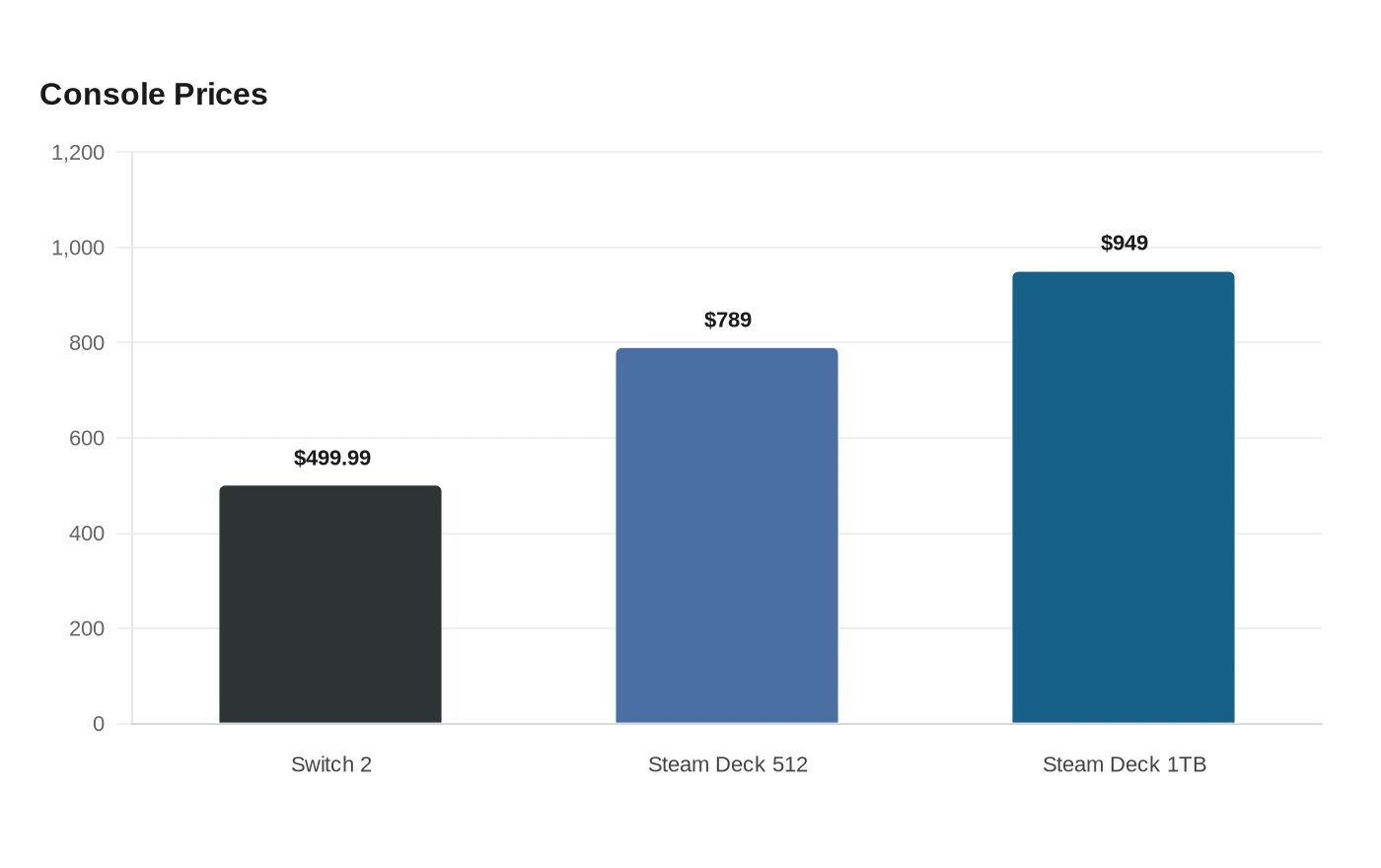
Taken together, the revisions show a gaming market where companies are leaning on broad claims of market conditions while passing more of the bill to consumers. What they have not provided is a public breakdown of how much of the higher prices comes from component costs, exchange rates or margin decisions, leaving buyers to face the increase without a clear accounting of why it landed now.
Sources
- [1]bbc.co.uk
- [2]news.xbox.com
- [3]nintendo.com
- [4]store.steampowered.com