World
Xi and Putin Deepen Energy and Trade Ties at Beijing Summit
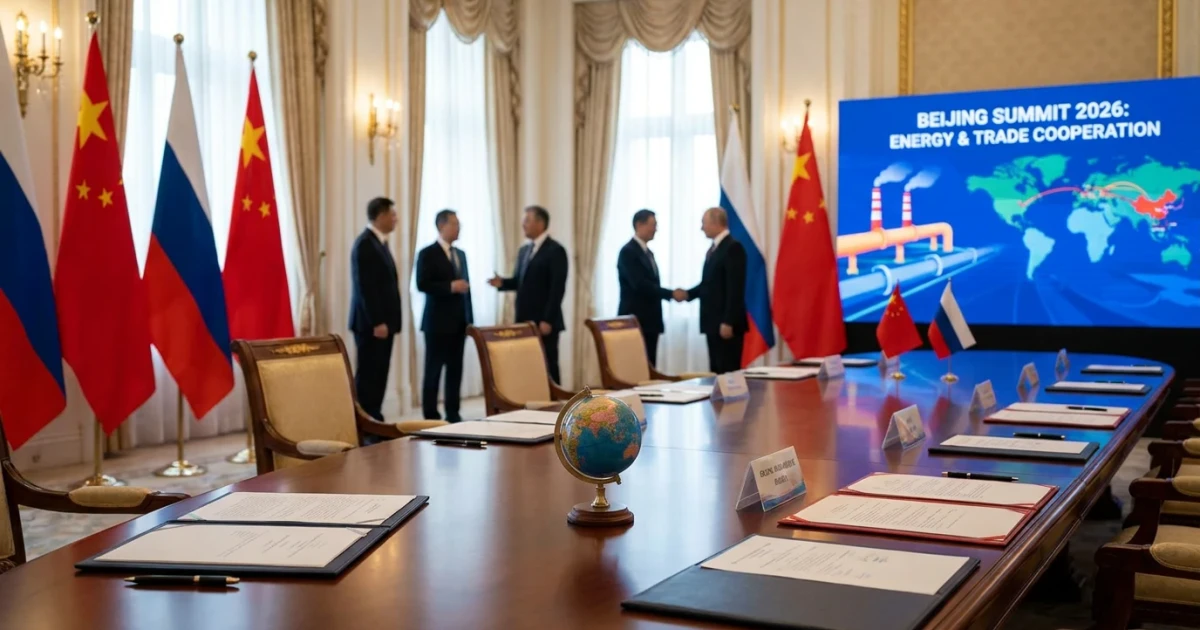
Chinese President Xi Jinping welcomed Russian President Vladimir Putin in Beijing this week, with both leaders reaffirming their strategic partnership through a series of high-profile agreements on energy cooperation, critical mineral supply chains, and a mutual visa-free travel policy for group tourists. The summit, marked by ceremonial displays and subtle diplomatic messaging, underscores the strengthening ties between the two countries amid ongoing tensions with the United States and Europe.
Energy Partnership: Power of Siberia 2 Moves Forward
Central to the summit was the advancement of the Power of Siberia 2 pipeline project, which aims to expand Russian natural gas exports to China. The pipeline, once completed, will significantly increase the volume of gas transported from Russia’s Yamal Peninsula to China via Mongolia, with a planned annual capacity of up to 50 billion cubic meters. This development is seen as a critical step in Russia’s ongoing pivot to Asian energy markets, as Europe continues to diversify away from Russian supplies.
- Russia is the world’s second-largest natural gas producer and a leading exporter, with China rapidly rising as a key market for Russian energy exports. See detailed figures in the Russia Energy Profile.
- The Power of Siberia 2 pipeline will build on the success of the original Power of Siberia, which began commercial deliveries to China in 2019.
Critical Minerals: New Agreements on Strategic Resources
Alongside energy, the summit addressed critical minerals cooperation. Both leaders emphasized the importance of stable supply chains for minerals essential to high-tech industries, defense, and green technologies. Russia and China are among the world’s top producers of several critical minerals, including nickel, cobalt, and rare earth elements. Enhanced cooperation in this sector is expected to strengthen both countries’ positions in global supply chains and reduce reliance on Western sources.
- For a breakdown of mineral production and trade by country, see the USGS Mineral Commodity Summaries.
- Both countries have signaled intentions to coordinate investments and technological exchanges in mineral extraction and processing.
Visa-Free Policy to Boost Travel and People-to-People Exchanges
The summit also yielded an agreement on a mutual visa-free travel policy for group tourists, further facilitating bilateral exchanges and tourism flows. This policy is designed to deepen cultural ties and foster greater understanding between the two populations, while also supporting the recovery of the travel sector.
- The mutual visa waiver applies to organized tour groups from both nations, expected to bolster travel industry revenues and cross-border engagement.
Geopolitical Context and Subtle Messaging
The summit’s timing comes as both Moscow and Beijing face renewed scrutiny and competition from the United States and its allies. During the red-carpet welcome, President Xi made remarks that were interpreted as a veiled critique of U.S. policies, highlighting the importance of multilateralism and opposing unilateral sanctions or ‘hegemonic’ behavior. This aligns with both countries’ recent diplomatic posture of presenting themselves as champions of a multipolar global order.
Broader Impact and Ongoing Cooperation
China and Russia have continued to expand their bilateral trade and investment, with trade volumes surpassing previous records in recent years. The summit reinforced their intent to further integrate their economies, particularly in sectors shielded from Western influence or sanctions. Observers note that these agreements may have long-term implications for global energy flows, supply chain resilience, and geopolitical alliances.
Looking ahead, analysts will be watching the implementation of these agreements, especially the construction timeline and financing for Power of Siberia 2, as well as concrete steps in mineral cooperation and the rollout of the visa-free policy. As China and Russia continue to deepen their partnership, the ripple effects will be felt across global markets and diplomatic circles.