World
Xi backs Myanmar junta leader in Beijing talks
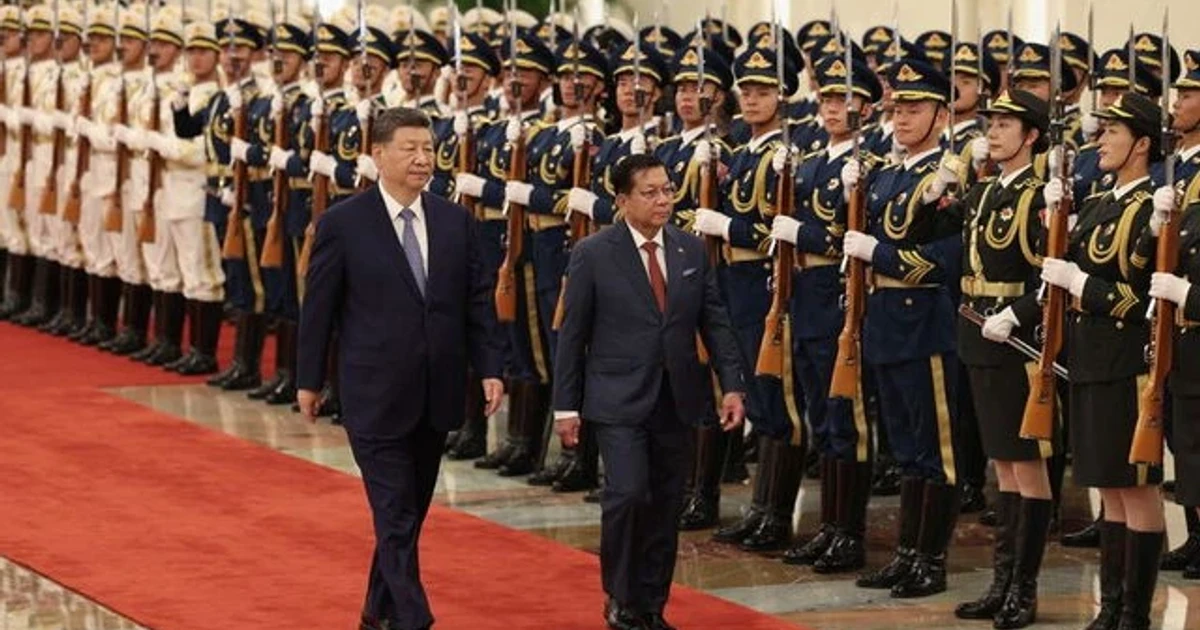
China deepened its embrace of Myanmar’s military rulers in Beijing on June 16, as Xi Jinping met Min Aung Hlaing and signaled support for a leader many governments still treat as internationally isolated. The encounter showed what Beijing gains from the relationship: border stability, leverage over a troubled neighbor, and influence along the infrastructure corridors that link Myanmar to China’s wider regional strategy.
Xi met Min Aung Hlaing after a state welcome ceremony at the Great Hall of the People, part of a five-day state visit and the Myanmar leader’s first trip to China since becoming president. The two men had last met in Tianjin on August 30, 2025, at the Shanghai Cooperation Organization summit, where their governments signed cooperation documents in customs and media. In Beijing, they again witnessed the signing of cooperation documents, though the contents were not immediately disclosed.
The public optics mattered as much as the paperwork. Xi backed Min Aung Hlaing’s political leadership during the talks, reinforcing a relationship that has survived Myanmar’s 2021 military coup, a brutal civil conflict, and years of diplomatic pressure from Western governments. In April, Chinese Foreign Minister Wang Yi told Min Aung Hlaing that Beijing would “firmly support” Myanmar in safeguarding its national sovereignty and security, a clear signal that China intended to keep the junta close.
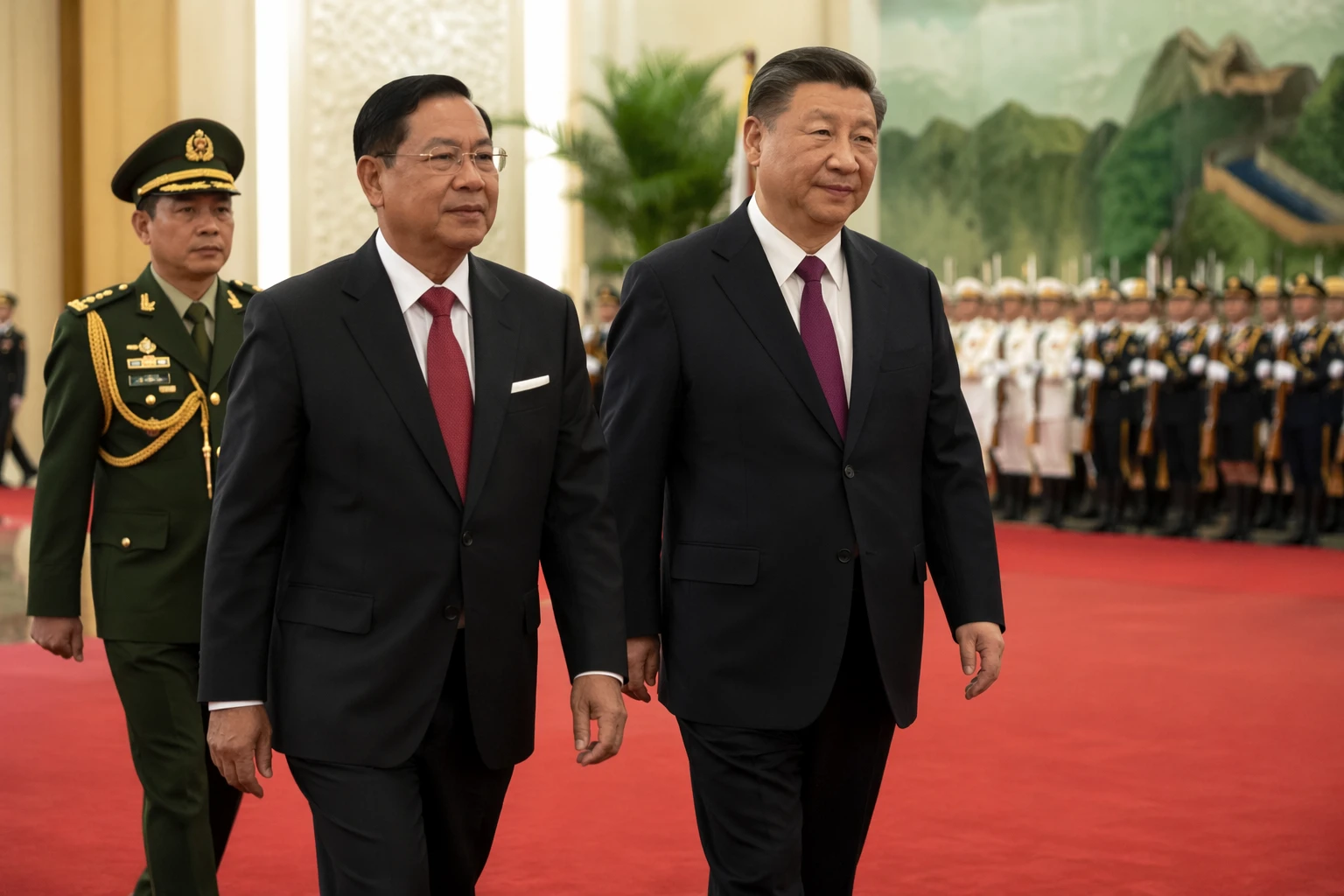
For Beijing, Myanmar is not just a diplomatic test case. The country sits on critical Belt and Road routes, including an oil and gas pipeline that crosses Myanmar and a planned deep-sea port project tied to the China-Myanmar Economic Corridor. Kyaukphyu, in Rakhine State, remains the port most closely associated with China’s access to the Bay of Bengal and the Indian Ocean. Analysts also see China watching the Myanmar-India border region, border security, and rare earths, all of which give the relationship extra weight for Chinese planners.
The stakes are humanitarian as well as strategic. By the end of March 2026, Myanmar had 3.7 million internally displaced people and 1.6 million refugees and asylum-seekers, according to UNHCR-linked data, part of one of the world’s largest displacement emergencies. The United Nations said in January that the crisis had deepened under escalating violence, mass displacement, and a military-controlled election that entrenched repression.
That reality makes China’s backing especially consequential. As Washington and European capitals try to pressure Myanmar’s generals, Beijing is demonstrating that the junta still has a powerful patron willing to invest, trade, and provide diplomatic cover.
Sources
- [1]usnews.com
- [2]bssnews.net
- [3]english.www.gov.cn
- [4]unhcr.org
- [5]themimu.info
- [6]news.un.org
- [7]thepeoplesmap.net
- [8]fmprc.gov.cn