Entertainment
Christopher Nolan’s The Odyssey aims to redefine big-screen filmmaking
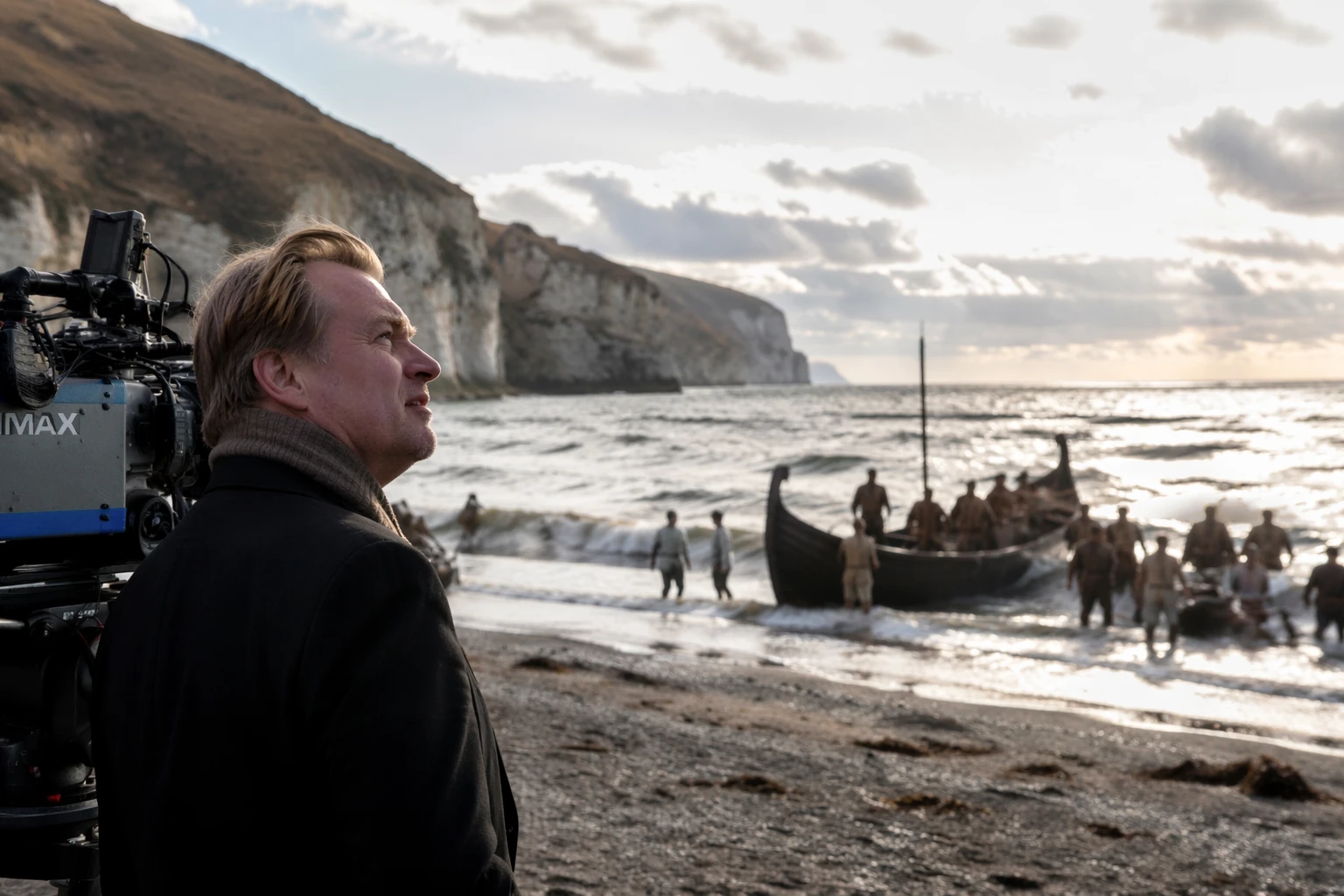
Christopher Nolan’s The Odyssey opens in theaters on July 17 with a claim few films can make: it was shot entirely on IMAX film, a technical gamble that turns Homer’s 3,000-year-old epic into a referendum on how far big-screen spectacle can still go. Early reactions have already called the film a “staggering achievement” and “flawless filmmaking,” putting Nolan’s most ambitious project at the center of the same question that has followed his career for years, whether sheer scale can carry emotional weight as well as visual force.
Nolan, now 55, has spent 28 years and 13 features building a career on that tension, writing his own screenplays and repeatedly pushing studio filmmaking toward formal risk. TIME said he had been dreaming about The Odyssey for more than 20 years, and that he once had talks to direct Troy in 2004 before that project fell apart. After Oppenheimer grossed nearly $1 billion and won seven Oscars in 2023, Nolan said that success gave him the leverage to pursue a large-scale studio version of Homer’s story, a move that fits a director who has learned how to convert prestige into permission.
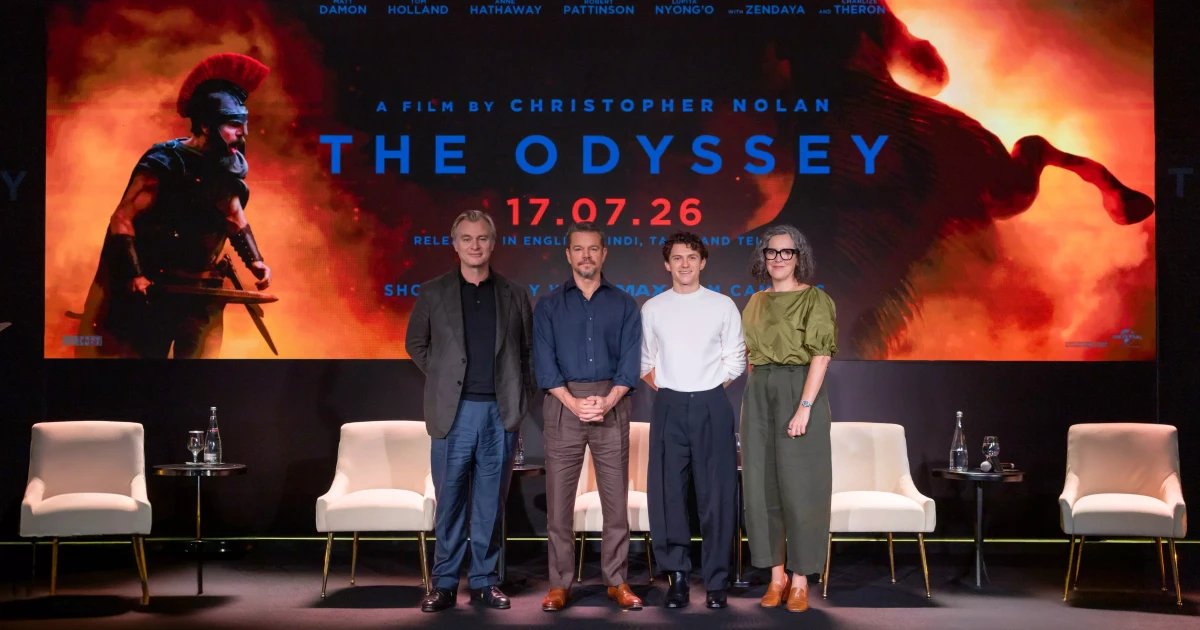
The film’s cast reflects the size of the wager. Matt Damon plays Odysseus, reuniting with Nolan after Interstellar and Oppenheimer, while Anne Hathaway, Tom Holland, Robert Pattinson, Zendaya, Lupita Nyong’o, Charlize Theron, John Leguizamo, Elliot Page and Jon Bernthal fill out the ensemble. Forbes reported a running time of 172 minutes and a budget of about $250 million, numbers that place the project firmly in the blockbuster lane even as Nolan continues to frame it as something more exacting than a standard franchise picture.
Its reach is also geographic. Confirmed filming locations include Greece, Sicily, the United Kingdom, Morocco, Scotland and Ireland, giving the production a real-world sweep that matches the poem’s long voyage. According to reporting around the production, Nolan and cinematographer Hoyte van Hoytema used IMAX cameras that were about 30 percent quieter than earlier versions and relied on sound-suppression blimps to handle the format’s practical limits, including short magazine lengths and constant reloading. That technical push has not only shaped the look of the film, it has helped turn the release into an event, with IMAX 70mm tickets reportedly selling out a year in advance.

Rotten Tomatoes notes that Homer’s poem has been adapted before, including the 1954 film Ulysses with Kirk Douglas and the 1997 Emmy-winning miniseries The Odyssey starring Armand Assante. Nolan’s version arrives as the latest and loudest attempt to make the ancient story feel newly cinematic, and the early response suggests that the IMAX scale may be doing more than enlarging the image. It may be giving Odysseus’s homecoming the kind of force Hollywood rarely lets original films claim anymore.
Sources
- [1]nytimes.com
- [2]thesheffieldpress.com
- [3]variety.com
- [4]forbes.com
- [5]editorial.rottentomatoes.com
- [6]time.com