Politics
JD Vance memoir traces faith journey amid 2028 speculation

JD Vance’s memoir, Communion: Finding My Way Back to Faith, reached readers on June 16, turning his conversion to Catholicism into a central part of his public story. The book arrived 10 years after Hillbilly Elegy and quickly became part of the larger question hanging over Vance: whether the vice president is laying the groundwork for a 2028 presidential campaign.
Harper announced the memoir on March 31 and said Jonathan Burnham negotiated North American rights with WME. The book traces Vance from the Christianity of his youth to atheism and back to Catholicism, while also folding in his roles as a husband, father and national political figure. Vance joined the Catholic Church in 2019 after private instruction from Dominican priests in Ohio and Washington.
That conversion has become one of the clearest windows into his governing worldview. Vance’s Catholicism connects him to postliberal intellectual circles that place heavier weight on the common good than on individual liberty alone. Critics have warned that strain of thought can drift toward reactionary or authoritarian politics; supporters describe it as a defense of shared moral obligations. In practical terms, that framework could be used to justify stricter immigration enforcement, a more guarded foreign policy and sharper resistance to cultural liberalism at home.
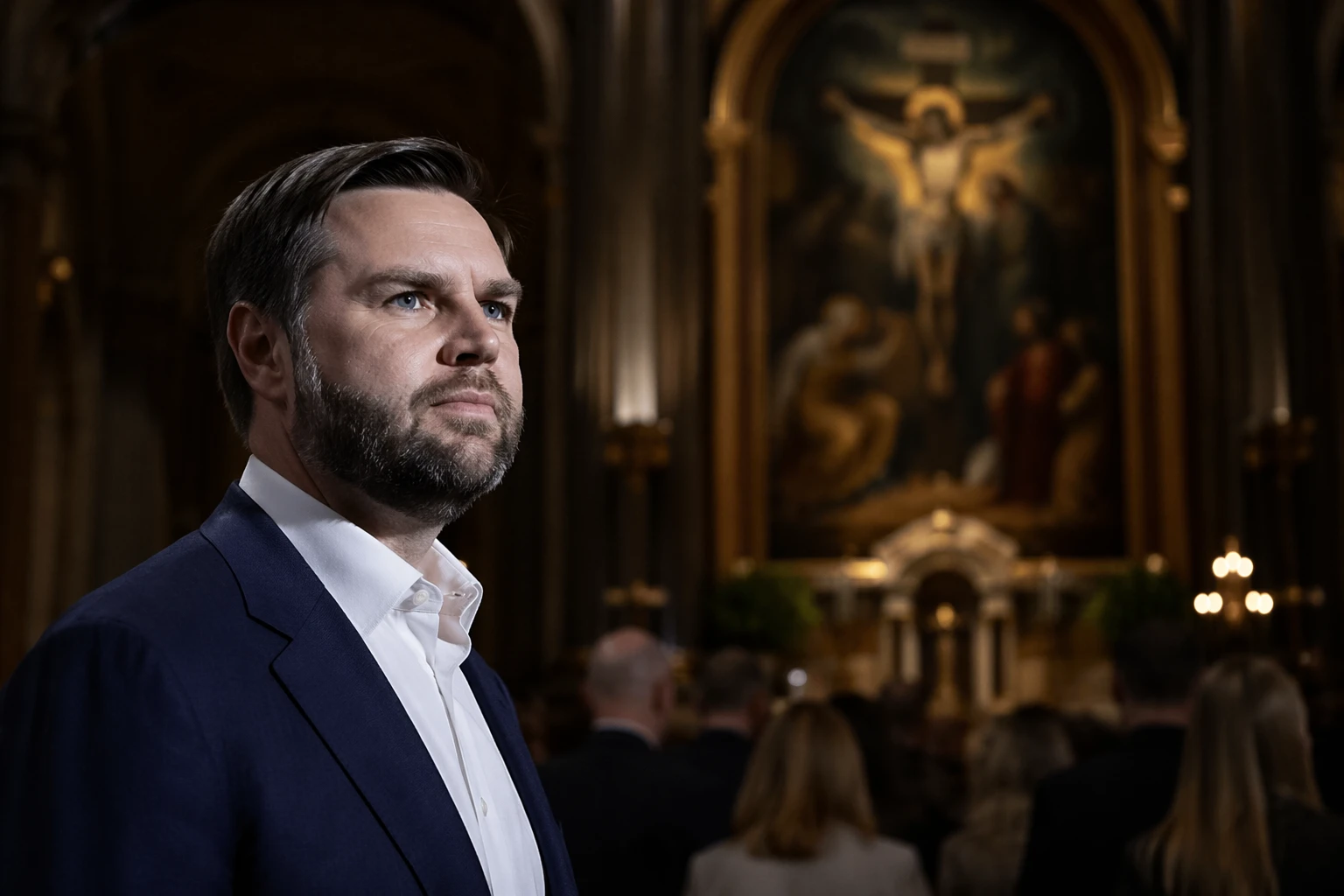
The memoir also arrives with Vance’s political identity under a brighter light than ever. The book is framed not just as a spiritual account but as an origin story, one that ties faith, family and ambition into a single narrative. That makes the rollout unusually charged for a sitting vice president who has not declared any 2028 plans before the 2026 midterms, even as the release fed speculation that he is positioning himself for a later national campaign.
Vance’s rise has repeatedly been told through conversions, from Appalachia to Washington, from skepticism of Donald Trump to serving as Trump’s running mate, and now from Protestantism to Catholicism. His marriage to Usha Vance and the public attention on family life have only deepened the sense that the memoir is doing more than recounting belief. It is also defining the moral language he may use if he seeks higher office.
Sources
- [1]nytimes.com
- [2]harpercollins.com
- [3]politico.com
- [4]ncronline.org
- [5]osvnews.com
- [6]pbs.org
- [7]thesheffieldpress.com