Technology
NASA finds first missing black hole in Omega Centauri cluster
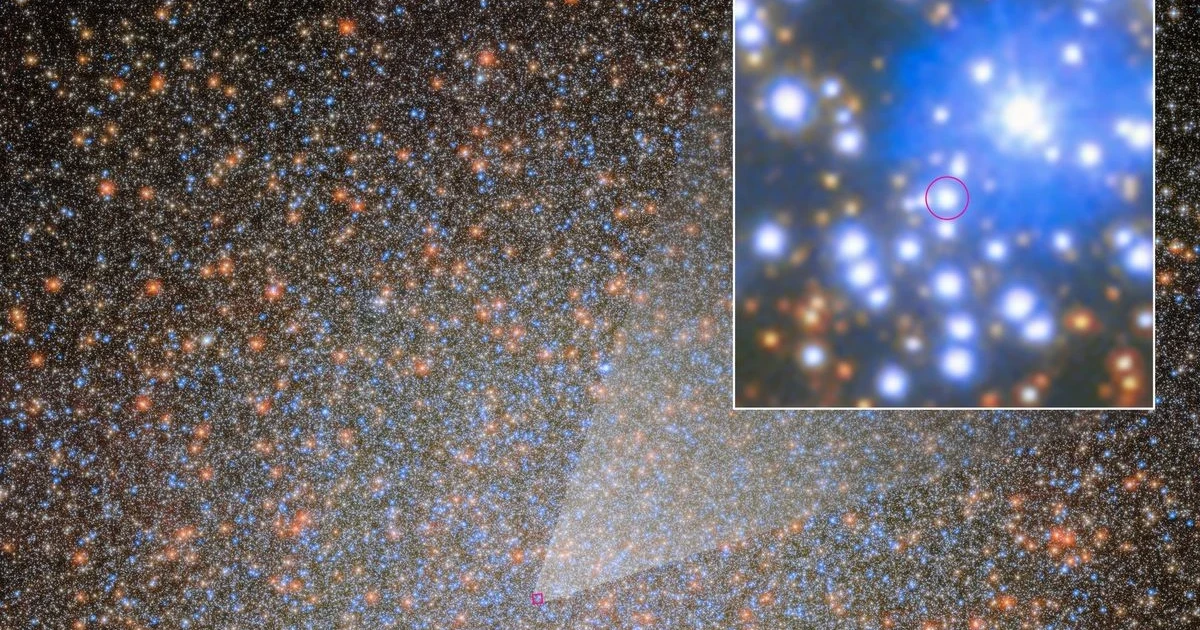
Astronomers identified oMEGACat BH-2, the first stellar-mass black hole detected in Omega Centauri, by tracking the faint pull it exerted on a visible companion star with NASA’s Hubble Space Telescope and the James Webb Space Telescope. The finding was published Monday, July 13, 2026, in The Astrophysical Journal Letters and used more than 20 years of archival Hubble data plus recent Webb observations to weigh an object hidden in one of the Milky Way’s largest star clusters.
Omega Centauri holds about 10 million gravitationally bound stars, and models have long suggested it should contain roughly 10,000 stellar-mass black holes. Until now, searches using radial velocity, radio emission and X-ray emission had failed to turn up that population. The result came through astrometry, the precise measurement of a star’s motion over time.
The black hole sits about 18,000 light-years from Earth and appears to have a lower-than-expected mass for this environment. The binary system containing oMEGACat BH-2 also has the longest orbital period of any known black hole binary system to date.
In 2024, a University of Utah-led team argued that the cluster also contains an intermediate-mass black hole at its center, with estimates placing that object at about 8,200 solar masses. University of Utah associate professor Anil Seth called that earlier result a “once-in-a-career kind of finding” and said, “extraordinary claims require extraordinary evidence.” Omega Centauri is thought to be the stripped nucleus of a smaller galaxy swallowed by the Milky Way.
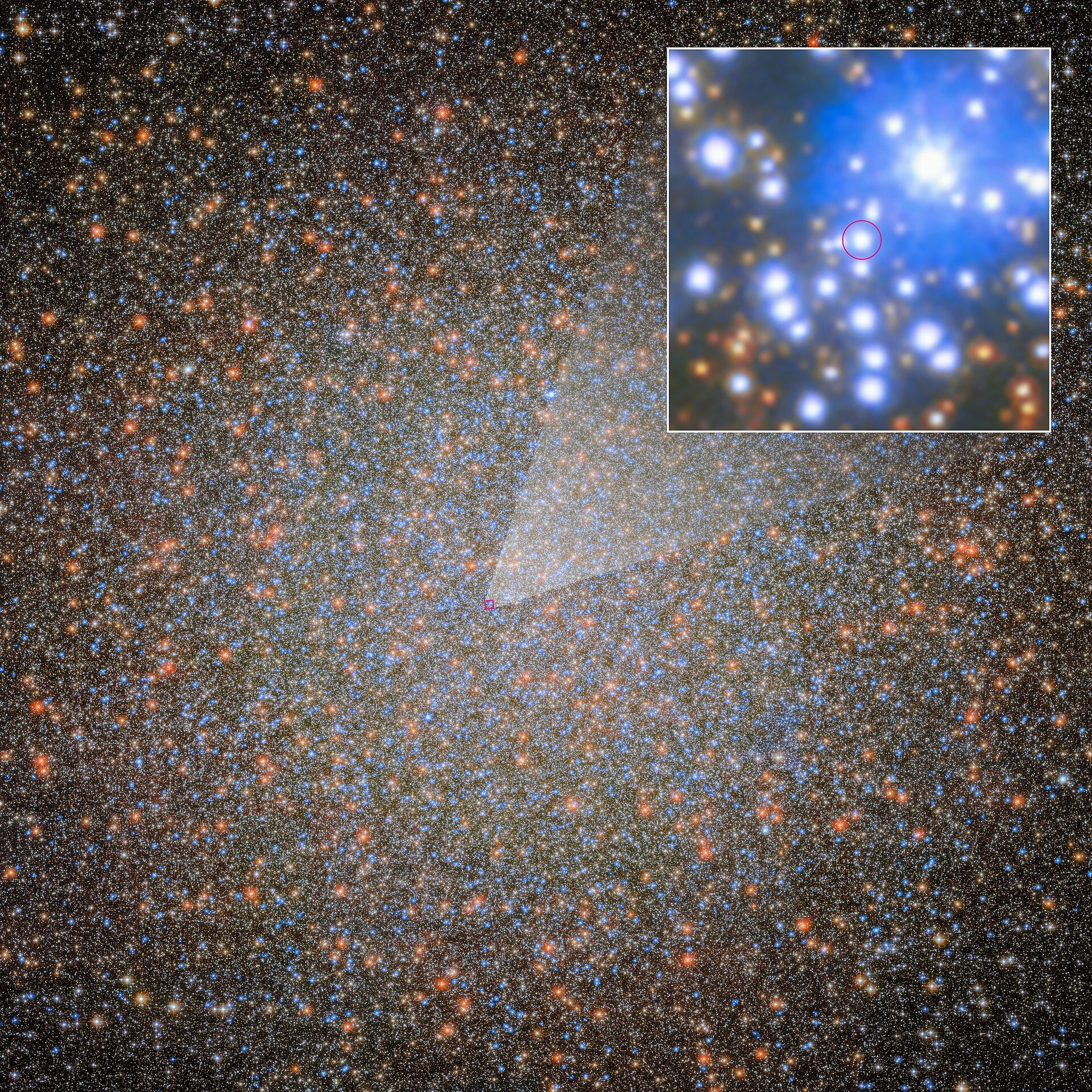
Matthew Whitaker of the University of Utah, a lead author on the new work, said the team could see the visible star’s motion in the binary and measured it with precision to a fraction of a pixel on both Hubble and Webb detectors. Nadine Neumayer of the Max Planck Institute for Astronomy said Omega Centauri, at about 18,000 light-years away, is the closest known example of a massive black hole.
Sources
- [1]news.google.com
- [2]science.nasa.gov
- [3]attheu.utah.edu
- [4]stsci.edu
- [5]arxiv.org
- [6]science.utah.edu
- [7]thesheffieldpress.com