Politics
Platner wins Maine Senate primary, sets up clash with Susan Collins

Graham Platner’s commanding primary win gave Maine Democrats the progressive nominee they wanted, but it also sharpened the party’s biggest 2026 question: whether a 41-year-old oyster farmer and military veteran with serious baggage can defeat Susan Collins, one of the Senate’s most durable Republicans.
Platner won the Democratic Senate primary on June 9 and will take on Collins, who is seeking reelection to a sixth term and is the only Republican senator from New England. Maine is the rare swing state that backed Kamala Harris over Donald Trump in 2024, and Democrats view it as one of their clearest chances to flip a GOP seat as they try to net four Senate seats and take control of the chamber in 2027.
Preliminary results showed Platner with about 72% of the vote, Janet Mills with just under 20%, and David Costello with about 8%. The size of Platner’s margin matters in Washington as much as in Maine: a blowout suggested that rank-and-file Democrats were willing to overlook the controversies around him, while a narrow win would have intensified doubts about whether he could survive a general election against Collins.
Those doubts did not disappear. Platner’s campaign was shadowed by old offensive Reddit posts, a tattoo that resembled a Nazi symbol and has since been covered up, allegations about how he treated ex-girlfriends, and reports that he sent sexually explicit texts to other women after marrying in 2023. Platner denied being violent toward women and said the behavior came during a dark period after military service, when he was struggling with post-traumatic stress disorder. He has tried to recast the race around redemption and anti-war populism, making housing, healthcare and the high cost of living central to his message.
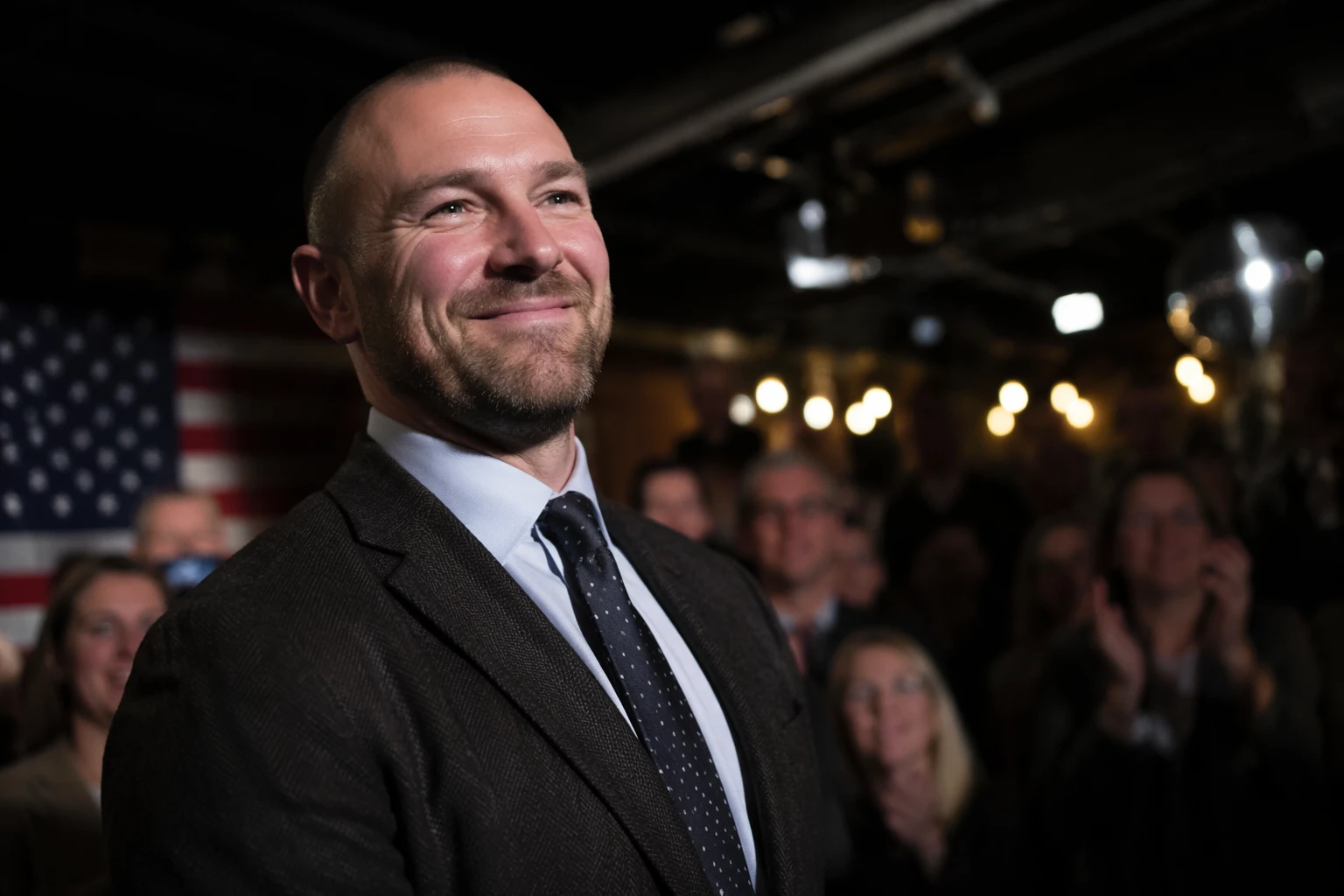
The primary also ended a behind-the-scenes Democratic debate over whether Platner was too damaged to win in November. Janet Mills suspended her campaign on April 30 after lagging in polling and fundraising, though she remained on the ballot, and was unable to seriously dent Platner’s support. Early voting began on May 11, and more than 30,000 Democrats had already voted by the Friday before the primary, meaning Platner had banked much of his support before the latest backlash fully hit.
Even after the negative coverage, the campaign said it recorded its best fundraising day in more than a month, and eight of the 20 Democratic state lawmakers who had endorsed him earlier in the spring said they still backed him. A June 6 event in Bar Harbor drew about 600 people, a sign that Platner still excited a sizable share of the party base.
The fall contest is already shaping up as one of the closest Senate races of 2026. Democrats are expected to portray Collins as a Trump-aligned incumbent, even though she has sometimes broken with him, while Collins will lean on her long record of winning in Maine and her moderate brand. Trump has already endorsed Collins’s reelection bid, underscoring how much control of a closely divided Senate may run through Maine.
Sources
- [1]nytimes.com
- [2]politico.com
- [3]wbur.org
- [4]bloomberg.com
- [5]thesheffieldpress.com
- [6]apnews.com