Politics
Platner’s rise in Maine Senate race tests Democrats’ future
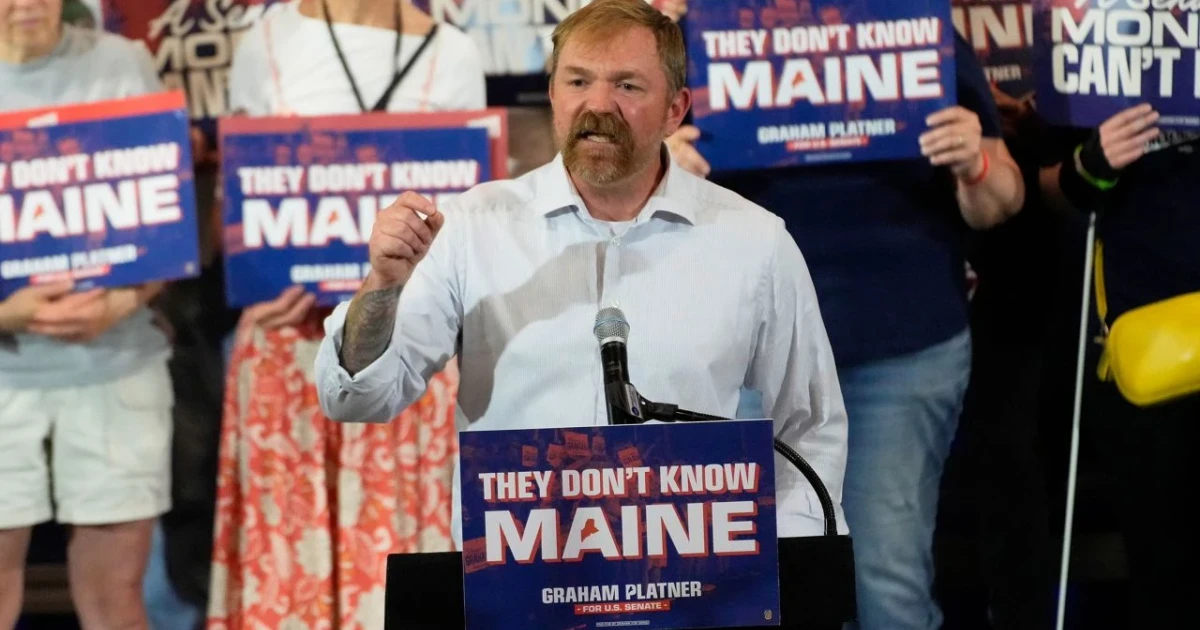
Graham Platner won Maine’s Democratic Senate primary and was set to face Republican Sen. Susan Collins on November 3, turning a once-secondary contest into one of the clearest tests on the 2026 Senate map. Platner, a political newcomer, surged quickly after entering the race and converted that momentum into a victory over Gov. Janet Mills, the party establishment’s favored general-election choice.
Platner’s appeal came from a progressive-populist message that found a middle ground with many Maine Democrats. Bernie Sanders and Elizabeth Warren backed his campaign, and the endorsements helped amplify an outsider profile that contrasted sharply with Mills, who had the support of the Democratic Senatorial Campaign Committee and Senate Minority Leader Chuck Schumer. Several pre-primary polls showed Platner ahead, underscoring how fast his candidacy moved from novelty to serious threat in a race that national Democrats had expected Mills to control.

The contest became a proxy battle over the party’s future. Progressives saw Platner as proof that Democrats could still win with a working-class, anti-establishment message that challenged donors and Washington habits. Skeptics saw something different: a party overcorrecting in search of a more authentic messenger and testing whether a more moderate, traditional profile had been written off too quickly in battleground states like Maine. Platner’s rise put that argument at the center of a race that otherwise would have been defined by Collins’ long tenure and Maine’s habit of punishing national assumptions.


Platner’s later collapse, however, changed the calculation inside the party. The scandal that engulfed his campaign set off a new debate about vetting and electability, and whether Democrats were confusing outsider energy with readiness for a general election. The question now reaching beyond Maine is narrower and more practical: whether the party can borrow Platner’s anti-billionaire, populist language for 2026 without importing the baggage that ultimately consumed his campaign.
Sources
- [1]nytimes.com
- [2]thesheffieldpress.com
- [3]punchbowl.news
- [4]notus.org
- [5]politico.com