Entertainment
Sheffield’s newspaper archives trace the city’s public memory back to 1787
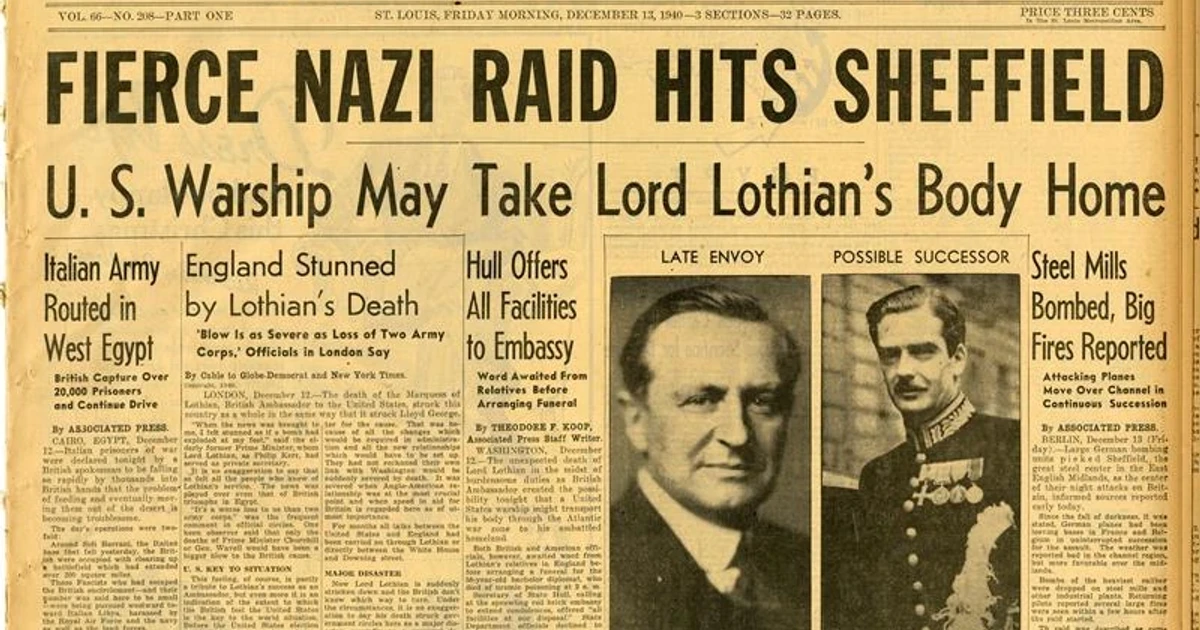
We think and dream and fuss over the moment in front of us, but Sheffield’s newspaper record keeps pointing back to a longer civic horizon. The city’s press history begins in the late 18th century and keeps stretching forward, with gaps but without a break in spirit: a ledger of arguments, announcements, crises, and ordinary life that still outlasts the fads of any single season.
The archive reaches back farther than the headlines
Sheffield City Council says its newspaper holdings cover dates from 1787 to the present, with gaps, and that span gives the city something rarer than nostalgia: continuity. Sheffield City Archives says it preserves material relating to Sheffield and the surrounding area from the 12th century to the present day, but the newspaper record gives that broad civic memory a public voice, a place where the city argued with itself in print and recorded what it chose to notice.
The council’s guide names a long line of local titles, each one marking a different phase in Sheffield’s public life. The Sheffield Public Advertiser ran from 1760 to 1793, the Sheffield Register from 1787 to 1794, the Sheffield Independent from 1819 to 1938, and the Sheffield Iris from 1835 to 1843. Later titles followed the city’s growth and its changing pace: the Sheffield Evening Telegraph ran from 1897 to 1939, the Sheffield Weekly Telegraph from 1884 to 1950, The Star from 1869 to 1900, and the Star (Green ‘Un) from 1909 to 1958.
That list matters because it shows how a city’s memory is not stored in one grand archive alone. It is scattered across mastheads, frequency shifts, closures, mergers, and gaps, each paper holding a different slice of public attention.
Why the early papers looked the way they did
The city’s earliest newspapers were constrained by money and law as much as by printing technology. Sheffield City Council says they were often short weekly papers because of stamp duty and taxes, which meant limited room for local reporting and a strong emphasis on political, legal, business, and international material. In other words, the city’s first printed conversations were shaped by the cost of having one.
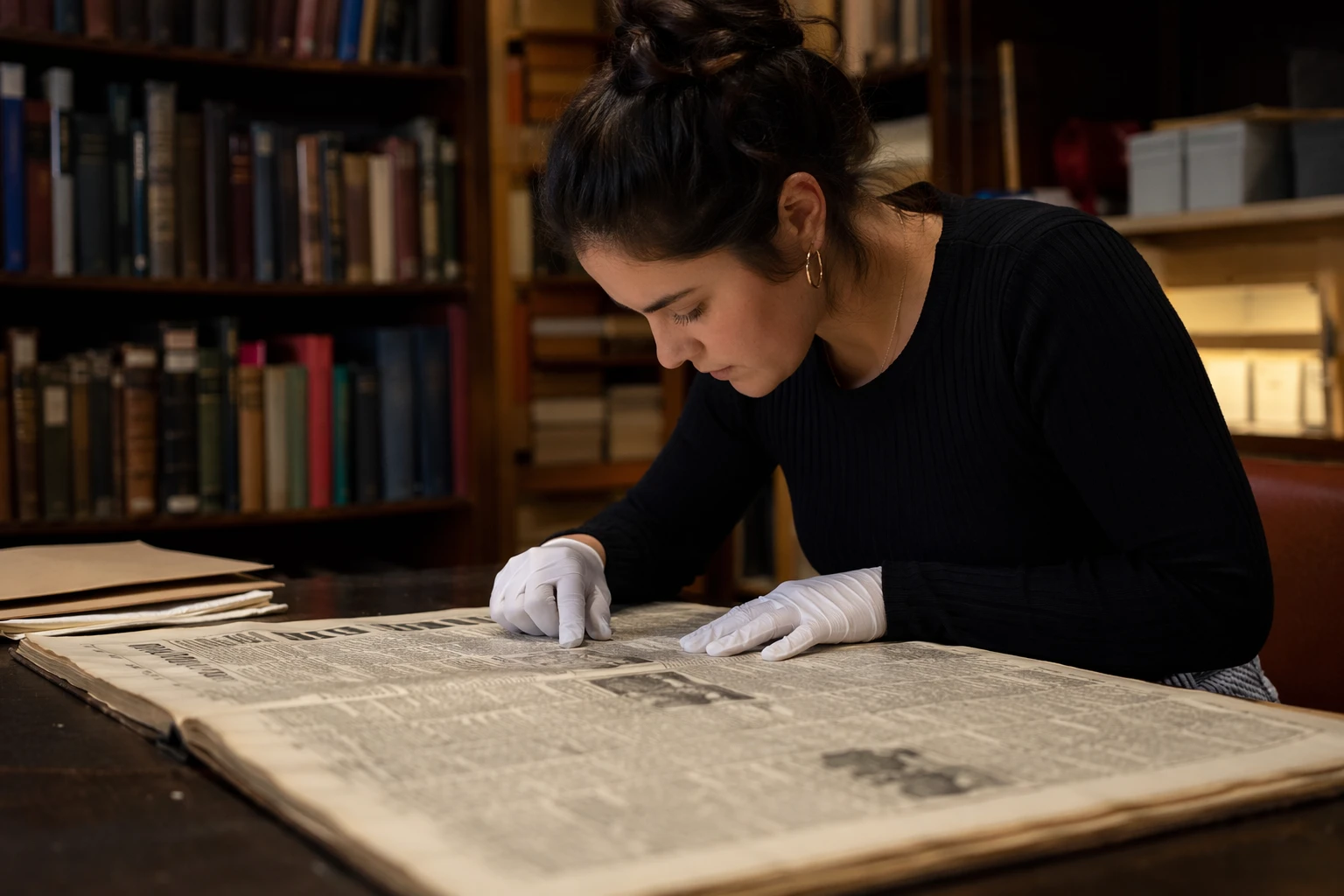
That pressure helps explain why the Sheffield Register could cover the French Revolution in July 1789, while the Sheffield Iris could report Queen Victoria’s accession in 1837. Those are not trivial details tucked into old pages. They show Sheffield readers connected to events far beyond the town, while the papers themselves still served as local instruments of record, debate, and identity.
The Sheffield Daily Telegraph marked another turning point. Sheffield City Council says it began in June 1855 and was the city’s first daily newspaper. The move from weekly cadence to daily publication changed the speed of civic life on the page, bringing Sheffield into a more immediate rhythm of reporting and response. Once a city has a daily paper, public memory begins to accumulate differently: less like a series of isolated snapshots, more like a continuous reel.
The scale of the surviving record
The surviving archive is not just a list of titles. The British Newspaper Archive’s Sheffield results surface 65,127 issues, a figure that shows how much of the city’s public life has been captured in print and preserved for searching. That scale turns the archive from a curiosity into an infrastructure of memory. It makes Sheffield’s past something that can still be traced through publication date, headline, and issue count rather than only through institutional summaries.
This is where the cosmic metaphor lands with force. The city may chase its latest argument, celebrate its latest personality, or exhaust itself on the latest scandal, but the archive keeps orbiting on its own steady track. The news cycle burns hot; the record endures. A civic culture that keeps newspapers this long is not just preserving paper, it is preserving a way of seeing power, economy, faith, labor, and daily life as part of one shared ledger.
What the titles reveal about civic life
The old Sheffield papers are useful because they show how local journalism once did more than amplify the immediate. The Sheffield Public Advertiser, the Sheffield Register, the Sheffield Independent, and the later Telegraph titles were all part of a city learning how to narrate itself in public. Their topics, formats, and schedules reflect a place where politics, trade, and local reporting had to share space with international events and national change.

The papers also track the city’s transition from occasional publication to a denser media environment. The Sheffield Weekly Telegraph and the Sheffield Evening Telegraph each reflect a different relationship to time, attention, and readership. The Star and the Star (Green ‘Un) show how even familiar names can evolve into different civic roles across decades. Together, they map the practical history of how Sheffield talked to itself.
For readers who care about civic engagement, the lesson is plain: local newspapers have never just been containers for information. They are institutions that shape what a city remembers, what it argues over, and what it eventually forgets.
A small masthead in a much larger press world
The contrast with other Sheffield Press titles makes the point even more sharply. Newspapers.com says the Sheffield Press in Sheffield, Missouri includes only four searchable pages from 1907. The Library of Congress separately lists Sheffield Press in Sheffield, Iowa as first published in 1880 and still current. Those records are tiny beside the Sheffield, England archive, but they underline a shared fact of local journalism: even the smallest masthead can become part of a community’s self-description.
That comparison is useful because it shows the difference between a surviving fragment and a long civic archive. A handful of pages can preserve a moment, while a major city’s newspaper history can preserve generations of argument, routine, and change. Sheffield’s record is unusually deep, but its meaning is broader than Sheffield alone. It shows what happens when a place keeps enough of its printed past to remember how it once spoke to itself, and enough of that record still survives to keep speaking now.
In an age of distraction and churn, that is the real value of the archive: not sentiment, but structure. It tells you that public memory is built issue by issue, and that the city’s loudest present tense is always smaller than the history it leaves behind.