Business
UK inflation eases, but households face another energy-led squeeze

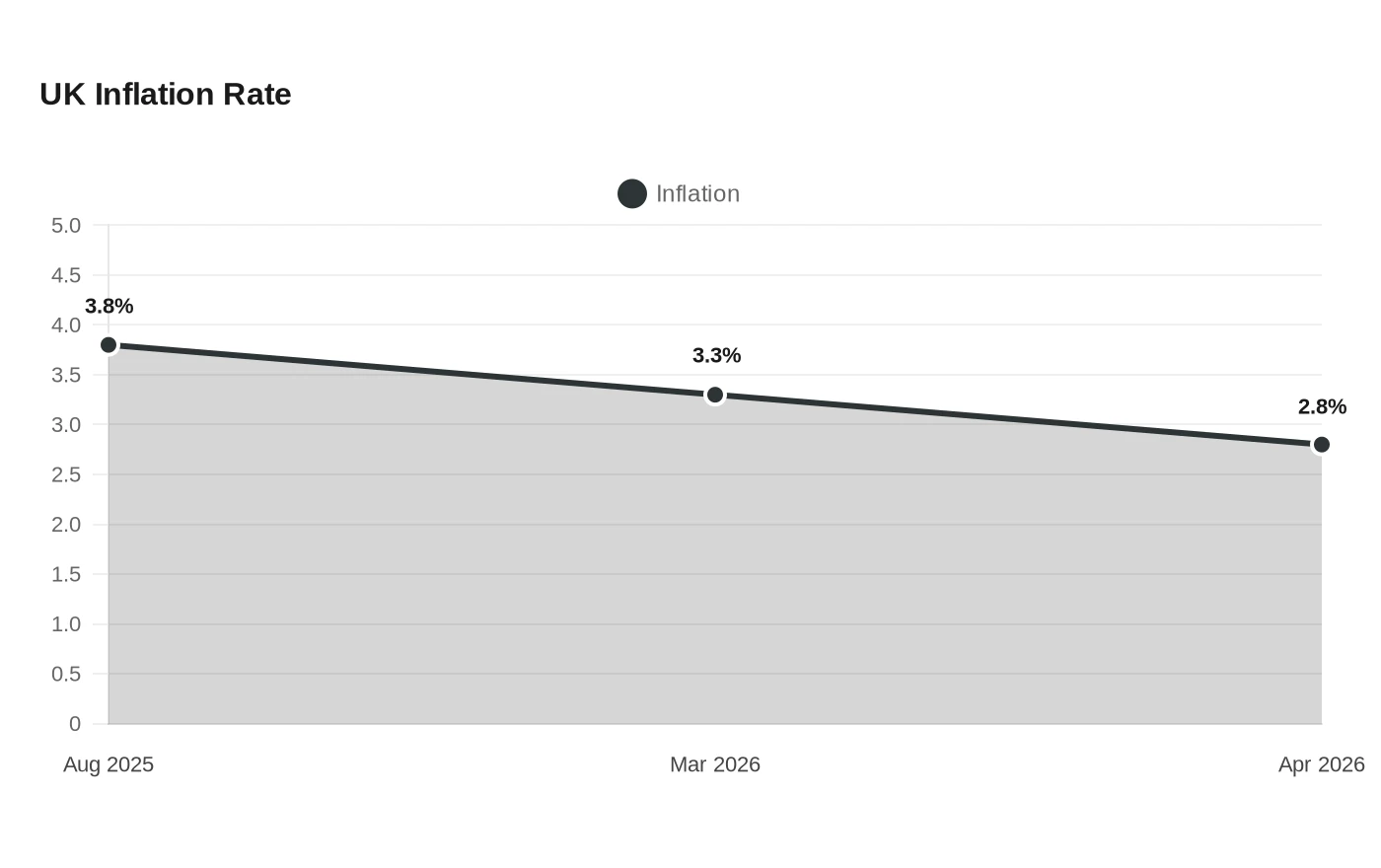
Household budgets in Britain are back under pressure as energy costs push inflation higher and companies hesitate to pass the full hit on to weary consumers whose wages are not keeping up. The Office for National Statistics said consumer prices rose 2.8% in the 12 months to April 2026, down from 3.3% in March but still above the Bank of England’s 2% target.
The details show how uneven the latest move in prices remains. CPIH inflation was 3.0% in April, while core CPI inflation, which strips out food and energy, was 2.5%, a sign that underlying price pressure had not disappeared. Motor fuel prices made an upward contribution to the April reading, even as housing and household services helped pull the monthly rate lower. The ONS said the latest consumer inflation release was published on May 20, 2026, with the next one due on June 17.
That matters because Britain has already lived through a punishing inflation cycle. The House of Commons Library said UK inflation hit 3.8% in August 2025, the highest level since January 2024, after a 41-year high between 2021 and 2023. Over the five years to August 2025, consumer prices rose 28.2%, leaving households especially sensitive to another energy-led squeeze that could spread from petrol stations into transport, food and other essentials.
The Bank of England has warned that food prices and administered prices have been major drivers of the renewed inflation pressure, and that makes the next move in rates harder to judge. The central bank’s 2% target remains the benchmark, and if inflation moves more than 1 percentage point away from that goal, Governor Andrew Bailey must write to the Chancellor explaining why prices have diverged and how the Bank plans to bring them back.
For households, the risk is a longer stretch of tight borrowing conditions just as living costs remain elevated. Higher inflation makes it harder to justify rapid rate cuts, which keeps mortgages, consumer credit and business borrowing expensive for longer. That leaves consumer spending vulnerable, especially if energy shocks continue to feed into transport and food rather than staying confined to fuel bills.